

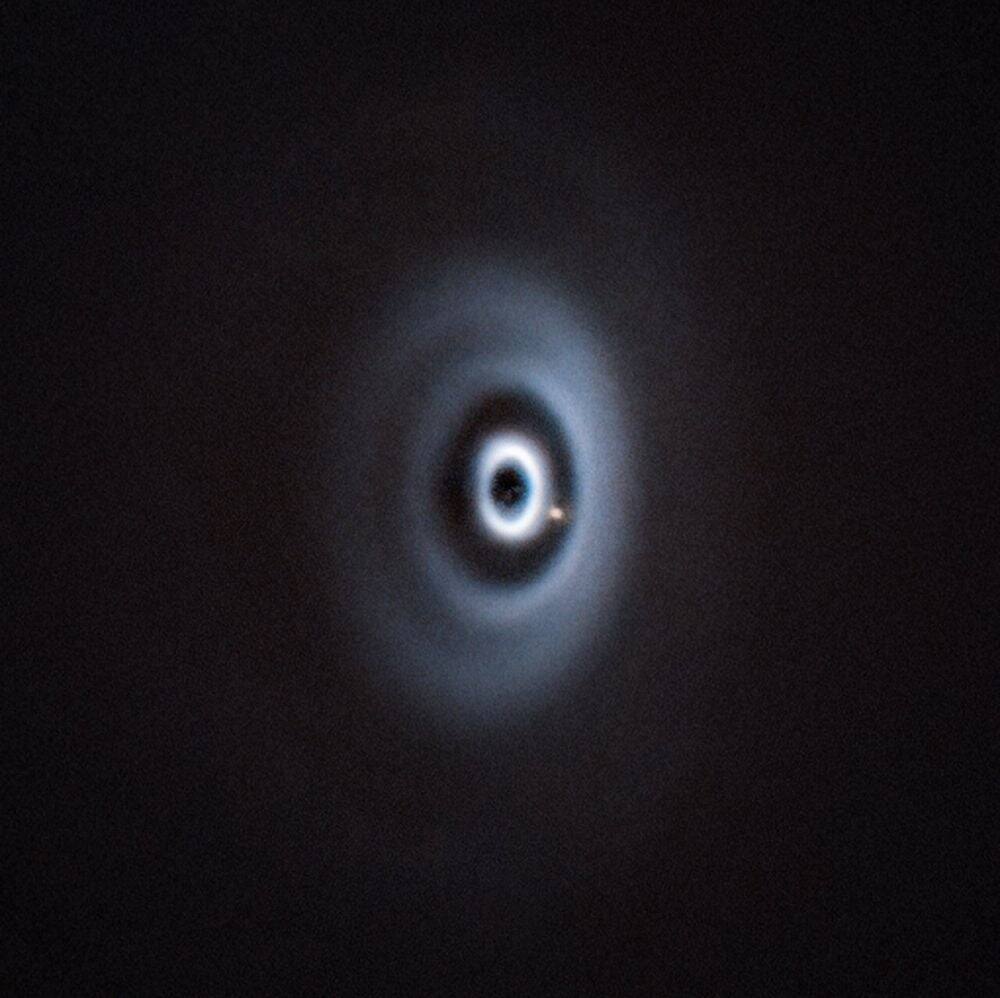
Scientists have confirmed two massive gas giants forming around the young sun-like star WISPIT 2, located about 437 light-years away. At only 5 million years old, WISPIT 2 offers an unprecedented glimpse into the early stages of planetary system formation. This discovery is only the second known case of multiple baby planets directly observed forming in a protoplanetary disk, advancing our understanding of how solar systems like our own develop.
WISPIT 2-b, a gas giant roughly five times the mass of Jupiter, was first imaged in 2025 using the Very Large Telescope’s SPHERE instrument. The planet lies embedded within a striking protoplanetary disk featuring multiple rings and gaps. These gaps likely result from infant planets pulling in material and carving paths as they grow. Recently, astronomers unveiled a sibling planet, WISPIT 2-c, located about 14 astronomical units from the star and potentially between eight and twelve Jupiter masses-making it roughly twice as massive as WISPIT 2-b.
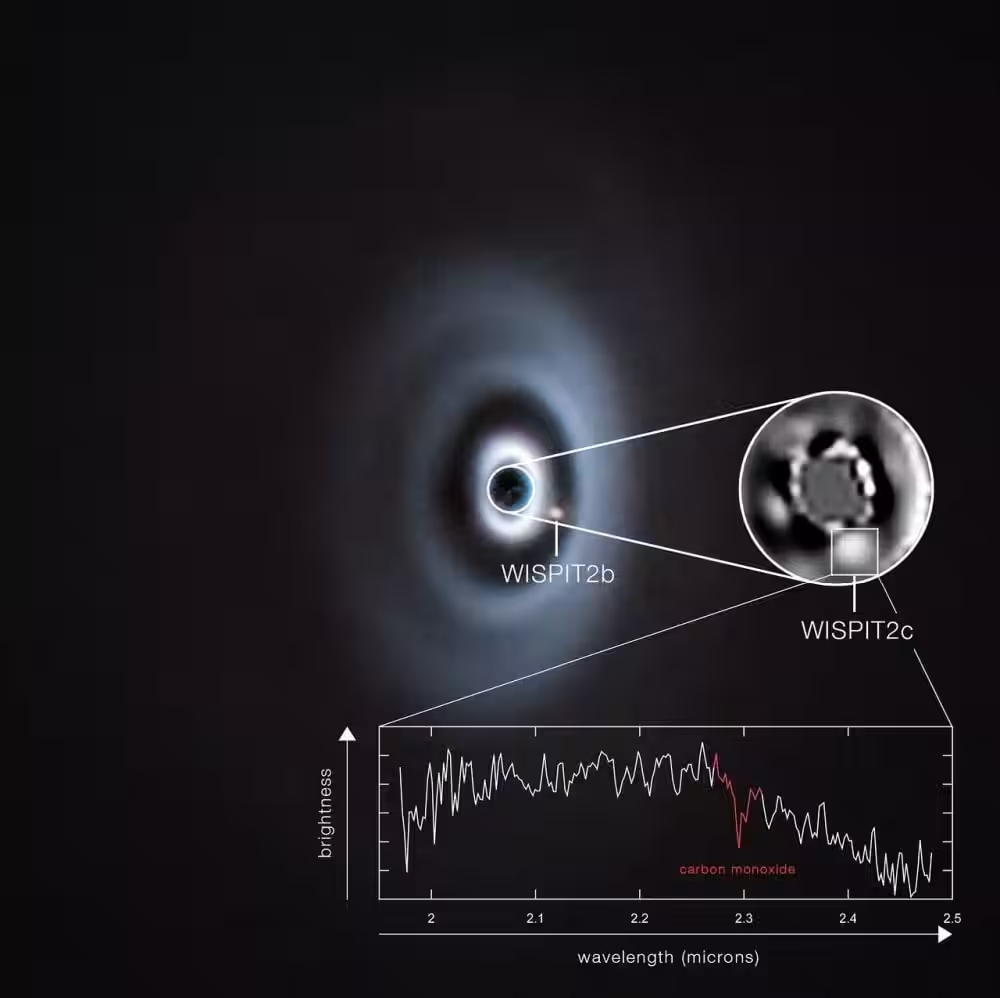
The presence of WISPIT 2-c was confirmed through direct spectroscopic observations combining data from VLT/SPHERE and the VLTI/GRAVITY+ instrument. Detecting carbon dioxide in its atmosphere was a key indicator that this faint source is indeed a nascent gas giant and not a misleading background star. Such direct spectroscopic confirmations are technically challenging but invaluable for understanding a planet’s composition and physical characteristics during its early development.
WISPIT 2’s significance lies not only in its resemblance to the young Sun but also in its elaborately structured protoplanetary disk, which shows evidence of multiple planets sculpting gaps and rings. This complex pattern indicates that additional planets may be forming, including a possible third, Saturn-mass world inferred from a narrower and shallower gap further out. Upcoming instruments on the Extremely Large Telescope (ELT), set for first light in 2029 with its huge 39-meter mirror, could reveal more planetary companions and provide sharper insights into such systems.
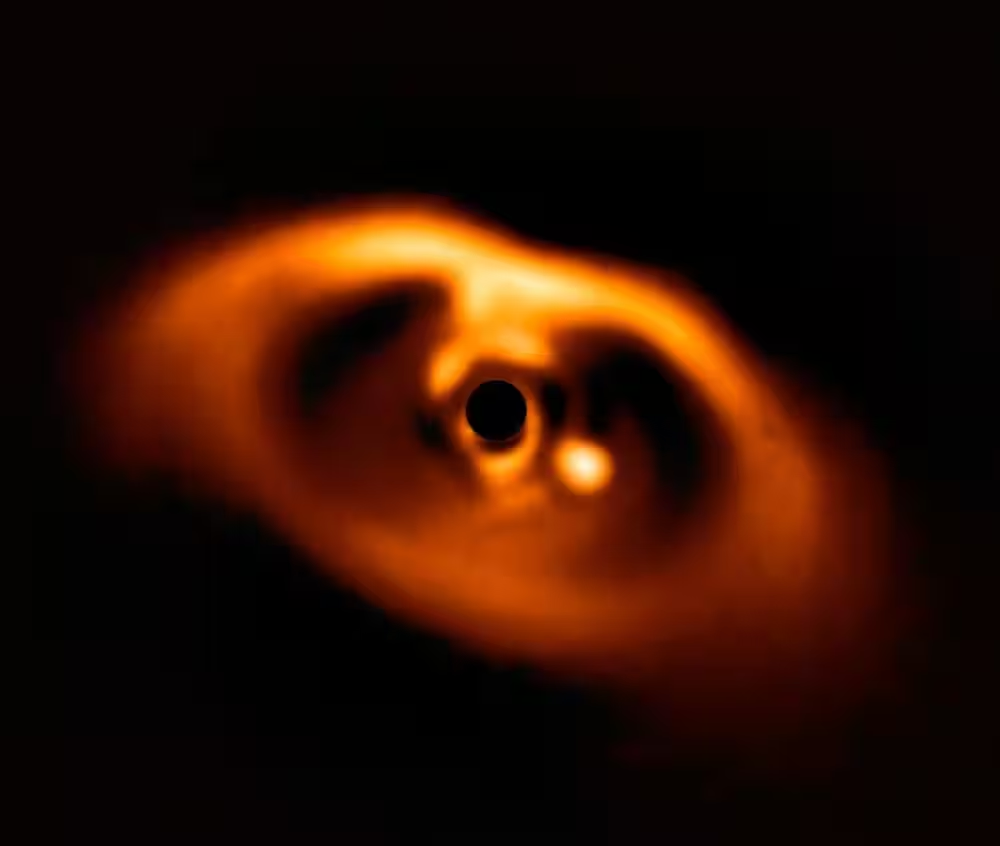
The only other system where two young planets have been directly observed forming is PDS 70, another young star about 370 light-years away, which hosts at least two confirmed planets. WISPIT 2, with its more extended disk and distinct ring structures, offers a complementary laboratory to study how planetary systems arrange themselves during their early millions of years.
”WISPIT 2 is the best look into our own past that we have to date,” remarked lead researcher Chloe Lawlor. The discoveries underscore the power of current observatories, particularly upgrades like GRAVITY+, which push instrument sensitivities to detect planets near their bright host stars. As more direct observations of such systems are gathered, astronomers hope to piece together the connection between initial disk conditions and the eventual layout of mature planetary systems.”
This research highlights a potential ”Goldilocks Zone” for giant planet formation at specific orbital distances, but the full picture remains incomplete. Observing multiple planets forming simultaneously within a disk remains rare and challenging yet is crucial for understanding the processes that shaped our own Solar System. WISPIT 2 is set to become a prime target for future exploration as more planets reveal themselves within its swirling rings.