

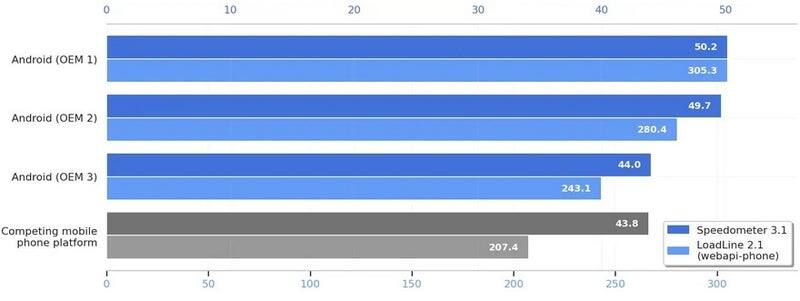
Google has confirmed that Chrome running on the latest Android devices offers the quickest mobile browsing experience, outperforming Safari on iOS. Using two specialized benchmarks-Speedometer 3.1 and LoadLine-Google demonstrated substantial speed gains on Android flagships compared to their iPhone counterparts.
Speedometer 3.1 evaluates a browser’s responsiveness by simulating real-world user interactions such as typing, scrolling, and button presses on complex sites like Facebook and Google Docs. A higher score indicates a fluid, snappy user experience when tackling demanding web apps. LoadLine, created by Chrome and Android teams alongside hardware partners, measures the total time taken to fully load common websites after clicking a link, reflecting real navigation speed on popular destinations including news and shopping platforms.
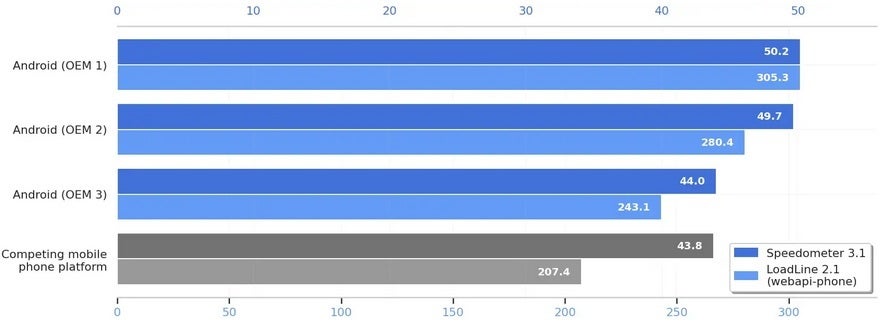
Google used recent tests on three unnamed Android flagships, which likely include the Pixel 10 Pro, Samsung Galaxy S26 Ultra, and Xiaomi 16. These devices scored an average of 48.2 on Speedometer 3.1, about 10% higher than the iPhone’s 43.8. On LoadLine, the Android trio recorded an average of 276.3, outpacing the iPhone’s 207.4 by over 30%. This translates into web pages loading up to 6% faster and interactions feeling 6% to 9% snappier year-over-year on these Android devices.
Google attributes these gains to tight integration across hardware, the Android operating system, and Chrome’s browser engine. It also encourages Android manufacturers to tune their hardware and software stacks against Speedometer and LoadLine benchmarks to maximize performance. This coordinated approach appears to have pushed Android’s mobile web browsing speed well ahead of iOS for the first time in recent memory, reflecting a broader trend of vertical optimization in the smartphone ecosystem.
This announcement comes amid ongoing competition in browser technology, where factors like JavaScript execution, network handling, and UI responsiveness define user experience. While Safari has traditionally been praised for efficiency on iOS, Google’s move reveals how Android OEMs partnering closely with the software team can leverage hardware-software synergy to gain the edge.
As mobile browsing continues to dominate smartphone usage, these Chrome on Android performance improvements might influence consumer choice and developer focus. Whether Apple will respond with its own performance tuning or architectural changes to Safari under iOS remains to be seen, but for now, Chrome on Android holds the speed crown.