


Xiaomi closed 2025 with impressive growth, boosted by a shift to premium smartphones and a booming electric vehicle business.
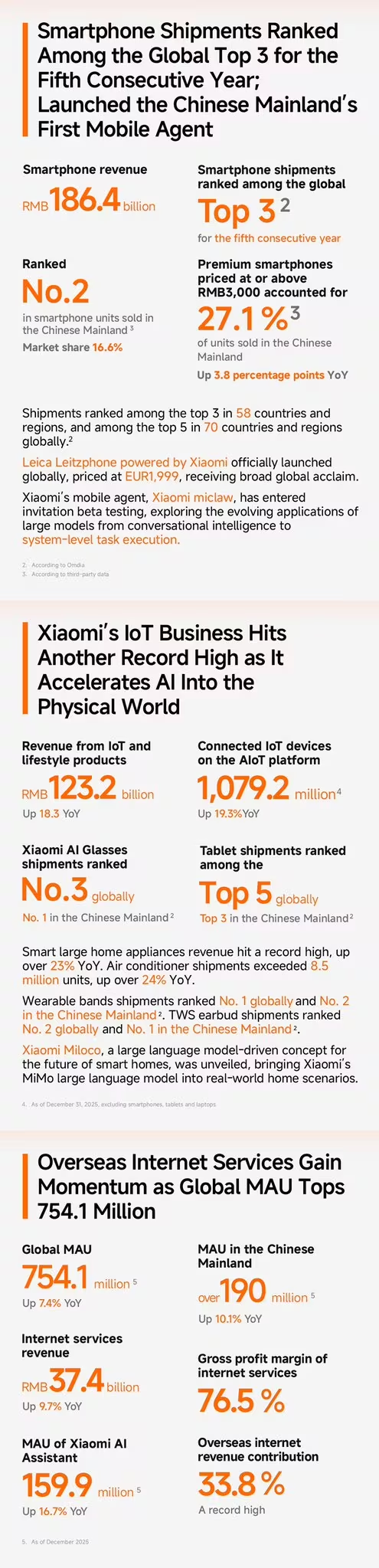
The Chinese tech giant shipped 165.2 million smartphones last year, generating 186.4 billion yuan ($27 billion) in revenue. According to Omdia, Xiaomi held a 13.3% share of the global smartphone market, securing its spot among the top three manufacturers for the fifth year running. In its home market, China, Xiaomi climbed to second place with a 16.6% share – a notable jump of seven percentage points compared to 2024.
Xiaomi’s premium smartphone sales drive revenue growth
A key driver behind this growth was Xiaomi’s push into higher-end devices. Smartphones priced above 3,000 yuan ($435) made up 27.1% of sales, marking the company’s highest share yet. Flagship models in the 4,000-6,000 yuan range ($580-$870) accounted for 17.3% of total smartphone sales.
International expansion of Xiaomi smartphones
Internationally, Xiaomi expanded its footprint across several regions. It jumped to second place in Latin America and Southeast Asia with market shares of 17.5% and 17.0%, respectively. In Europe and Africa, Xiaomi held third place with 20.3% and 12.7% shares, both showing year-over-year growth.
Growth in Xiaomi’s tablets, wearables, and wireless earbuds
Beyond smartphones, Xiaomi strengthened other product categories. Its tablets rank among the global top five and top three in China. Wearables hold first place worldwide and second in China. Wireless earbuds remain the company’s second-best-selling product globally and number one domestically.
Xiaomi’s IoT ecosystem and online services user growth and revenue
The company’s IoT ecosystem and online services also showed strong growth, surpassing 750 million monthly active users. This segment pulled in 123.2 billion yuan in revenue, up 18.3% year-over-year, with a gross margin of 23.1%.
Record shipment and revenue growth from large appliances
Large appliances like air conditioners, refrigerators, and washing machines also hit record shipment volumes, pushing revenue in that segment up 23.1%.
Xiaomi’s electric vehicle division achieves profitability and high sales
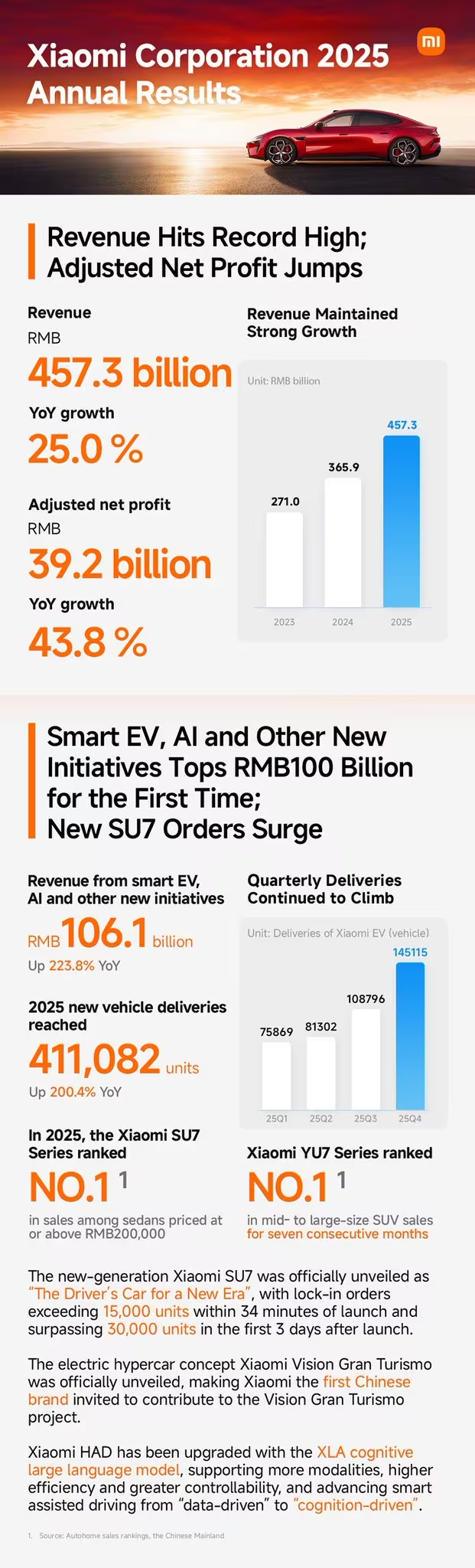
The standout performer was Xiaomi’s electric vehicle division. Revenue soared 223.8% year-over-year to 106.1 billion yuan ($15.4 billion), marking its first time surpassing 100 billion yuan. Even more importantly, the EV unit turned profitable for the first time, posting a 0.9 billion yuan ($130 million) profit.
In total, Xiaomi delivered 411,082 cars in 2025, with 145,115 sold in the last quarter alone. The Xiaomi SU7 topped China’s sedan sales above 200,000 yuan ($29,000), while the Xiaomi YU7 series dominated the mid-to-large SUV segment for seven consecutive months.
Looking ahead, Xiaomi plans to ramp up EV shipments to 550,000 vehicles in 2026, signaling a serious push into the automotive market.
Comparison with competitors in premium smartphones and EV markets
Xiaomi’s leap into premium smartphones follows a global trend where consumers are ready to pay more for better hardware and features. Compared to giants like Apple and Samsung, Xiaomi still plays catch-up in premium margins but has clearly laid the groundwork to close that gap.
The explosive growth of Xiaomi’s EV business places it in direct competition with both domestic players like NIO and BYD and international automakers expanding in China. The question now is how Xiaomi will balance accelerating car production while maintaining quality and profitability as competition intensifies.