

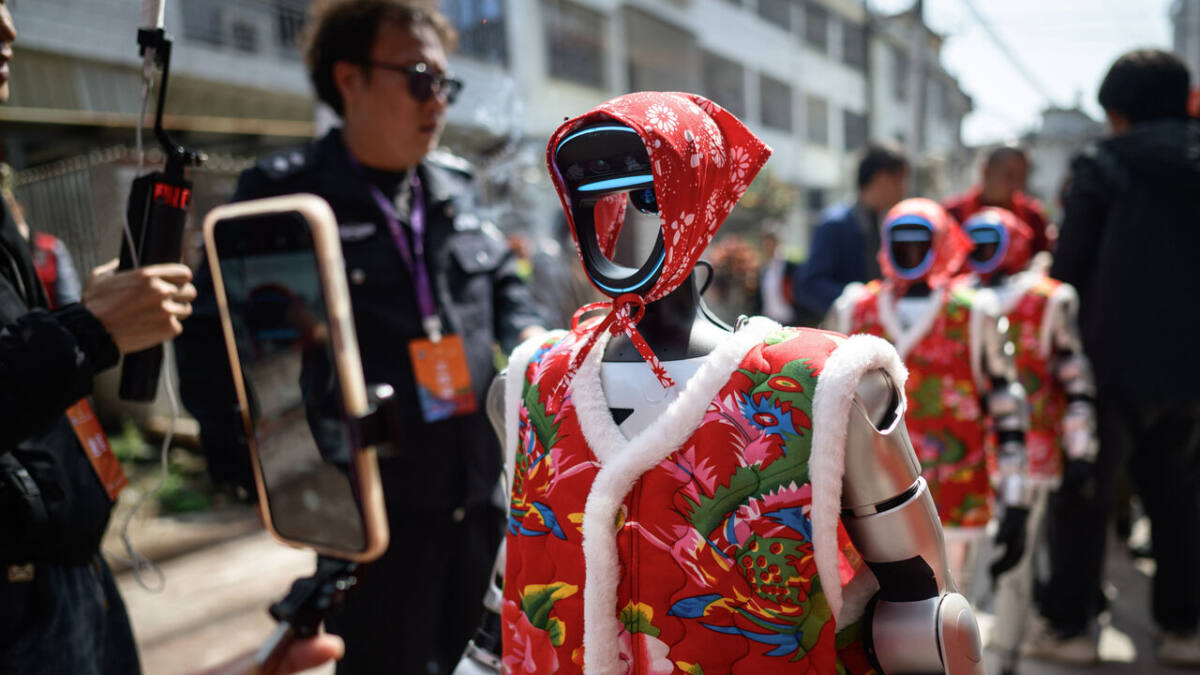
China has unveiled its 15th five-year plan, revealing an ambitious roadmap for its technological future that reads like a sci-fi blueprint. While official language focuses on ”industrial upgrading” and ”new quality productive forces,” the underlying vision includes a sky filled with delivery drones and flying taxis, factories powered by fusion and hydrogen fuel, humanoid robots as workers, quantum computers performing advanced computations, and mobile devices that connect directly to the human brain via 6G networks.
The Communist Party’s plan exemplifies a state-led tech strategy, pushing the nation toward a future where AI and clean energy drive economic growth. By targeting quantum computing and brain-machine interfaces, China is betting on technologies that could transform manufacturing and communication. This aligns with its broader ambition to shift from ”Made in China” to ”Created in China.”

While the plan’s grand ideas may remind some of Elon Musk’s boldest visions, China’s approach is heavily state-driven, aiming to avoid the challenges encountered by purely private-sector innovation. The integration of technologies such as fusion, hydrogen power, robotics, and quantum computing demands extensive infrastructure and policy support, which Beijing is prepared to provide.
This vision isn’t without hurdles. Fusion power plants remain experimental worldwide, and commercial brain-computer interfaces have yet to prove safe or effective at scale. Yet China’s coordinated push sets it apart from more fragmented global efforts. It also signals rising competition with the US and Europe, where innovation is typically more market-led.
Looking beyond 2030, if China succeeds, it could leapfrog multiple generations of technology, reshaping global supply chains and digital infrastructure. The plan hints at a future where people and machines are more tightly intertwined, raising questions about privacy, control, and ethical use-debates that will intensify as these technologies emerge.