

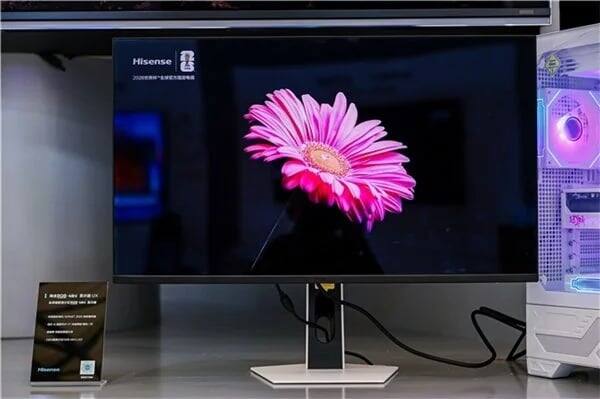
Hisense is making a bold entry into the premium gaming monitor arena with two standout mini-LED screens unveiled at AWE 2026 in China. At the forefront is the Hisense UX, which pushes mini-LED technology ahead by integrating a true RGB backlight system-unlike typical panels relying on just white or blue LEDs. This innovation lets the monitor produce precise colors directly from the red, green, and blue mini-LEDs, improving color fidelity and significantly cutting down the halo glare often seen around bright objects against dark backgrounds.
The UX display boasts 2,304 local dimming zones alongside an impressive 6,912 zones dedicated exclusively to color control, enabling meticulous brightness and hue management across the screen. Supporting this is coverage of up to 100 percent of the BT.2020 color gamut, which aligns with cinema-grade standards. Hisense has equipped the UX with its H7 AI image processing chip, handling contrast and sharpness adjustments on the fly, while an Obsidian Screen coating helps minimize reflections, ensuring a clear and immersive viewing experience.
Alongside the UX, Hisense rolled out the GX Ultra, a 5K mini-LED gaming monitor designed for gamers seeking both resolution and speed. It mirrors the UX’s 2,304 local dimming zones and Obsidian coating but stands out with a peak brightness rating of 2,000 nits and the flexibility to toggle between 5K resolution at 165Hz and a QHD mode at an ultra-fast 330Hz. This twice-as-fast refresh option is ideal for competitive gamers who value high frame rates. To support these demanding modes, the GX Ultra includes a full-bandwidth DisplayPort 2.1 port.
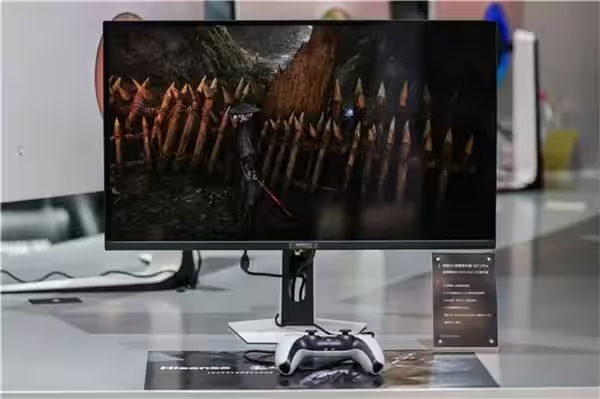
While Hisense has yet to reveal pricing or release schedules for either the UX or GX Ultra monitors, their introduction marks a serious push into a segment currently dominated by brands like ASUS, Samsung, and LG, all of whom are exploring mini-LED or OLED technology for gaming-focused displays. Hisense’s RGB mini-LED approach could offer a competitive edge through superior color accuracy and contrast management.
With advanced features like extensive local dimming zones, AI-driven image optimization, and dual-mode refresh rates at 5K and QHD resolutions, Hisense’s entry suggests the company aims to challenge entrenched players. Whether gamers will embrace this fresh contender depends heavily on pricing and availability, but the technology positions Hisense as a notable underdog stepping into a crowded, innovation-rich gaming monitor market.