

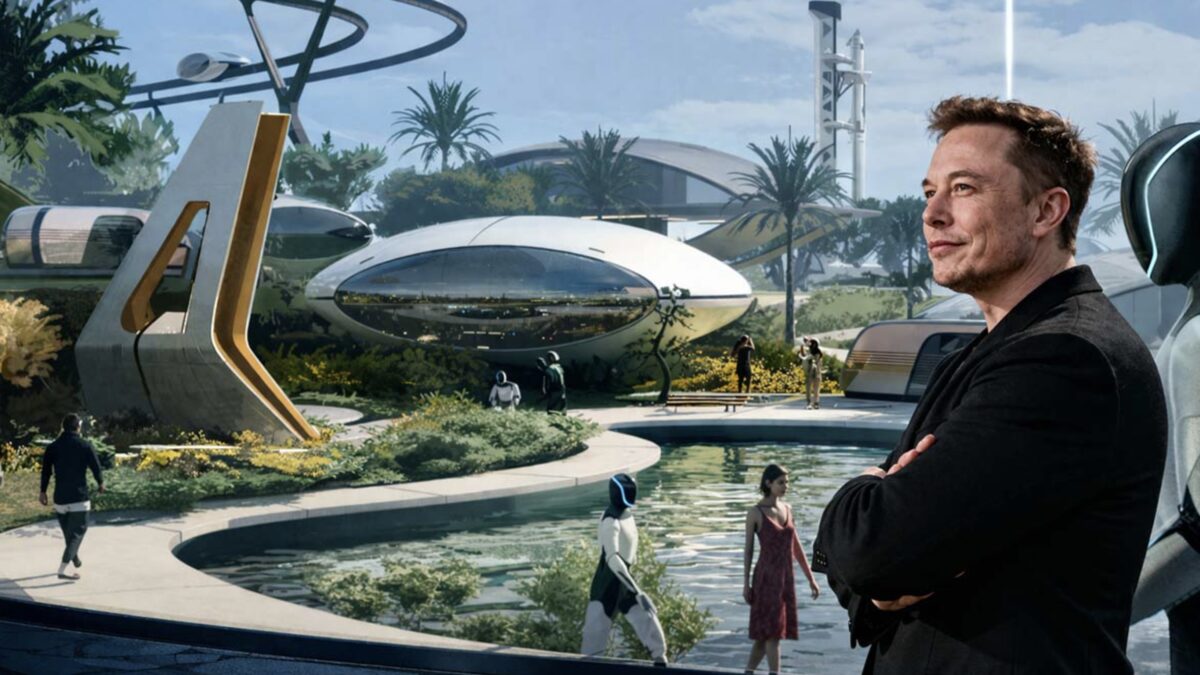
Elon Musk is setting his sights on reshaping the chip industry with plans to build two advanced semiconductor factories in Austin, Texas, under a project he calls ”Terafab.” The ambitious initiative targets producing chips tailored for Tesla’s electric vehicles and humanoid robots, as well as specialized processors designed for AI workloads and space-grade applications supporting SpaceX’s future data centers.
Musk has highlighted that global chip manufacturing currently meets only about 3% of the anticipated needs for his companies’ future AI and robotics technologies, emphasizing how existing fabs from giants like Samsung, TSMC, and Micron won’t be enough. By vertically integrating chip production through Terafab, Musk aims to sharply reduce Tesla and SpaceX’s external dependencies while scaling supply to unprecedented levels.
High-performance chips for Tesla robots and SpaceX space applications
The two factories will have distinct roles: one will focus on producing chips powering Tesla’s Optimus humanoid robots, crucial for the company’s vision of automation and AI-driven manufacturing. The other factory will develop chips tough enough to operate in space, a necessity for SpaceX’s ambitions to maintain AI-enhanced space-based data centers, a rare niche in semiconductor manufacturing.
This dual approach reflects Musk’s broader push into AI through ventures such as xAI and indicates the scale required to stay competitive in robotics and extraterrestrial computing. He estimates the combined output of these fabs could reach one terawatt of computational capacity each year-roughly double the current production capacity across the entire US chipmaking industry.
Challenges and timeline for Texas semiconductor plants
Despite the grand vision, no official timeline has been announced for Terafab’s construction or when production might start. Musk’s track record with similarly large-scale projects suggests delays remain a possibility. However, the move signals a critical shift toward self-reliance amid an increasingly tight global chip supply chain and rising strategic importance of semiconductor manufacturing for AI and space industries.
While traditional foundries have focused primarily on consumer electronics and data centers, Musk’s focus on harsh-environment chips and robot-specific processors points to a new frontier in bespoke semiconductor design. This could pressure established players to rethink offerings or risk losing ground in rapidly evolving AI-driven sectors.