
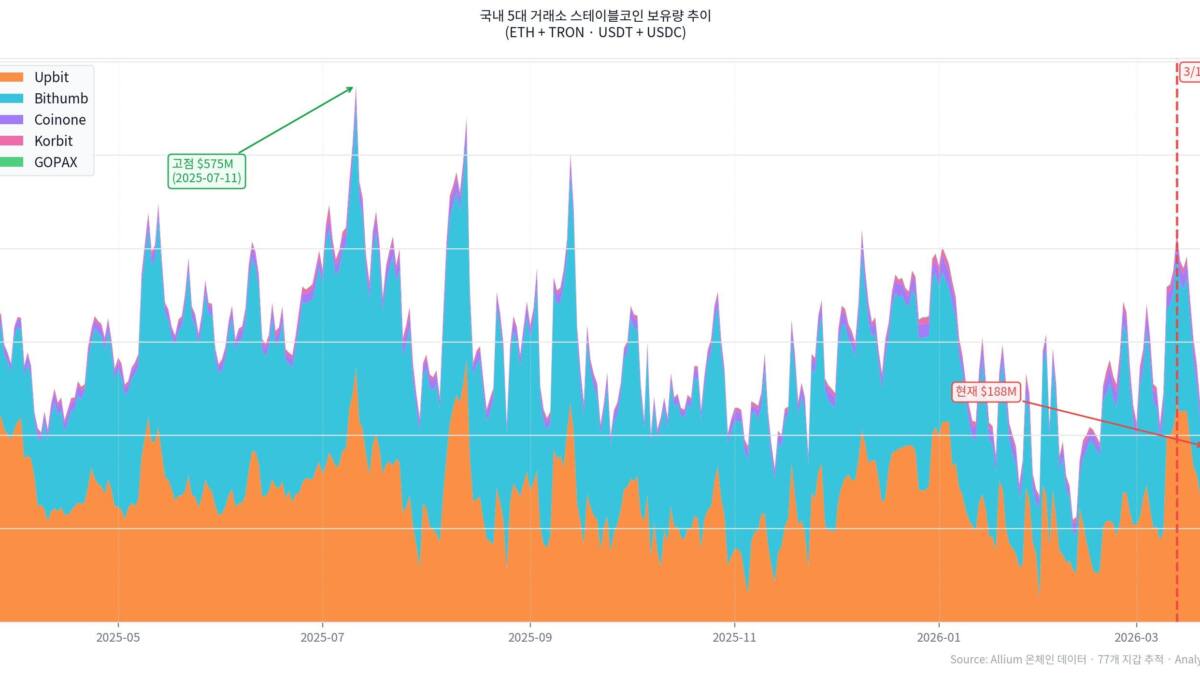
Stablecoin balances held on South Korea’s major cryptocurrency exchanges have plummeted by 55% since July 2025, reflecting a dramatic shift of capital from crypto assets into the stock market. This exodus accelerated when the Korean won weakened past 1,500 per US dollar in mid-March-a level unseen since the 2008 global financial crisis-prompting traders to offload dollar-pegged tokens and redeploy funds into domestic equities.
On-chain data tracking wallets across the country’s top five exchanges-Upbit, Bithumb, Coinone, Korbit, and GOPAX-shows stablecoin holdings dropped from about $575 million in July 2025 to roughly $188 million by mid-March 2026. This selloff correlates closely with the won’s depreciation, triggering increased conversions into Korean won and bolstering equity market inflows, as retail investors seek to capitalize on the surging local stock market.
Rather than a mere sentiment shift, this liquidity rotation appears triggered by currency movements. The won’s slide heightened the appeal of converting dollar-denominated stablecoins back into local currency to avoid foreign exchange risk, with investments then funneled into equities-particularly chipmakers riding the artificial intelligence wave. South Korea’s government has also incentivized repatriation of overseas assets through policies offering significant capital gains tax exemptions for reinvestments made domestically.
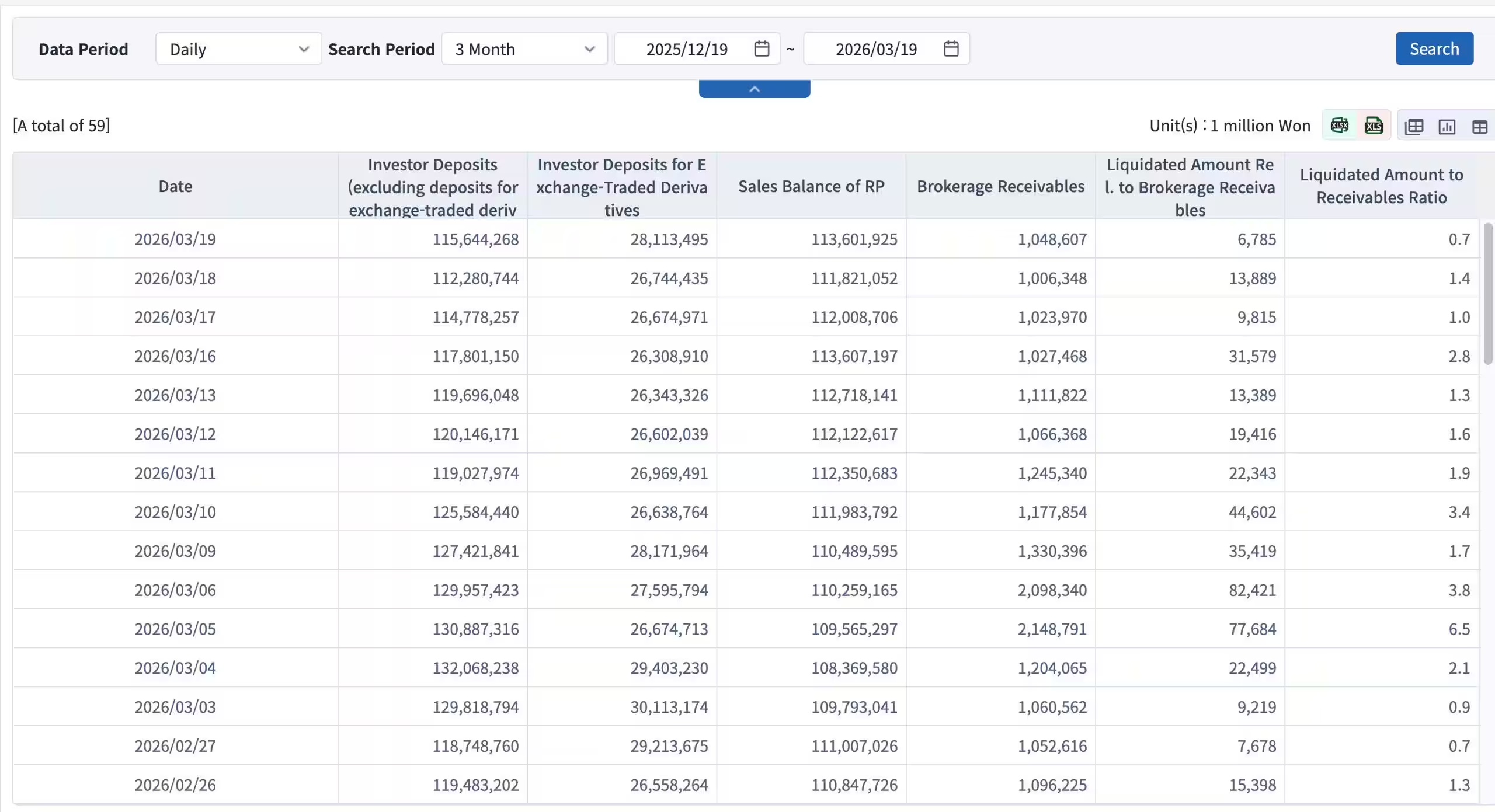
Supporting this pivot, brokerage data reveals investor deposits dropped from about ₩131 trillion (around $86 billion) in early March 2026 to roughly ₩112 trillion ($74 billion) soon after the won’s decline, aligning with the timing of stablecoin outflows. These deposits have started to stabilize, indicating new inflows replenishing buying power amid the stock market rally.
The Korea Composite Stock Price Index (KOSPI) has soared 75% in 2025 and climbed another 37% so far in 2026, making it the world’s top-performing major index. This bull run is heavily concentrated, with Samsung Electronics and SK Hynix alone accounting for half the market value and over 50% of expected earnings, drawing disproportionate attention from both retail and institutional investors.
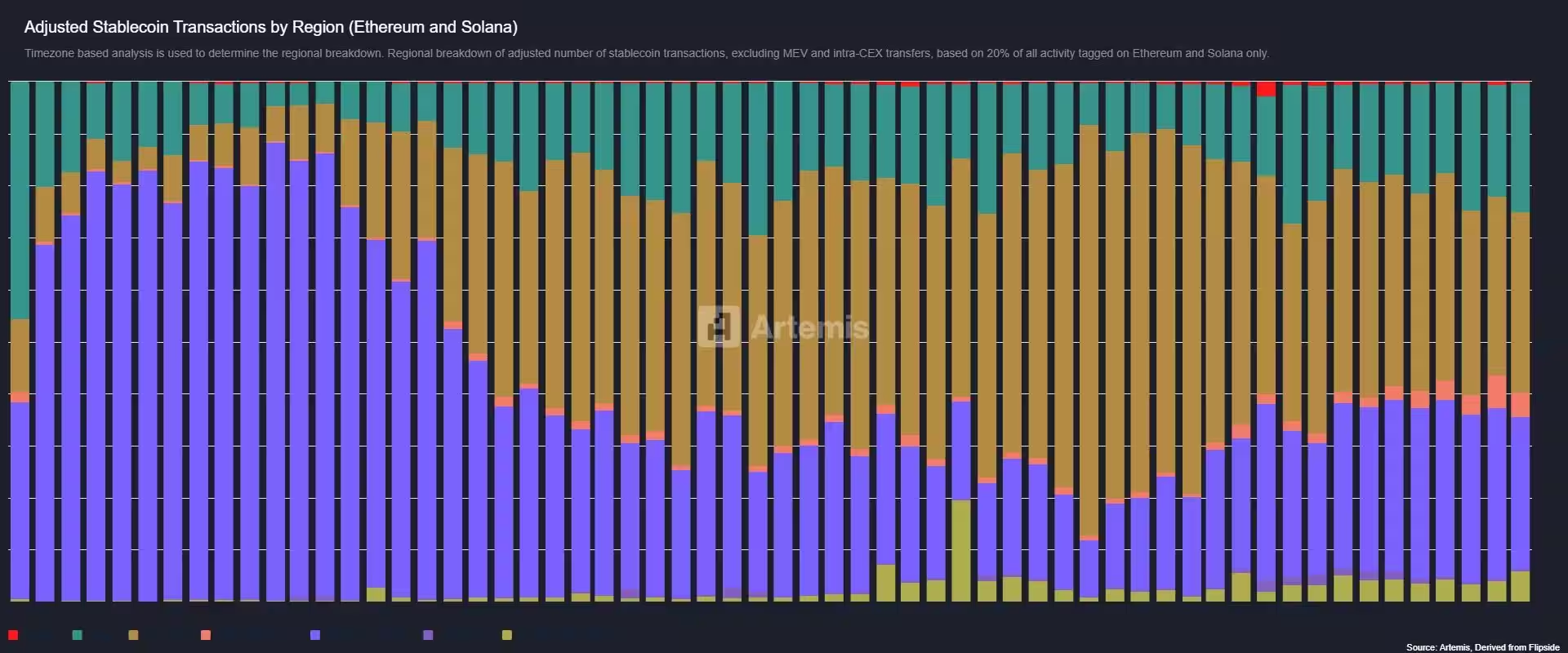
Meanwhile, regional stablecoin transaction volumes across Asia have generally increased over the past year, according to data from Artemis. This confirms that Korea’s plunge in stablecoin holdings stems from a domestic capital rotation rather than a broader retreat from crypto in the Asia-Pacific.
For cryptocurrency markets, South Korea has long been a bellwether for retail enthusiasm and liquidity cycles. The ongoing outflows signify a drying up of a once pivotal retail pool. Whether this capital finds its way back to crypto hinges on the durability of Korea’s stock surge, which is concentrated in semiconductor stocks vulnerable to geopolitical and supply chain risks-including recent oil transit disruptions in the Strait of Hormuz that threaten broader economic stability.
KOSPI’s dependence on a handful of semiconductor giants adds fragility; a sharp market correction could swiftly prompt another wave of capital rotation away from equities, potentially freeing liquidity back into crypto assets. With rising Treasury yields pressuring global markets alongside Bitcoin’s earlier plunge toward $60,000, the interplay between Korea’s currency volatility, stock market dynamics, and cryptocurrency investment flows will remain a trend to watch.