
Elon Musk has announced Terafab, a colossal joint semiconductor fabrication venture involving Tesla, SpaceX, and AI startup xAI, aiming to build a $20-$25 billion chip foundry in Texas. The facility, planned for Giga Texas’s North Campus, will produce 2nm chips split between vehicle and humanoid robot AI processing and space-grade chips for SpaceX’s ambitious orbital AI satellite constellation. This move marks Musk’s most explicit attempt to unify his diverse ventures under a single hardware infrastructure gigafab, signaling an audacious expansion far beyond Tesla’s traditional automotive focus.
Terafab’s scale is staggering: Musk targets a terawatt of annual compute output, roughly double the entire current chip production capacity of the United States and dwarfing global AI chip output by 40 to 50 times. Monthly production would hit one million wafer starts – about 70% of Taiwan Semiconductor Manufacturing Company’s (TSMC) existing global volume. Musk said that 80% of this compute power would serve space-based workloads, reinforcing SpaceX’s future satellite AI plans, a fact not revealed prior to the event.
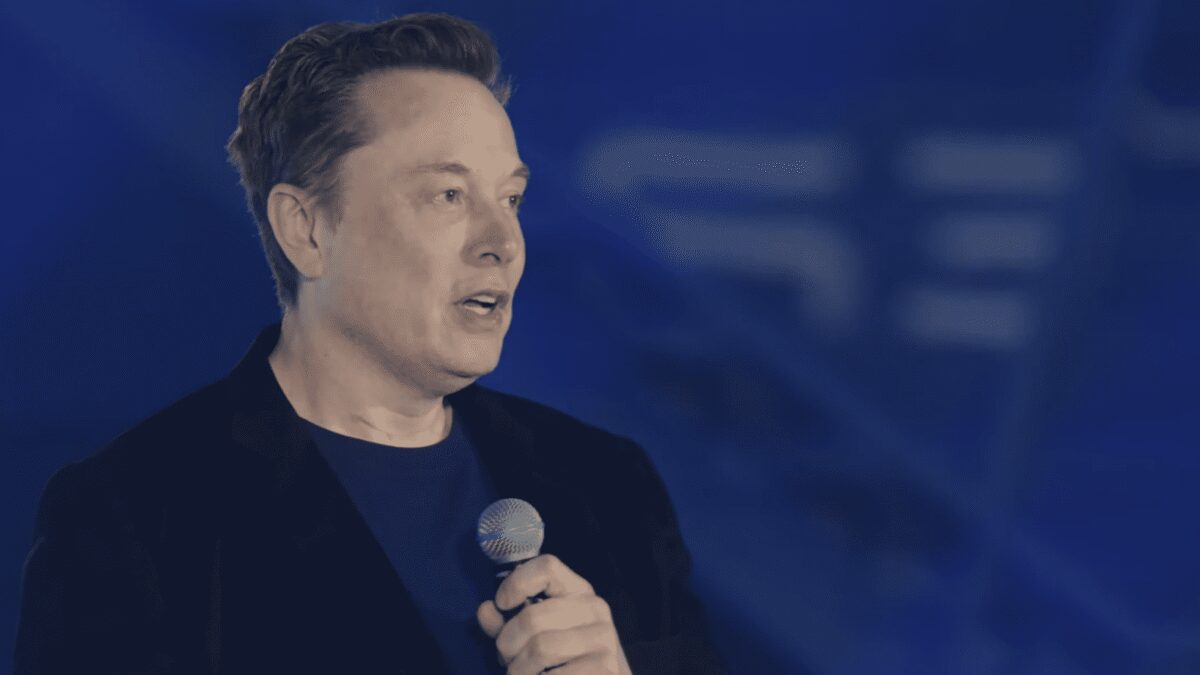
The presentation showed Musk somewhat unprepared and scattered, a departure from his typically polished showcases. Nevertheless, he positioned Terafab as essential, stating existing chip suppliers like Samsung, TSMC, and Micron are insufficient for his companies’ needs. ”We either build the Terafab or we don’t have the chips,” he asserted. The venture’s chip requirements exceed global supply capacities by a massive margin, underscoring Tesla’s urgent push for semiconductor self-reliance as industry-wide shortages linger.
Tesla’s CFO confirmed the Terafab project’s cost hasn’t yet been added to the company’s 2026 capital expenditure budget, which already tops $20 billion. Significant investment is also slated for the Optimus humanoid robot, Cybercab robotaxi project, and Macrohard, a joint xAI-Tesla initiative aligning AI models with autonomous software agents. It’s notable that Tesla, lacking any semiconductor fabrication history, has not issued a construction timeline for Terafab, suggesting this is a strategic long game rather than an immediate remedy for chip delays.
On the automotive front, chip production timelines remain sluggish. The AI5 chip, delayed to mid-2027, will still initially rely on TSMC and Samsung, while its AI6 successor, tied to Samsung’s $16.5 billion Taylor, Texas fab contract, faces delays after the Korean manufacturer’s 2nm process timeline slipped. Terafab is envisioned as the long-term solution to these bottlenecks, not a quick fix.
Musk’s pattern of grand pronouncements preceding tangible progress continues. Previous ambitious projects-including AI5 chips, Tesla’s full self-driving capabilities, and mass robotaxi deployment-have yet to fully materialize. Tesla’s robotaxi pilot remains limited to one city and exhibits a crash rate significantly above human drivers, far from Musk’s initial end-2025 promises.
The most strategic revelation is SpaceX’s formal involvement in Terafab, aligning the fab’s massive compute ambitions with a company potentially valued near $1.75 trillion in a forthcoming public offering. This association adds financial heft to the venture beyond Tesla’s shifting fortunes and intertwines chip production with Musk’s space colonization narrative. Investors and regulators will watch closely to see if this tight operational convergence materializes or if it’s primarily a financial maneuver entwining Musk’s ventures.
Musk’s call to believe in visionary leaps harkens back to early Tesla days, urging stakeholders to commit to bold futures like a galactic civilization and a moon mass driver. Yet, this is not 2015 anymore: electric vehicles have matured, while these newer undertakings carry higher risks and uncertain timelines in fields where Tesla lacks experience or full backing. Terafab’s dream-scale ambition highlights Musk’s enduring appetite for pushing boundaries-whether those horizons are technologically or financially within reach remains the key question.