

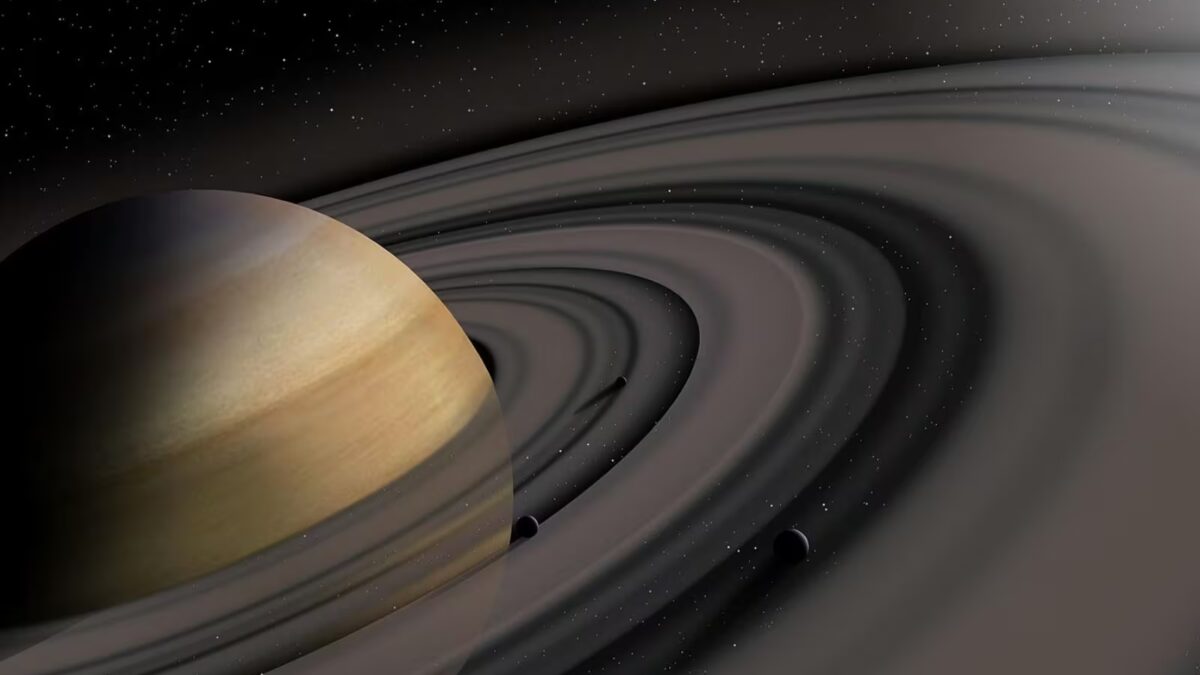
Jupiter and Saturn, the Solar System’s giants, just got even more crowded. Astronomers have identified 15 new moons-four around Jupiter and eleven around Saturn-expanding these planets’ already vast collections of satellites.
The Minor Planet Center announced the findings, revealing these newly spotted moons are tiny by planetary standards, averaging about 3 kilometers in diameter. They orbit far from their host planets and are extremely faint, with stellar magnitudes between 25 and 27, making them invisible to amateur telescopes.
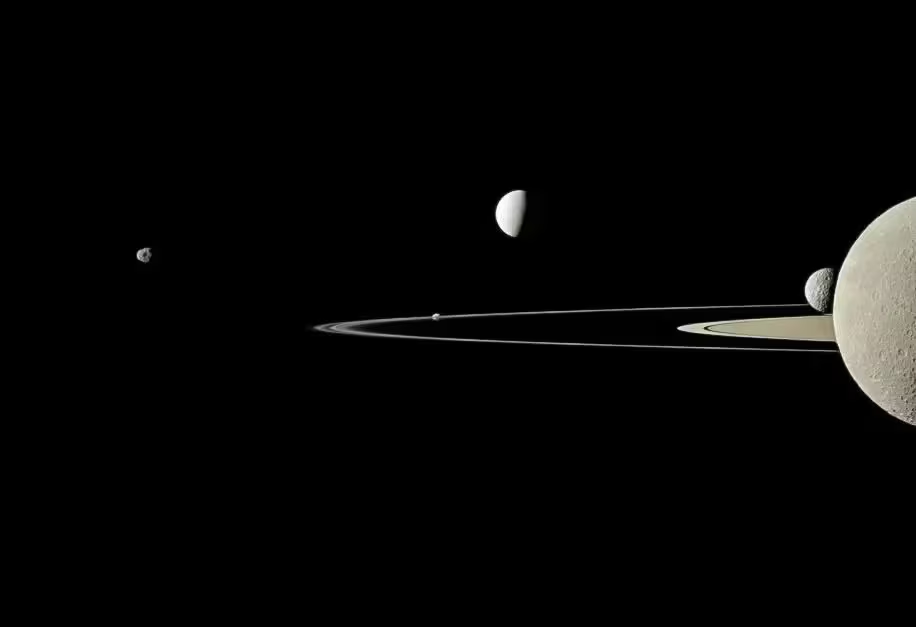
These dim, distant moons were discovered using some of the world’s most powerful telescopes: Magellan in Chile, Canada-France-Hawaii Telescope (CFHT), and Subaru in Hawaii. The discoveries were led by Scott Sheppard from the Carnegie Institution, David Tholen from the University of Hawaii, and Edward Ashton.
New moons around Jupiter and Saturn expand our understanding of gas giants
Currently, Jupiter is known to have 101 moons, while Saturn’s tally stands at 285. These counts are likely to change as new missions and observations proceed. Several spacecraft headed to Jupiter may uncover more objects in the coming years. Additionally, moons can form relatively quickly in dynamic environments where collisions between small celestial bodies generate debris that eventually coalesces under gravity and starts orbiting the planet.
How astronomers discovered the new moons using powerful telescopes
The discovery of small, faint moons around gas giants is not uncommon. NASA’s Juno mission at Jupiter and the Cassini mission at Saturn have previously helped identify numerous satellites. These new finds add to the ongoing story of planetary systems’ complexity and the processes that govern moon formation around giant planets, which differ significantly from rocky, terrestrial planets like Earth.
The future of moon discoveries around gas giants in the Solar System
With telescopes continually improving and missions en route, expect the census of these planetary systems to keep shifting. Future discoveries will shed light on how common such tiny, distant moons are and what they reveal about the chaotic environment around gas giants.