

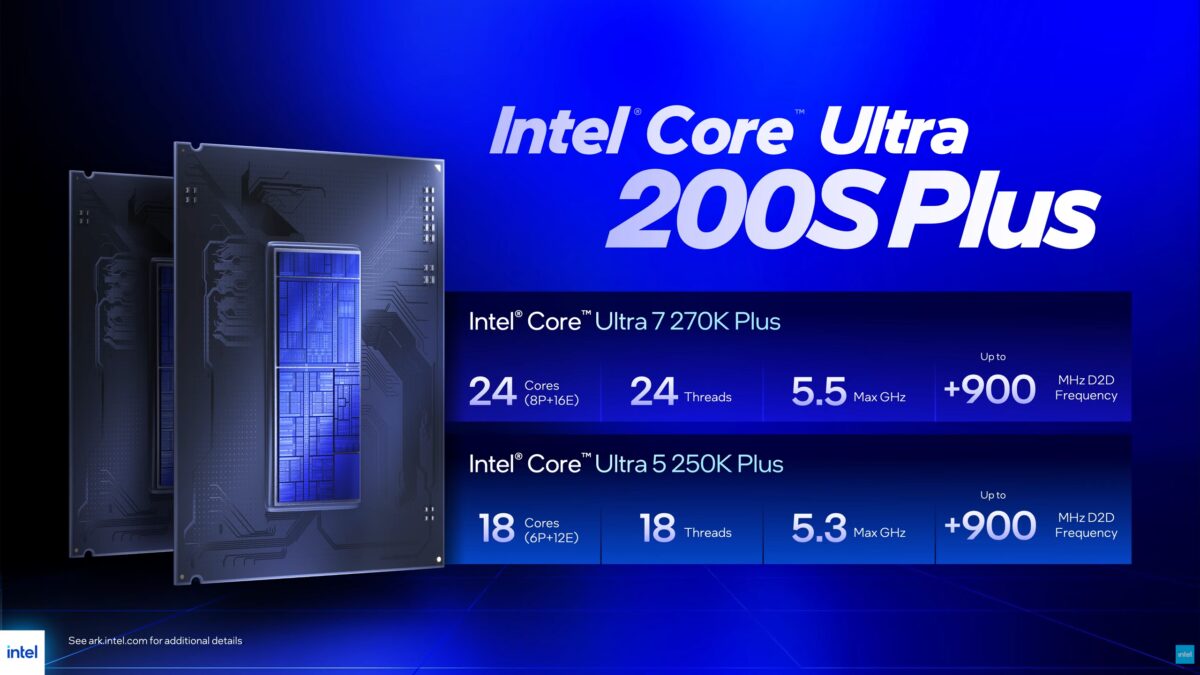
Intel has quietly revamped its Arrow Lake desktop processors, packing in more efficiency cores and slashing price points to gain ground against AMD’s Ryzen chips. This refresh, dubbed the Core Ultra 200S Plus series, introduces up to four extra E-cores on key models while dropping prices to $299 and $199, making Intel’s mid-range lineup more attractive for budget-conscious gamers and creators.
Historically, Intel’s flagship desktop CPUs have trailed AMD Ryzen’s architectural efficiency and gaming prowess, especially since Ryzen’s introduction of 3D V-cache technology. Arrow Lake’s original launch struggled with higher power draw and latency issues tied to Intel’s tile-based chiplet design, which separated CPU cores from the memory controller and led to performance bottlenecks. This architectural choice favored manufacturing but hurt gaming latency, handing AMD a distinct advantage in enthusiast circles.
The Arrow Lake 200S Plus generation tackles this head-on by boosting the inter-die communication frequency by up to 900 MHz, significantly reducing memory latency and improving power efficiency. Early Intel benchmarks highlight a 15% average gain in 1080p gaming performance, with some titles experiencing up to a 40% uplift thanks to these hardware tweaks combined with Intel’s new runtime software optimization tool, IBOT (Intel Binary Optimization Tool).
IBOT dynamically optimizes software at runtime, improving compatibility and performance regardless of original coding for Intel hardware. Whether it’s legacy games, console ports, or programs tuned for rival chips, IBOT aims to wring extra performance without requiring manual patches or updates. While details on its inner workings remain scarce, Intel’s recent software support efforts inspire cautious optimism.
In terms of core count, the refresh supercharges the Core Ultra 7 270K Plus with 24 total cores and the 250K Plus variant with 18 cores, pushing multithreaded workloads harder. This marks a strategic pivot: Intel is no longer chasing outright dominance in every metric but instead focuses on balancing core density, efficiency, and price. Starting at $199, the 250K Plus is priced aggressively to disrupt AMD’s grip on the mid-range market segment, where value is king.
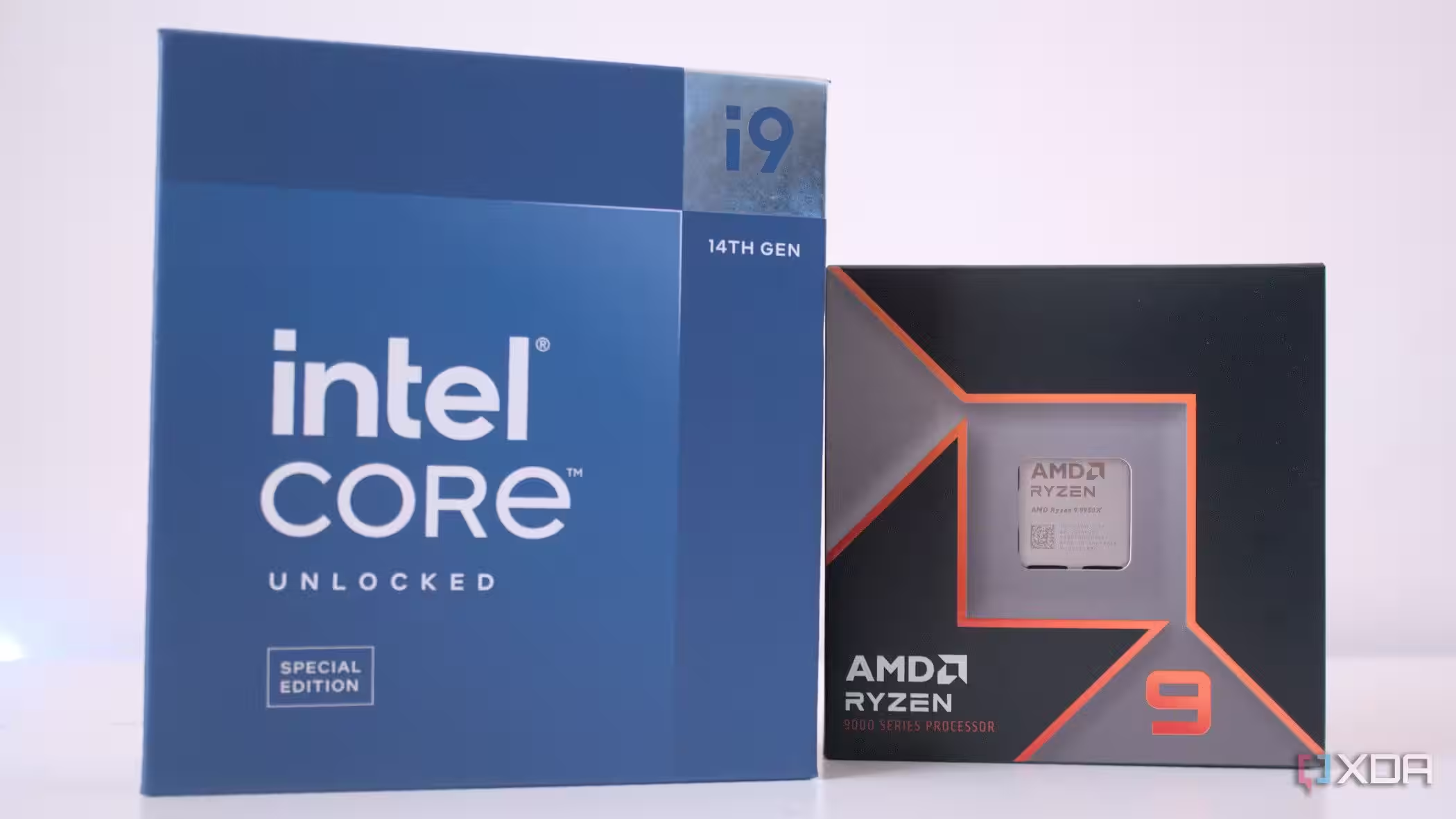
Intel’s renewed push with Arrow Lake addresses earlier criticisms and may finally offer a competitive alternative to AMD Ryzen 9000 series chips in parts of the market. That said, dethroning AMD’s 3D V-cache-enhanced gaming champions still feels unlikely with just a refresh and a software optimization overlay.
Still, those on the fence at checkout could find Intel’s new pricing and improved efficiency compelling enough to reconsider. The refresh underscores Intel’s broader strategy of combining hardware and software innovation to claw back market share from AMD, hinting that the CPU wars are far from settled as 2026 unfolds.
Intel Core Ultra 200S Plus Pricing:
- Core Ultra 7 270K Plus – 24 cores, price not explicitly stated
- Core Ultra 7 250K Plus – 18 cores, starting at $199
- Other key models priced at $299
This aggressive pricing coupled with increased core counts aims to enhance Intel’s competitiveness in the mid-range desktop CPU segment against AMD Ryzen processors.