

Intel has quietly introduced the Core i7-13645HX, a new mid-range laptop processor from its Raptor Lake family. The chip closely mirrors the specs of the Core i7-13650HX but comes with a key upgrade in integrated graphics performance.
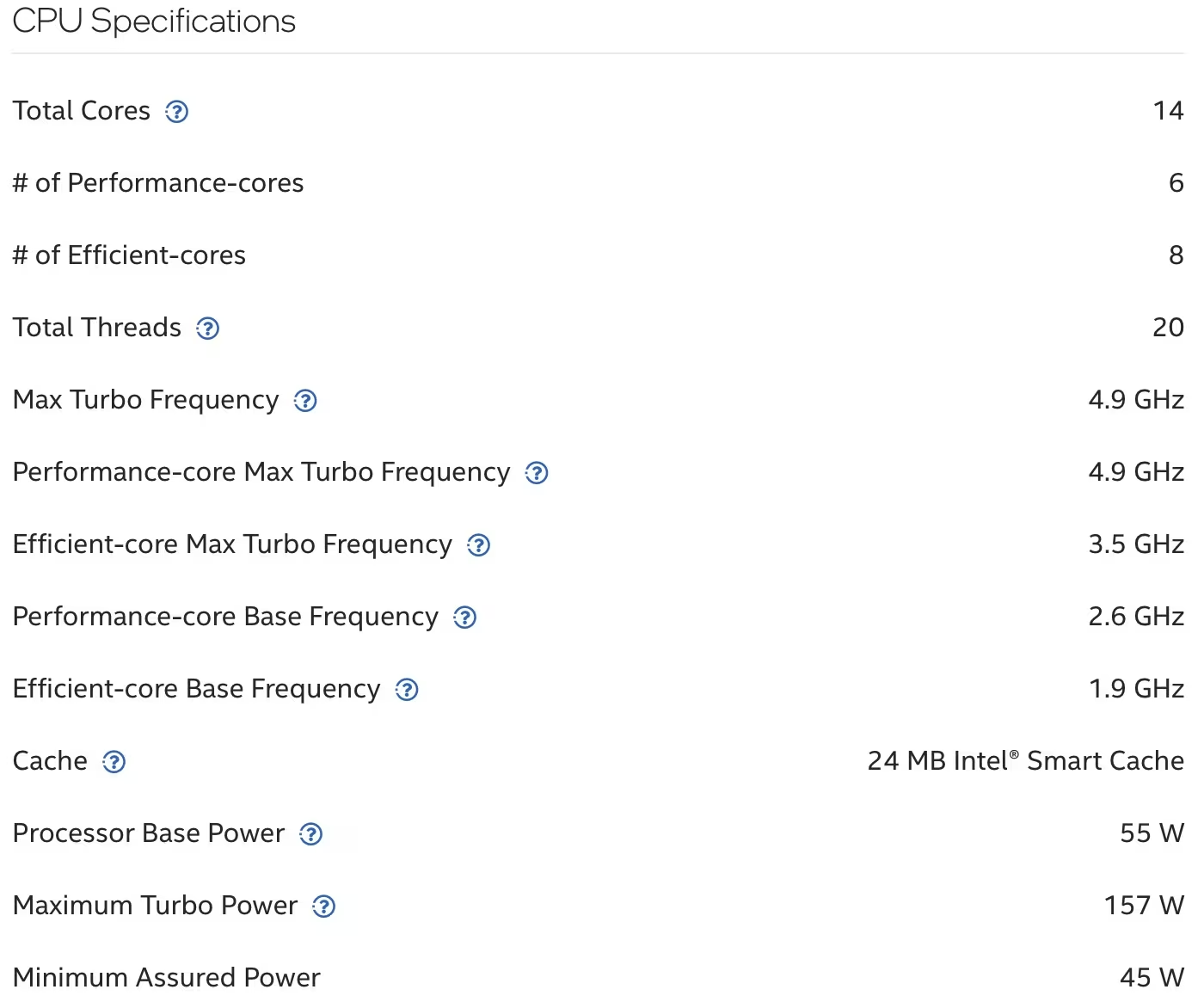
The Core i7-13645HX packs 14 cores-six performance (P) cores and eight efficiency (E) cores. Its P-cores run up to 4.9 GHz, while the E-cores are slightly dialed back to 3.5 GHz. It features 24 MB of cache and a peak power draw of 157W, closely matching its near-identical sibling, the 13650HX.
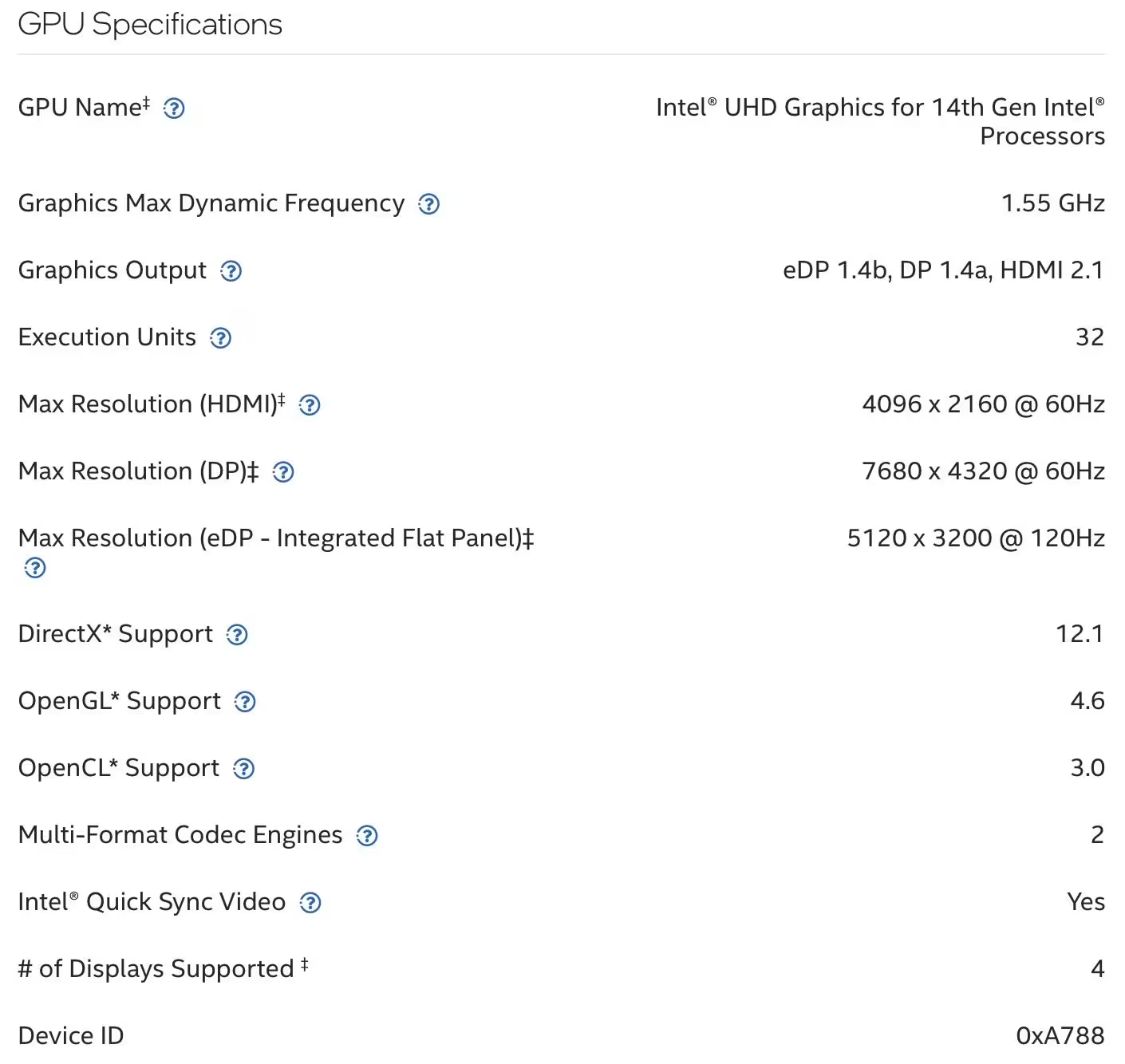
Where this new chip stands out is in its integrated GPU. Instead of the 16 execution units (EUs) found in the Core i7-13650HX’s Intel UHD graphics, the 13645HX doubles that count to 32 EUs. Despite the boost, the integrated graphics remain entry-level and are unlikely to replace a dedicated GPU for demanding tasks.
The processor also ups the maximum supported DDR5 memory speed from DDR5-4800 to DDR5-5600. This pushes memory bandwidth to 89.6 GB/s, aiding overall system responsiveness and giving the integrated graphics a noticeable lift.
Even with these upgrades, the multi-threaded performance stays largely unchanged from the Core i7-13650HX. That predecessor already packs enough punch to compete with newer chips like Intel’s Core Ultra X9 388H (Panther Lake), impressively holding its own despite being nearly three years old.
Most laptops using the 13645HX will likely still include discrete graphics cards, which diminishes the practical impact of the upgraded integrated GPU for many users. Still, the refreshed graphics and faster memory support could appeal to budget-conscious buyers who rely more on integrated power or want better efficiency without stepping up to expensive discrete GPUs.
Intel’s release of the Core i7-13645HX reflects a subtle but steady push to refine their mid-range laptop processors with targeted tweaks rather than major overhauls. As rivals like AMD and Apple continue to enhance integrated graphics performance, Intel’s doubling of execution units signals the beginning of a more competitive integrated GPU battle in mainstream laptops. The key question remains how these improvements will stack up against upcoming hybrid architectures and dedicated graphics solutions in the increasingly crowded mobile CPU space.