


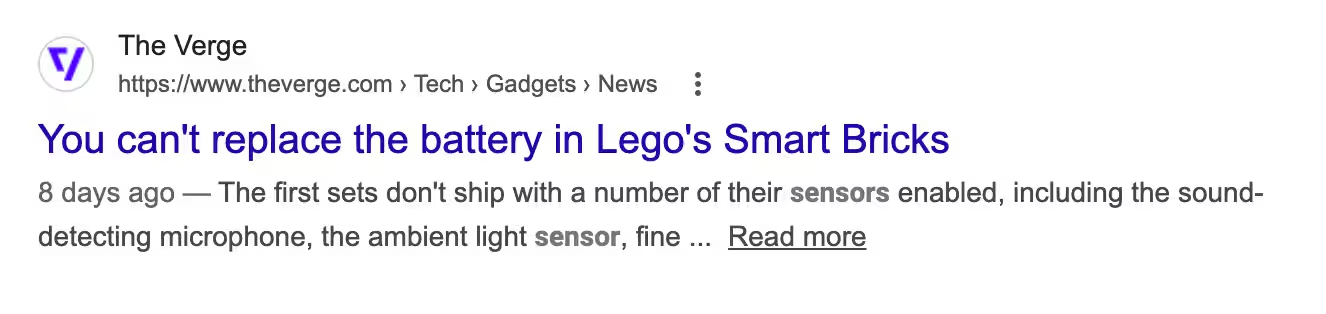
Google Search, long known for its reliable presentation of webpage titles, has quietly begun an experiment replacing news headlines with AI-crafted versions. This change affects the classic ”10 blue links” search results, traditionally trusted to display accurate, publisher-written titles. Several news outlets, including The Verge, have noticed their carefully crafted headlines replaced with AI-generated ones that sometimes distort the story’s true intent.
For example, a detailed Verge headline explaining the limits of a cheating AI tool was truncated by Google’s AI to a vague endorsement-sounding phrase: ”’Cheat on everything’ AI tool.” Such substitutions raise concerns about editorial control, as publishers invest significant effort into writing headlines that inform and engage readers without sensationalism or clickbait. Google’s spokespeople framed the activity as a narrow test and denied plans to deploy generative AI at scale for headline rewriting, though the distinction remains unclear.
The company claims this experiment aims to match titles more closely to user queries and boost engagement, extending beyond news to all web content. Yet, replacing original titles without any disclosure diminishes trust in journalism at a time when media credibility is under fierce scrutiny. Google’s ongoing headline tweaks have historically only involved trimming overly long titles, not rewriting their substance.
Two familiar examples illustrate previous changes: long headlines shortened for clarity, or Google choosing on-page titles over specialized ”search headlines” optimized by publishers. But the new AI-generated headlines crafted from scratch mark a significant departure. Cases like ”Copilot Changes: Marketing Teams at it Again” reveal how Google’s AI can invent stylistic choices and phrasing foreign to the original authors.

This shift reflects Google’s broader embrace of AI assistance in search interfaces, similar to its previous rollout of AI summaries in Google Discover feeds. In those contexts, Google also merged human-written content with generative outputs, sometimes leading to misinformation or misinterpretations. While the current recoloring of headlines remains limited in scope, history suggests Google may expand such AI interventions once it deems user feedback positive.
Critics argue this undermines editorial rights and the accuracy of search results, especially as Vox Media, The Verge’s parent company, is already entangled in legal actions against Google’s ad technology practices. Google’s opaque experiment exemplifies the rising tension between algorithmic automation and human journalistic standards, raising the question: Will readers continue to trust search as a gateway to authentic news?

As Google continues fine-tuning its AI search models like Gemini, this headline experiment represents a critical juncture. It potentially erodes the clear link between publishers’ intent and what users see at the forefront of search. The appeal of AI-generated clarity and relevance must be weighed against preserving editorial integrity-a challenge that will define the next phase of online information discovery.