

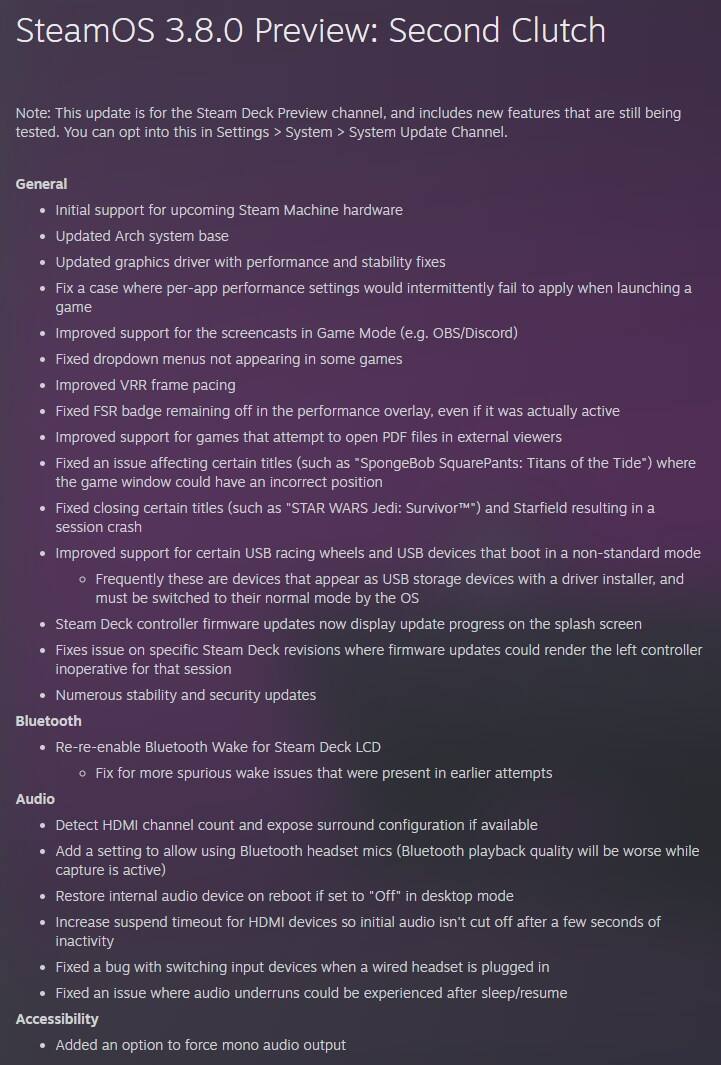
Valve has rolled out SteamOS 3.8.0 as a preview update, delivering significant improvements beyond just bug fixes. This release is the first to officially support the upcoming Steam Machine, Valve’s return to living room gaming PCs. It also expands compatibility to a variety of handheld gaming devices, including Microsoft and Asus’ Xbox Ally, Lenovo Legion Go 2, OneXPlayer X1, and others from MSI, GPD, Anbernic, OrangePi, and Zotac.
One of the standout features is the addition of genuine hibernation and ”memory power down” modes for the Steam Deck LCD model. This addresses a longstanding battery life gripe: while many Windows laptops can hibernate to extend standby duration, Steam Deck’s earlier instant-on sleep mode drained more power during idle periods. These new modes should help the Steam Deck compete better in battery conservation during inactivity.
Another long-requested upgrade is the integration of Bluetooth headset microphone support directly in SteamOS’s gaming mode. Previously, this functionality existed only in Linux desktop mode. Plus, Bluetooth Wake functionality returns for the Steam Deck LCD, allowing users to power up their TV-connected Deck via wireless controllers from the couch-a convenience for living room setups.
New Steam Machine support and expanded device compatibility in SteamOS 3.8
Beyond handheld-specific tweaks, SteamOS 3.8 enhances the desktop experience, especially for Steam Machines. Improvements include desktop HDR and variable refresh rate (VRR) display support, refined per-display scaling, and better game window management through Proton, Valve’s compatibility layer for Windows games. KDE Plasma receives an upgrade to version 6.4.3, polishing the user interface further. The system now detects audio channel configurations over HDMI more accurately to optimize surround sound output-an improvement over existing support.
System stability and device management improvements
The update also introduces an updated Arch Linux base and refreshed graphics drivers, boosting overall system stability and compatibility. For non-Valve devices, the