

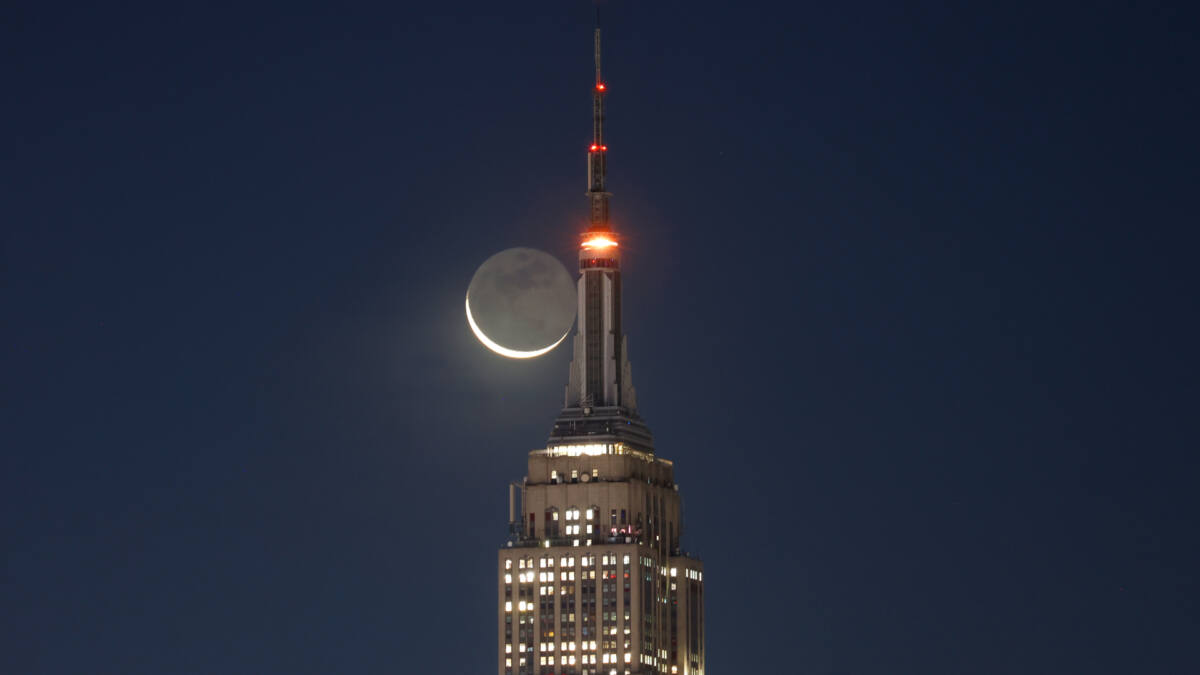
If you glance westward just after sunset this week, chance favors a stunning sight: a razor-thin crescent moon, its darkened half softly illuminated by earthshine. This ethereal glow results from sunlight bouncing off Earth and faintly lighting the unlit section of the lunar surface, revealing features hidden in the usual glare. Earthshine lighting is most visible during the days following the new moon phase.
The new moon arrived at 9:23 p.m. EDT on March 18, positioning the moon between Earth and the sun and creating perfect conditions for earthshine to appear. From March 19 onward, the barely lit crescent will sit low near the western horizon, with the dim glow highlighting ancient lunar seas, or mare, on the shadowed disk. The moon will be just below Venus, easily spotted roughly a fist-width above the horizon at arm’s length.
When and where to see earthshine on the moon
The best viewing window is right after sunset on March 19, though it requires a clear westward view and a bit of luck with the weather. Earthshine is sometimes referred to as the Da Vinci glow or romantically as the old moon in the new moon’s arms, a poetic nod to the delicate illumination of the moon’s dark face.
By March 20, the moon shifts higher in the southern sky above Venus, making the soft-lit details easier to spot. The crescent will be about 2% illuminated-ideal for seeing the lunar maria, large dark basaltic plains formed by ancient volcanic eruptions. These features are usually hidden in swaths of reflected sunlight but stand out under earthshine’s gentle light.
Using a telescope to observe earthshine details
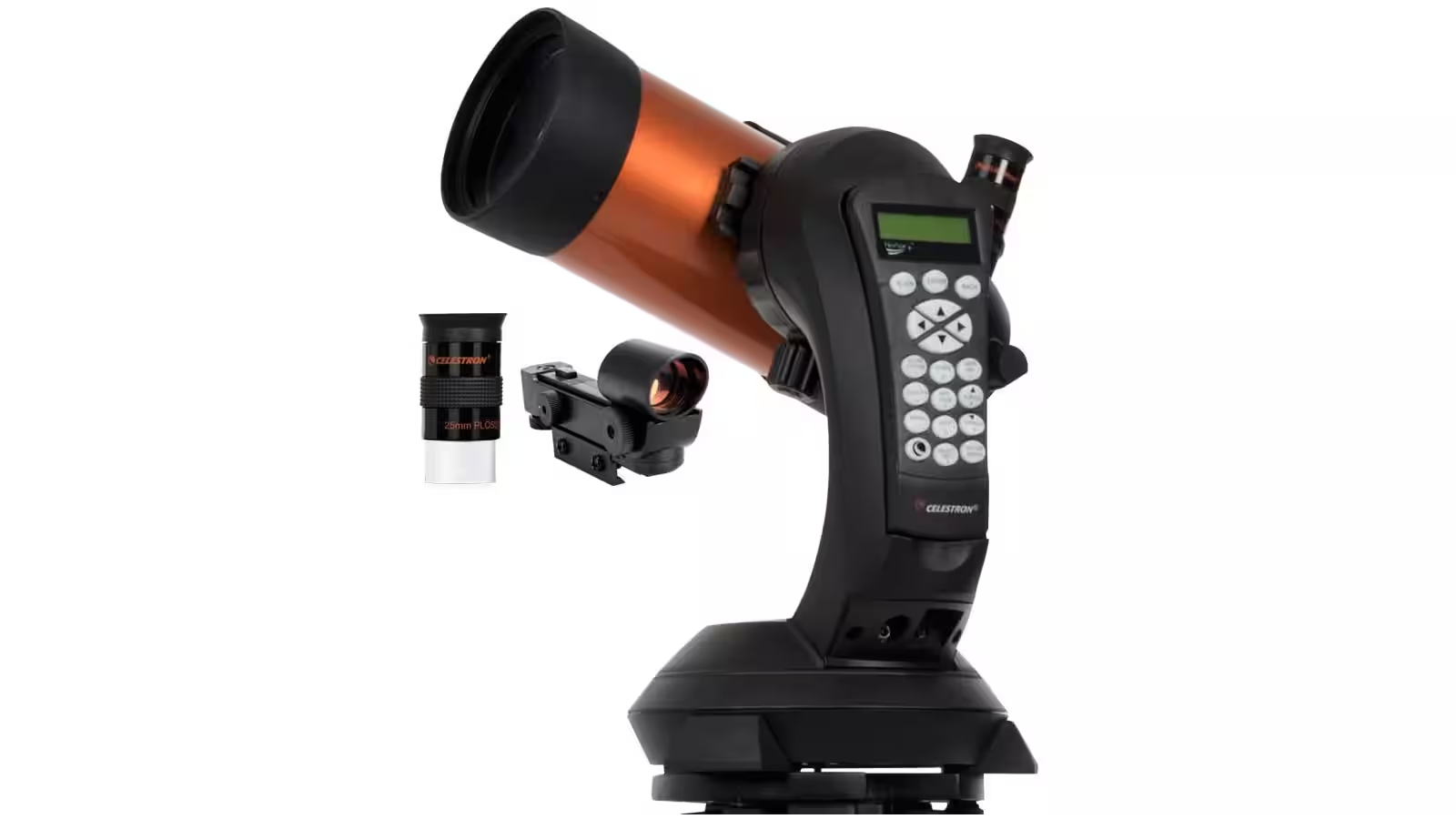
For those eager to enhance their experience, a beginner-friendly telescope like the Celestron NexStar 4SE can reveal more lunar detail and bring your moonwatching to the next level. It’s reliable, easy to use, and well-suited for fast setup to catch fleeting celestial sights like earthshine.
Astrophotography tips for capturing earthshine
If you want to capture this rare glow, consider astrophotography techniques with appropriate lenses and camera gear designed to handle low-light lunar conditions. Images of earthshine have a haunting beauty, showcasing the moon’s subtle features that often go unnoticed.
So, this week, when you see the crescent moon dim and delicate at twilight, remember it’s not just the sun lighting the lunar face-Earth itself is lending a subtle glow, revealing the hidden details of our satellite’s timeworn face.