

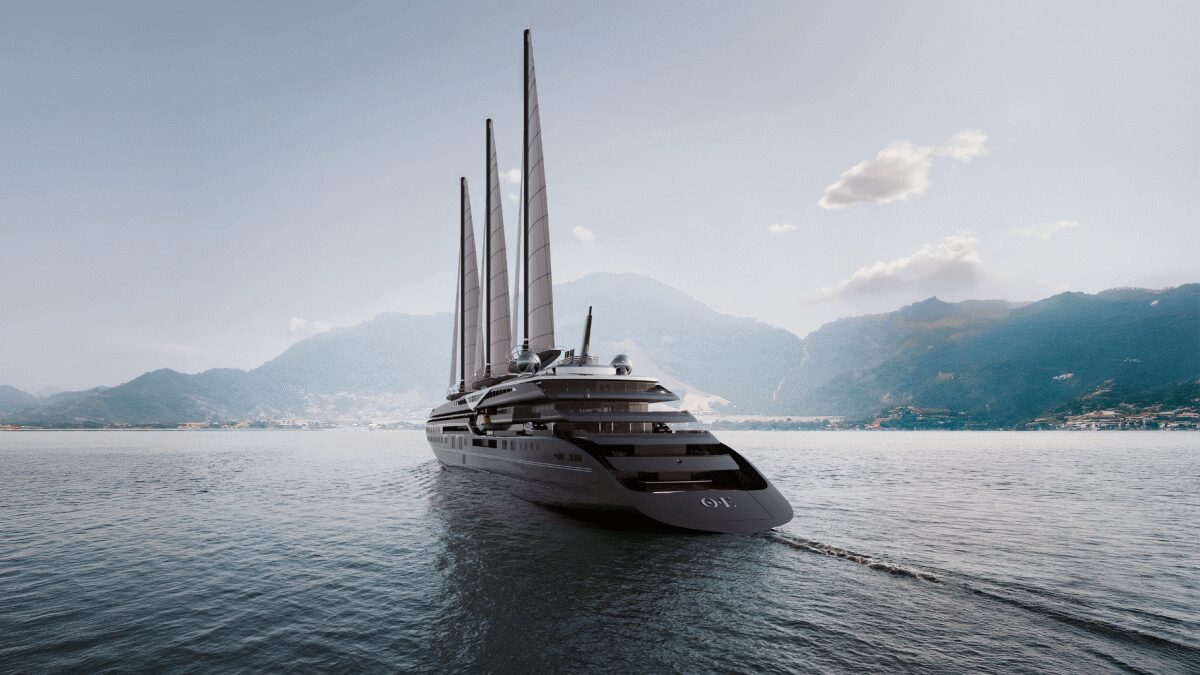
The Orient Express Corinthian, the world’s largest sailing liner, has shattered speed expectations during sea trials, reaching 22 km/h with a 37 km/h tailwind. This achievement is remarkable for a 219-meter vessel with a displacement of 25,000 tons that primarily relies on sails for propulsion. While it features an auxiliary engine for maneuvering and calm conditions, its defining innovation is the Solid Sail system, which took 17 years to develop and perfect.
The ship’s three carbon-fiber masts stand nearly 70 meters tall and each supports 1,500 square meters of sail area. The masts can rotate a full 360 degrees and tilt up to 70 degrees, enabling optimal wind capture and clearance under bridges by adjusting the rig’s height as needed. This flexibility underlines the engineering prowess behind the Solid Sail technology, marking a new era of large sailing vessel design.

Orient Express Corinthian passenger and speed specifications
The Orient Express Corinthian combines luxury travel with sustainable propulsion. It accommodates 110 guests across 54 cabins with a top calculated speed of 32 km/h relying solely on wind power.
- Length: 219 meters
- Displacement: 25,000 tons
- Guest capacity: 110
- Cabins: 54
- Top wind-powered speed: 32 km/h
The liner’s success has triggered the production of a successor, the Orient Express Olympian, currently under construction and slated for launch in 2027 at the Saint-Nazaire shipyard.
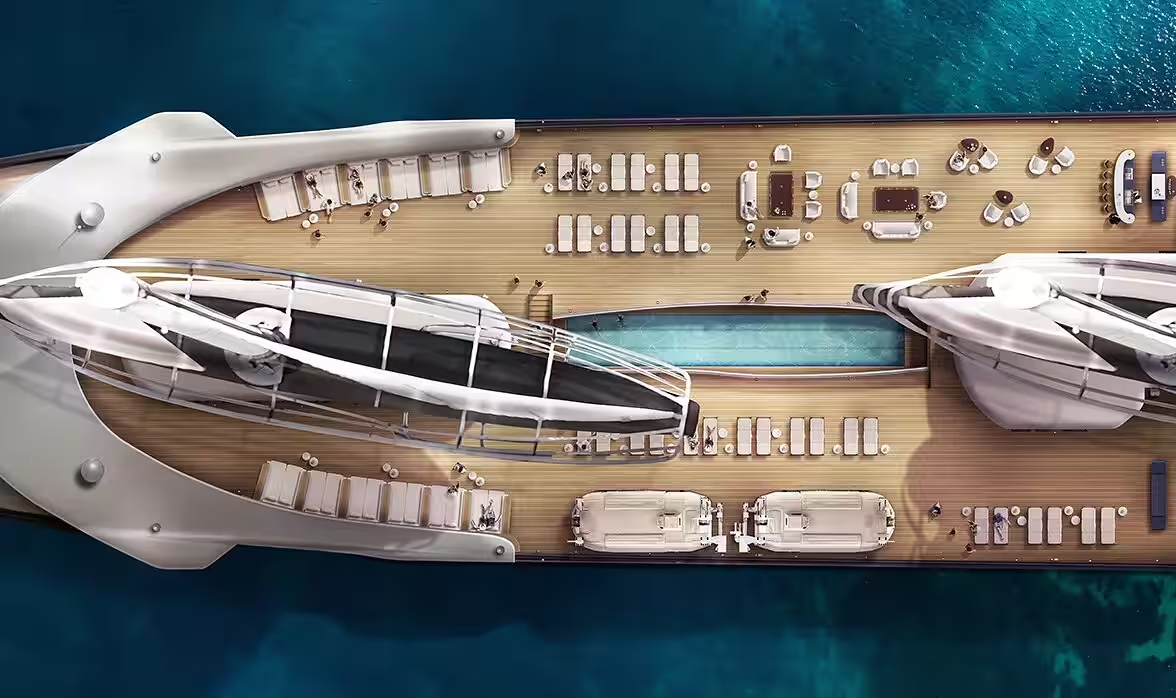
Solid Sail technology powering new era of sailing liners
The Solid Sail system, developed over 17 years, combines advanced materials and adaptive rigging that allow the masts to rotate and tilt for maximum wind efficiency and clearance.
This innovation signals growing interest in clean maritime technology, especially for large passenger vessels-a traditionally challenging category for sailing. The Orient Express Corinthian’s successful integration of solid sails may inspire more shipbuilders to reconsider wind as a viable propulsion alternative amid rising fuel costs and carbon regulations.