

NVIDIA is rapidly expanding the reach of its autonomous driving platform, DRIVE Hyperion, as more global automakers commit to using its technology for Level 4 self-driving vehicles. Industry heavyweights BYD, Geely, Nissan, and Isuzu are integrating the platform into their next-generation autonomous programs, signaling a shift from experimental projects toward large-scale deployment. This coordinated adoption marks a significant step in standardizing the complex ecosystem required for safe and scalable driverless cars.
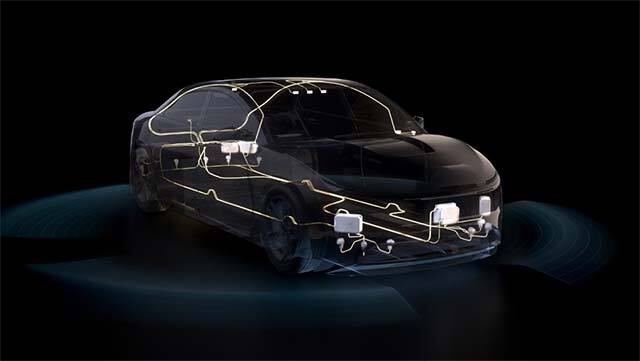
At the heart of NVIDIA’s momentum is the DRIVE Hyperion platform, a unified reference architecture that combines powerful computing hardware, advanced sensors, and networking capabilities with rigorous safety protocols into a single system. Powered by the Halos OS safety framework, this design helps automakers reduce development hurdles, speed up vehicle validation, and build learning-enabled fleets worldwide. DRIVE Hyperion also incorporates Alpamayo, NVIDIA’s open reasoning AI models, which enable vehicles to interpret complex environments and navigate challenging traffic scenarios-core features for Level 4 autonomy that do not require human intervention under most conditions.
Automakers integrating NVIDIA DRIVE Hyperion for production-grade Level 4 vehicles
Automakers committed to the platform are pushing forward with production-grade autonomous vehicles. BYD and Geely are pioneering their own models based on NVIDIA’s architecture, while Nissan will integrate DRIVE Hyperion alongside advanced AI software from Wayve, specializing in intricate urban driving tasks. Isuzu, focusing on autonomous buses, is collaborating with TIER IV using the DRIVE AGX Thor system-on-a-chip, tailored to high-performance compute demands specific to commercial autonomous transit.
Uber and other mobility providers adopting DRIVE Hyperion for robotaxi fleets
Beyond vehicle manufacturers, ride-hailing giant Uber is partnering with NVIDIA to create one of the largest robotaxi fleets powered by the DRIVE Hyperion system. The service rollout is planned for 28 cities globally by 2028, starting with Los Angeles and San Francisco in early 2027. This initiative leverages the full NVIDIA DRIVE AV software stack and Alpamayo AI, combined with Halos OS, to deliver robust safety and operational efficiency. Other mobility players like Bolt, Grab, and Lyft are also exploring the platform to accelerate their autonomous ride-hailing ambitions.
Safety architecture and industry coalition supporting NVIDIA DRIVE Hyperion
Safety remains a cornerstone of NVIDIA’s autonomous vehicle ecosystem. The Halos OS builds on ASIL-D-certified DriveOS foundations, incorporating a three-layer safety approach with middleware, deployable safety applications, and a five-star NCAP active safety stack. Complementing this, a coalition including AEye, Flex, Lucid Motors, and others participates in the NVIDIA Halos AI Systems Inspection Lab, ensuring sensor data, AI reasoning, and software stacks meet stringent automotive-grade safety standards.
Future of autonomous mobility with NVIDIA DRIVE Hyperion
With an increasing number of automakers, transit providers, and robotaxi services converging on a shared, scalable platform, NVIDIA is positioning DRIVE Hyperion as a pivotal technology in the future of autonomous mobility. As more Level 4 autonomous vehicles transition from prototypes to commercial service, integrated AI, computing power, and safety architecture will be essential to meet global demands for reliable and safe driverless transportation.