


Nvidia’s upcoming DGX Rubin NVL8 AI servers depend heavily on Intel’s new Xeon 6 host CPUs to manage the complex coordination of AI workloads across their GPUs. While Nvidia is known for powering AI computation with its GPUs, it’s Intel’s Xeon 6 CPUs that act as the essential ”mission control,” orchestrating hardware, managing memory, and maintaining security and throughput within these powerful AI machines.
At Nvidia’s GTC 2026 event, Intel highlighted how its Xeon 6 processors are integral to Nvidia’s AI infrastructure by taking the helm within the Rubin NVL8 servers. These CPUs aren’t just secondary; they are indispensable managers ensuring Nvidia’s GPUs work together in harmony. Jeff McVeigh from Intel emphasized that this host CPU role is mission-critical-governing orchestration, efficiently handling memory access, protecting model security, and maintaining throughput across GPU-accelerated environments.
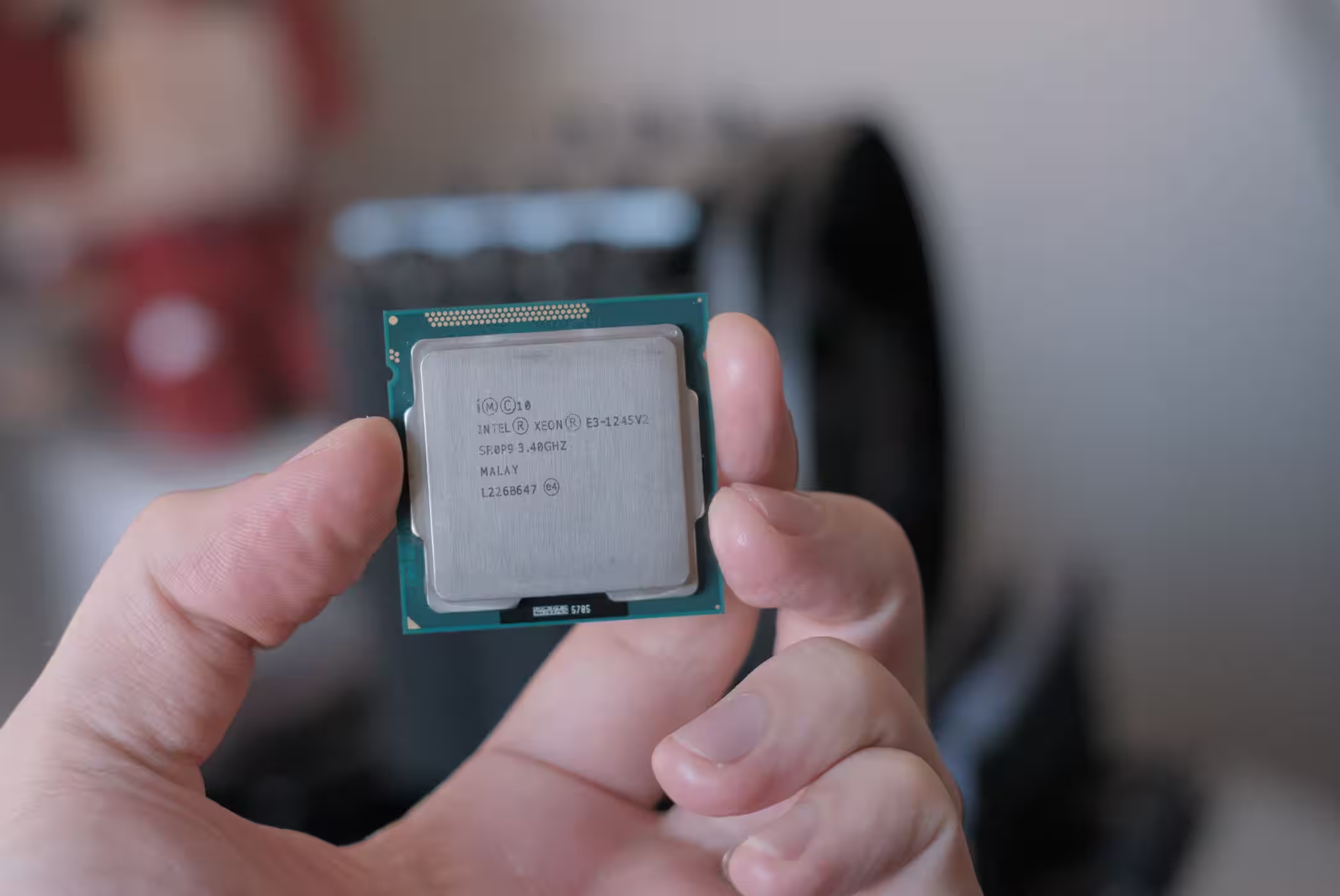
This partnership highlights the evolving roles in AI hardware: GPUs perform data-intensive computations, but CPUs keep the workflow coordinated, balanced, and secure-a clear example of why CPUs remain essential in AI systems. Intel’s extensive x86 software ecosystem compatibility helps enterprises scale AI inference workloads efficiently, reduce latency, and maintain smooth operation at scale.
While Nvidia popularized GPU-driven AI acceleration, Intel’s role in these AI servers demonstrates that no single component operates alone. CPUs like the Xeon 6 provide critical infrastructure coordination, ensuring Nvidia’s GPUs deliver AI performance without bottlenecks or coordination issues.
If you’re attending Nvidia GTC 2026, Intel is showcasing the Xeon 6 chips at booth #3100. Expect updates on how Intel plans to solidify its role in AI server ecosystems amid competition from other chipmakers targeting the AI revolution.