


While real influencers scramble for advertising budgets, navigate content rules, and deal with drama, their virtual rivals are clocking in 24/7 without eating, sleeping, or missing deadlines. These digital beauties don’t physically exist – yet they’re earning millions.
Lil Miquela: The trailblazing virtual influencer with $10 million in revenue
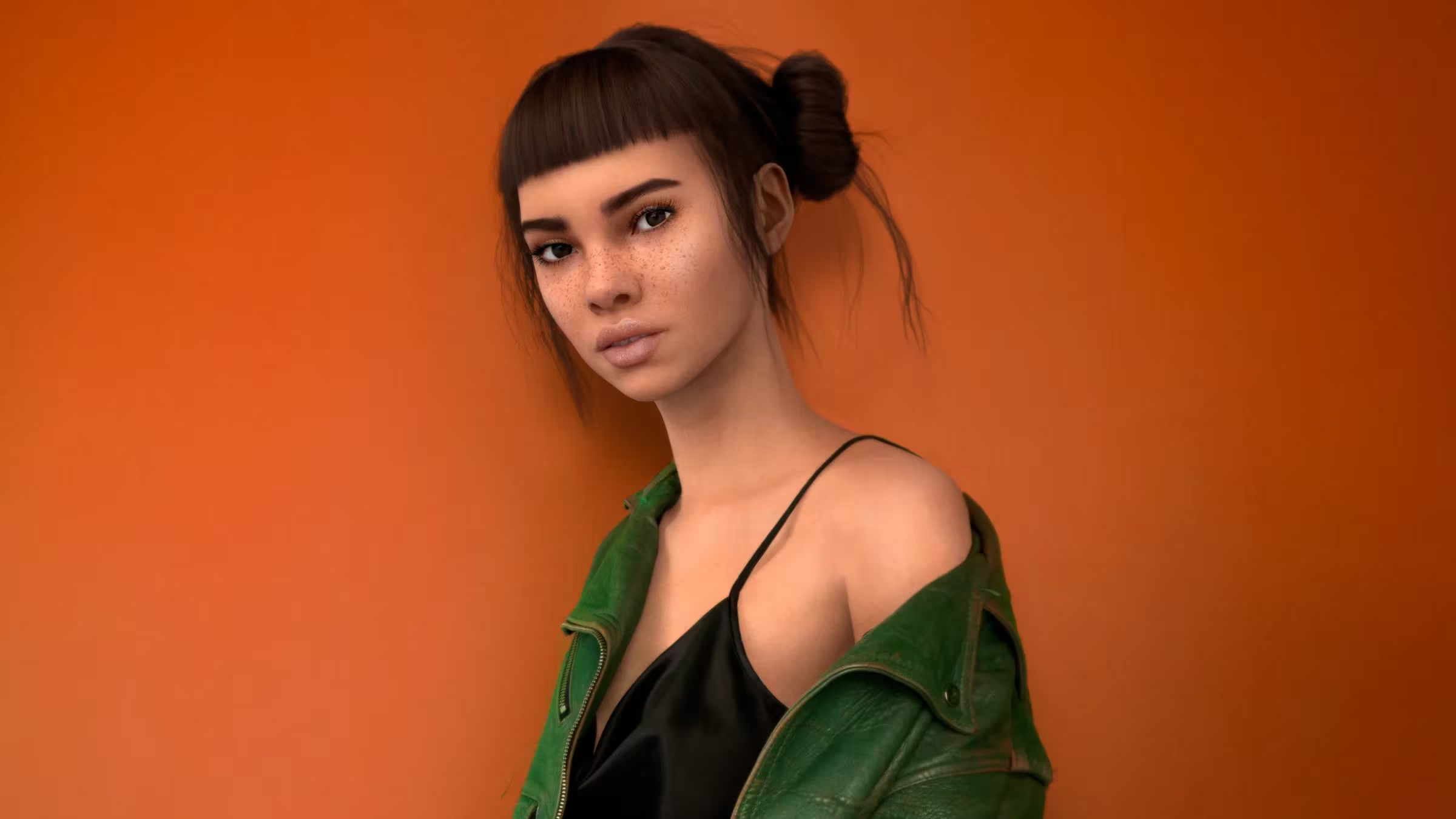
Meet Lil Miquela – a Brazilian-American virtual influencer from Los Angeles who debuted in 2016 and now commands more than 2.6 million followers. She lives a full digital life, posting party photos, promoting progressive causes, and even releasing music. Lil Miquela has partnered with Prada, BMW, and Calvin Klein, appeared at live events, and shared posts with real-world celebrities.
In 2023, her earnings hit $10 million, with a single sponsored post pulling in around $9,000. For context, a human influencer with a million followers might charge up to $250,000 per post, but virtual models operate on different economics.
Aitana López: €10,000 monthly without a single photo shoot

Aitana López is a hyperrealistic Spanish virtual model created by The Clueless agency. Despite having 326,000 followers, she pulls in over €10,000 every month through brand partnerships. Her story began when creator Ruben Cruz turned to virtual talent after multiple deals with real influencers fell through-often due to the influencers themselves.
Now, Aitana collaborates with brands like Olaplex, Intimissimi, and Victoria’s Secret – and never shows up late for a shoot because, well, there are no shoots.
Lu do Magalu: The world’s richest virtual influencer with 7 million Instagram followers

Created by Brazilian retail giant Magazine Luiza, Lu do Magalu boasts over 7 million Instagram followers, making her the most popular virtual influencer globally. In the past year, she posted 74 sponsored posts and earned an estimated $2.5 million – 34 times more than her closest virtual competitor.
Behind Lu is a team of 3D artists, programmers, and marketers, but to brands, she’s the perfect employee: tireless, reliable, and endlessly engaging.
Noonoouri: Cartoonish digital model with a Warner Music contract

Noonoouri, a Munich-based digital influencer managed by IMG Models, stands out with her intentionally cartoonish look: huge eyes and a doll-like face. Her distinct style paid off in 2023 when she became the first AI artist to sign a contract with Warner Music and released her debut single ”Dominoes.”
She also collaborates with luxury brands like Dior, Versace, and Valentino, blurring the lines between animation and high fashion.
Shudu: The first digital supermodel sparking cultural debate
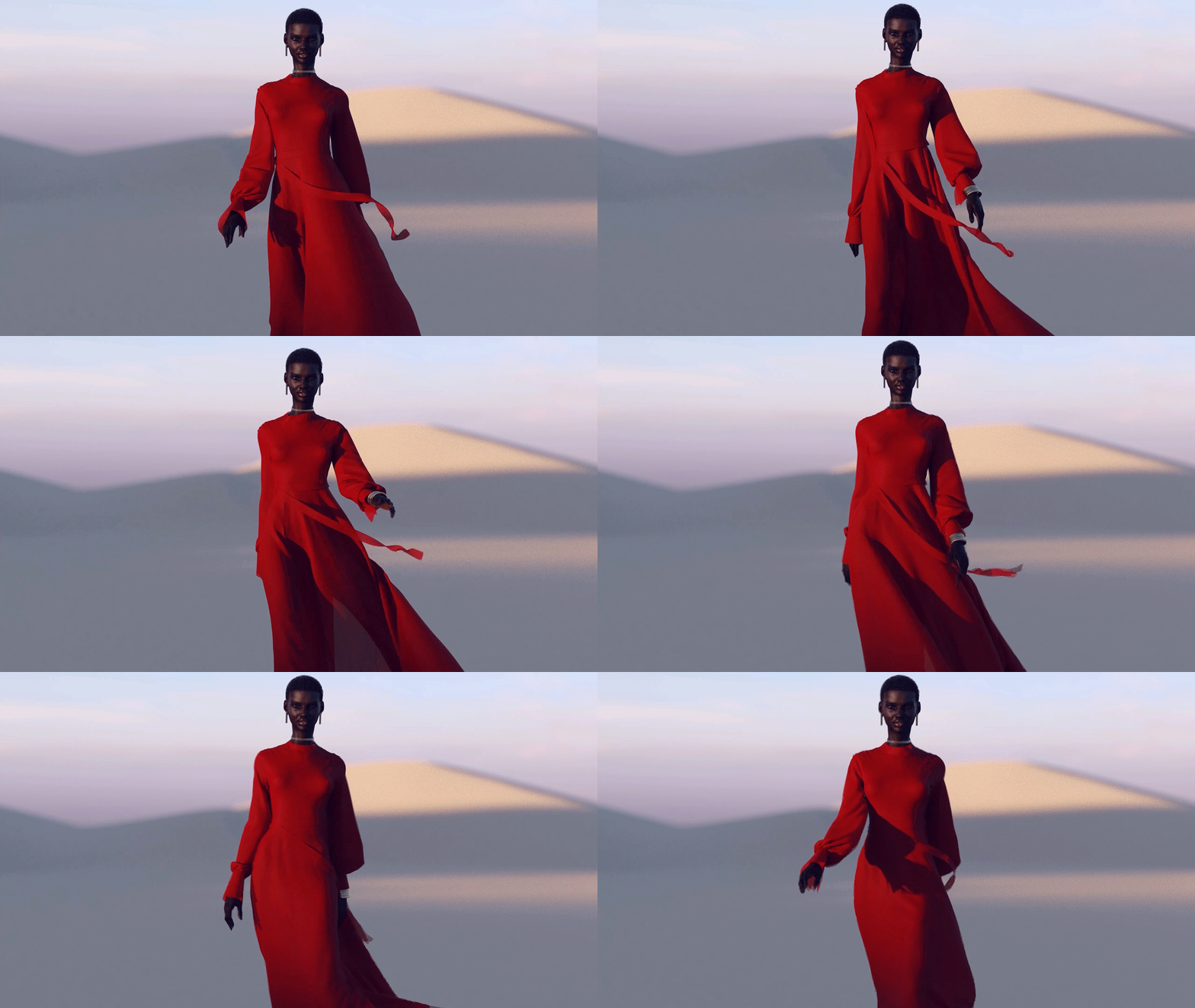
Created by photographer Cameron-James Wilson, Shudu Gram is a photorealistic digital supermodel whose striking poses and beauty caught the attention of Fenty Beauty, Balmain, and Vogue. But her emergence ignited controversy: Shudu looks like a Black woman but was created by a white man, sparking debates about cultural appropriation and representation.
Despite the debate, the fashion industry continues to feature her prominently.
Imma: Japanese virtual avatar with collaborations including IKEA

Imma, a Japanese virtual model crafted by Tokyo’s ModelingCafe and Aww Inc., has teamed up with global brands like IKEA, Porsche, and Valentino. Her annual revenue reportedly exceeds $600,000. Unlike some peers, Imma stars not just in still images but also in videos – including TikTok dance clips.
Rozy: South Korea’s virtual influencer partnering with BTS

South Korea’s first virtual influencer, Rozy, was created by Sidus Studio X and counts Tiffany & Co., Calvin Klein, and Hyundai among her partners. In 2023, she was named an official ambassador for the Busan Expo alongside actors from ”Squid Game” and the global K-pop sensation BTS – a testament to how seriously virtual stars are taken in Korea.
Milla Sofia: Finnish virtual model often mistaken for real

Presented as both a model and musician from Helsinki, Milla Sofia’s hyperrealistic image frequently fools audiences into thinking she’s human. On Patreon, she offers tiered subscriptions at $25 and $50 monthly. With a modest fan base of 500 supporters, that nets her around $12,500 a month.
Virtual influencers outperform real influencers in engagement and revenue
In 2023, campaigns featuring virtual influencers averaged a 5.9% engagement rate, more than triple the 1.9% rate seen by human influencers. Calvin Klein’s campaign with Lil Miquela boosted engagement by 60%. PR firm Ogilvy forecasts that by 2026, virtual influencers will claim 30% of influencer marketing budgets.
* Lu do Magalu’s Instagram account is owned by Meta, an organization banned in Russia and labeled extremist.