

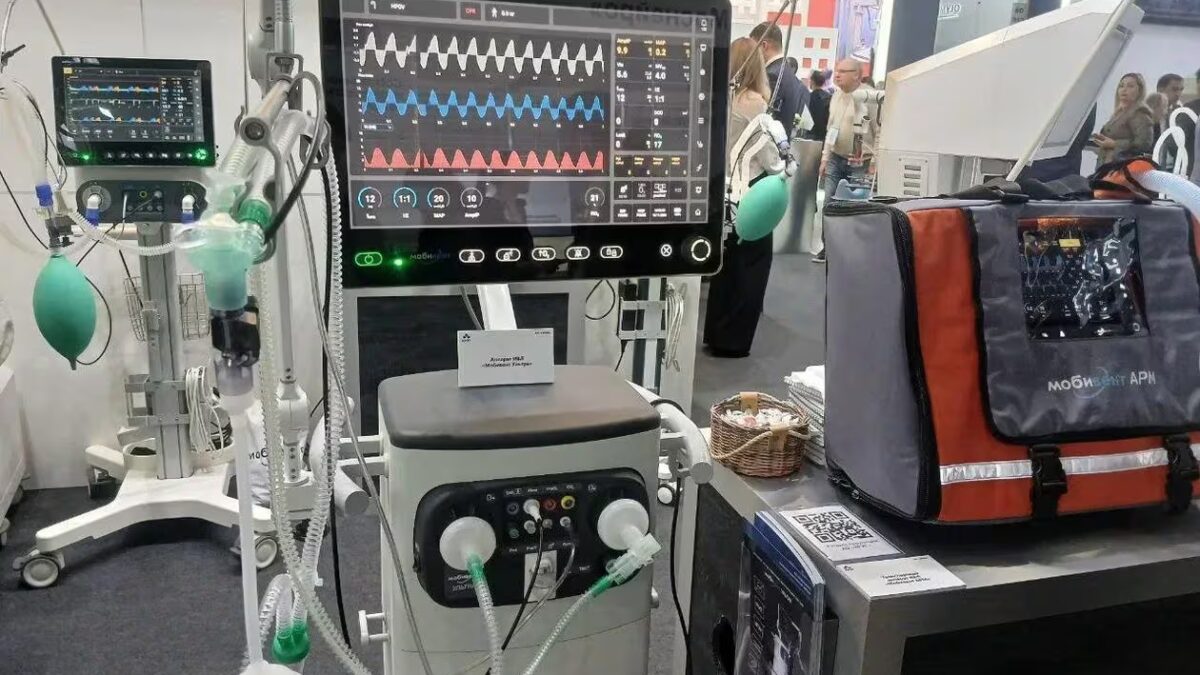
Rostec, through its Radioelectronic Technologies Corporation (KRET), has secured regulatory approval from the Russian health watchdog for the Mobivent Ultra, a high-end mechanical ventilator designed primarily for newborns with extremely low birth weight and other vulnerable patients. Mass production is slated to begin by the end of the year, aiming to reduce reliance on imported ventilators.
Developed by the Ural Instrument-Making Plant, a KRET subsidiary, the Mobivent Ultra supports both controlled and assisted ventilation for patients ranging from as little as 200 grams up to 300 kilograms. Its standout feature is a high-frequency oscillatory ventilation mode that delivers a rapid, high-pressure air mixture with intense oscillations. This technology minimizes lung injury and prevents alveolar collapse, which is critical for newborns with underdeveloped lungs and those with respiratory disorders.
The Mobivent Ultra joins a family of devices built on shared hardware and software platforms but tailored to different clinical needs. Previous models include the Mobivent Oxy for oxygen therapy and the Mobivent Arm, a portable variant optimized for patient transport. The Ultra is specifically tuned for intensive care, surgery, and critical care units, offered in six configurations featuring options like thermogeliox delivery and integrated compressors.
Rostec’s push into domestic medical device manufacturing aligns with broader efforts to expand Russia’s healthcare technology offerings and cut import dependence. The Mobivent Ultra exemplifies this strategy, having been developed closely with clinicians to optimize usability and performance in life-critical situations.
Key features of the Mobivent Ultra ventilator
- Supports patients from 200 grams to 300 kilograms
- High-frequency oscillatory ventilation delivering air at high pressure and rapid oscillations
- Reduces lung trauma and prevents alveolar collapse
- Available in six versions, including models with compressors and thermogeliox supply
- Ergonomic design based on medical expert recommendations
Introducing the Mobivent Ultra will enable Russian hospitals to access advanced ventilators tailored for neonatal and critical care without depending on foreign imports. This strengthens healthcare security and broadens the footprint of Russia’s domestic medical technology industry.
While companies like Philips, Dräger, and ResMed have long dominated the global ventilator market, Rostec’s entry reflects a trend among nations to localize critical healthcare manufacturing amid geopolitical tensions and supply chain vulnerabilities. The Mobivent Ultra’s specialized focus on the most fragile patients could carve out a niche domestically and possibly pave the way for future exports.
The key questions now are how quickly Rostec can ramp up production to meet hospitals’ urgent needs and how the Mobivent Ultra’s real-world performance will compare to established international devices. Its success could signal a turning point for Russia’s ambitions in self-sufficient medical technology and encourage innovation in neonatal ventilators.