

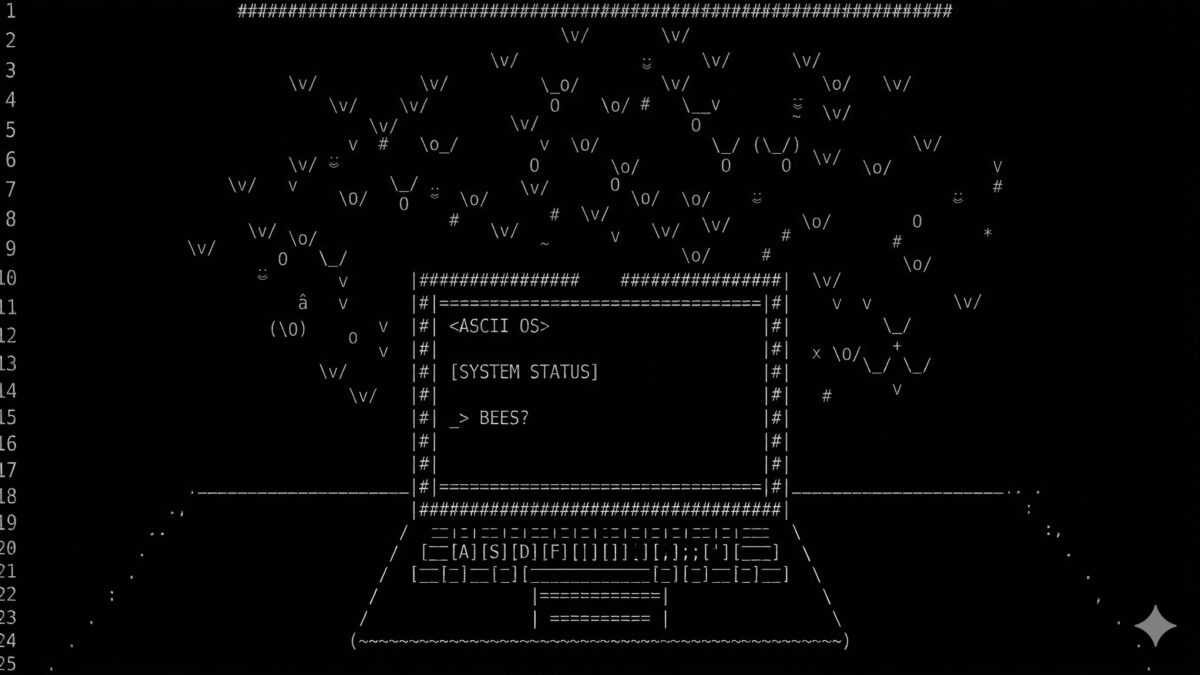
Random Labs, a Y Combinator-backed startup based in San Francisco, has launched Slate V1, the programming industry’s first ”swarm-native” autonomous coding agent. Designed to tackle complex, large-scale software engineering challenges, Slate departs from traditional AI coding assistants by orchestrating multiple specialized AI models to work in parallel, mimicking the coordination of a human engineering team.
Addressing a persistent ”systems problem,” where the sheer complexity and long-term context of codebases overwhelm existing agentic AI, Slate introduces a new architectural concept called Thread Weaving. This approach employs a central orchestrator that manages a network of worker threads, each executing discrete coding tasks. Unlike bots that handle everything simultaneously, Slate divides responsibility between strategic oversight and tactical execution-boosting efficiency and reducing cognitive overload for the AI models involved.
Thread weaving and recursive language models enhance Slate’s swarm-native coding agent efficiency
At Slate’s core is an engagement with Recursive Language Models (RLMs), which deconstruct tasks into manageable units dynamically dispatched through a TypeScript-based domain-specific language (DSL). This framework treats the AI’s limited context window like precious RAM, smartly pruning and managing memory to keep the swarm aligned on long-horizon goals. Instead of the lossy compaction common to other agents, Slate generates ”episodes”-condensed summaries of successful operations-that maintain essential project state and enable parallel processing.
This architecture facilitates massive parallelism, allowing different AI models to specialize: for instance, Claude Sonnet orchestrates refactoring, GPT-5.4 writes code, while GLM 5 researches documentation-all simultaneously. By allocating the right model to the right task, Slate avoids overspending computational resources, injecting strategic intelligence where it counts and tactical smartness where it doesn’t require supercomputing power.
Commercial deployment and integration of the Slate swarm-native AI coding agent
Random Labs is currently in early beta with Slate, focusing primarily on professional software teams rather than individual developers. A usage-based credit system and organization-level billing tools have been implemented to facilitate team-wide adoption and cost transparency. The company is also preparing integrations with OpenAI’s Codex and Anthropic’s Claude Code, positioning Slate less as a competitor to individual models and more as a superior orchestration layer that safely coordinates multiple AI engines.
This orchestration model includes clever caching strategies to reuse subprocesses and minimize redundant operations, and a ”context engineering” method designed to keep credit consumption manageable despite running complex parallel threads. This efficiency becomes important as AI-based coding tools transition from experimental assistants into indispensable infrastructure for engineering workflows.
Slate V1’s reliability and impact on software engineering workflows
Early internal tests revealed Slate’s robustness: it passed approximately two-thirds of the make-mips-interpreter tests on the challenging Terminal Bench 2.0 benchmark, a task where many top-tier models typically succeed less than 20% of the time without orchestration. This higher reliability in changing scenarios underscores Slate’s potential as a stable partner rather than a simple tool.
Endorsements from early adopters, including high-profile fintech developers, praise Slate as a powerful debugging companion that scales alongside organizational complexity. As software development increasingly requires managing sprawling codebases and diverse tools, Slate’s swarm-native approach hints at a future where engineers lead a hive mind of specialized AI, moving well beyond chatbots into collaborative AI ecosystems focused on real-world problem solving.