

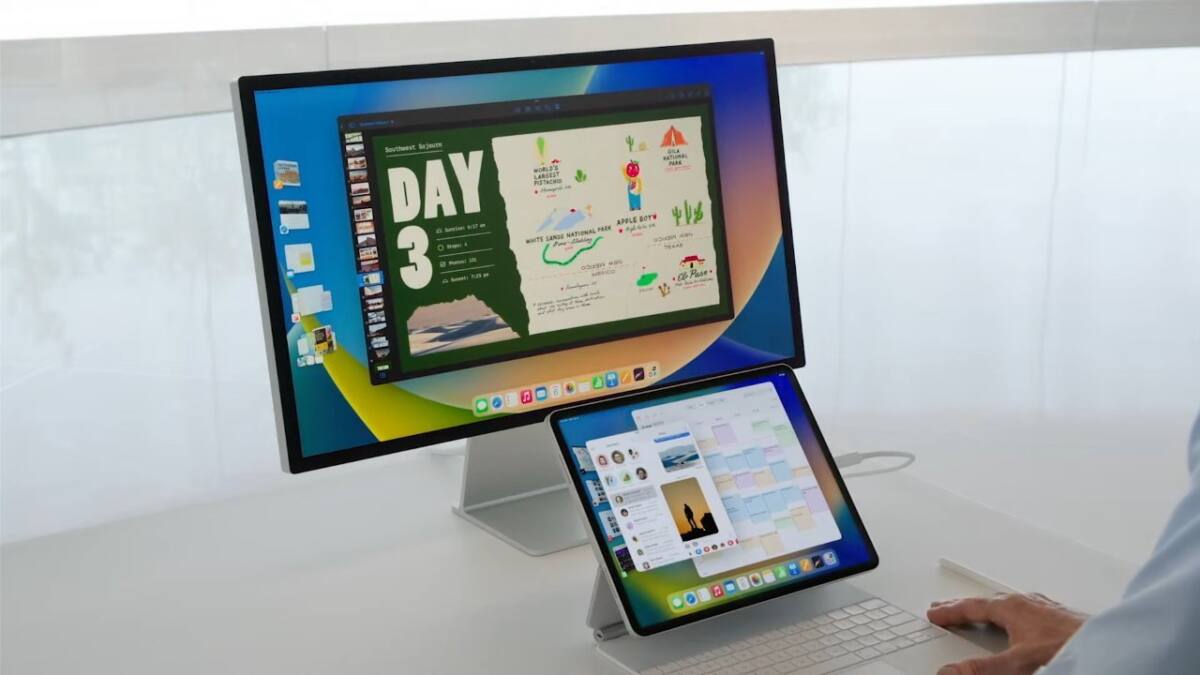
Apple’s MacBook Neo demonstrates that running macOS on iPhone-grade processors is not just possible-it’s been done convincingly. This suggests a future where your iPhone or iPad might morph into a full Mac desktop experience simply by connecting it to a keyboard, mouse, and external display. Despite this potential, Apple remains hesitant, still treating macOS and iOS/iPadOS as separate worlds rather than blending them into a versatile device that adapts to how you want to work. Meanwhile, competitors like Samsung have already taken steps in this direction with solutions such as Samsung DeX.
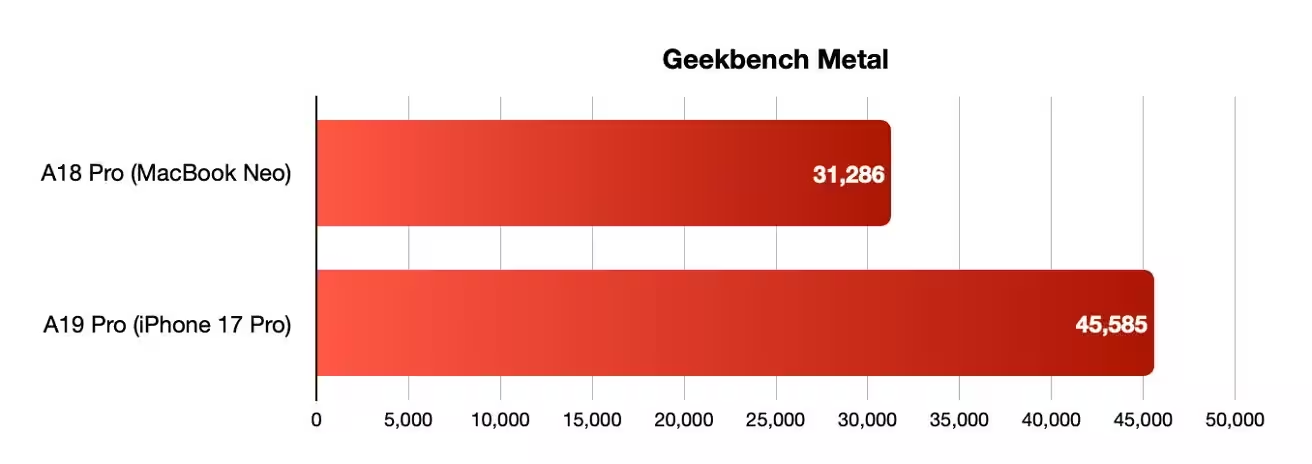
The MacBook Neo runs on Apple’s A18 Pro chip-an evolution of processors used in iPhones-demonstrating that the hardware can already handle macOS tasks adequately, even those requiring Rosetta translation for older Intel apps. The device’s performance benchmarks, though not at the level of flagship Macs or chips like the A19 Pro, prove that a scaled-down, pocket-sized Mac is within reach. Given Apple’s chip design flexibility, future iPhones could pack sufficient power to run macOS on a connected display without breaking a sweat.
From a hardware standpoint, the components are already in place: iPhones and iPads support external displays and Bluetooth keyboards; recent processors can power full macOS environments; and Apple software frameworks continue to converge, albeit slowly. For example, plugging an iPad into an external screen extends the workspace, though it currently runs iPadOS instead of macOS. The core challenge isn’t hardware but software integration-making the switch between iOS/iPadOS and macOS seamless and understandable for users.
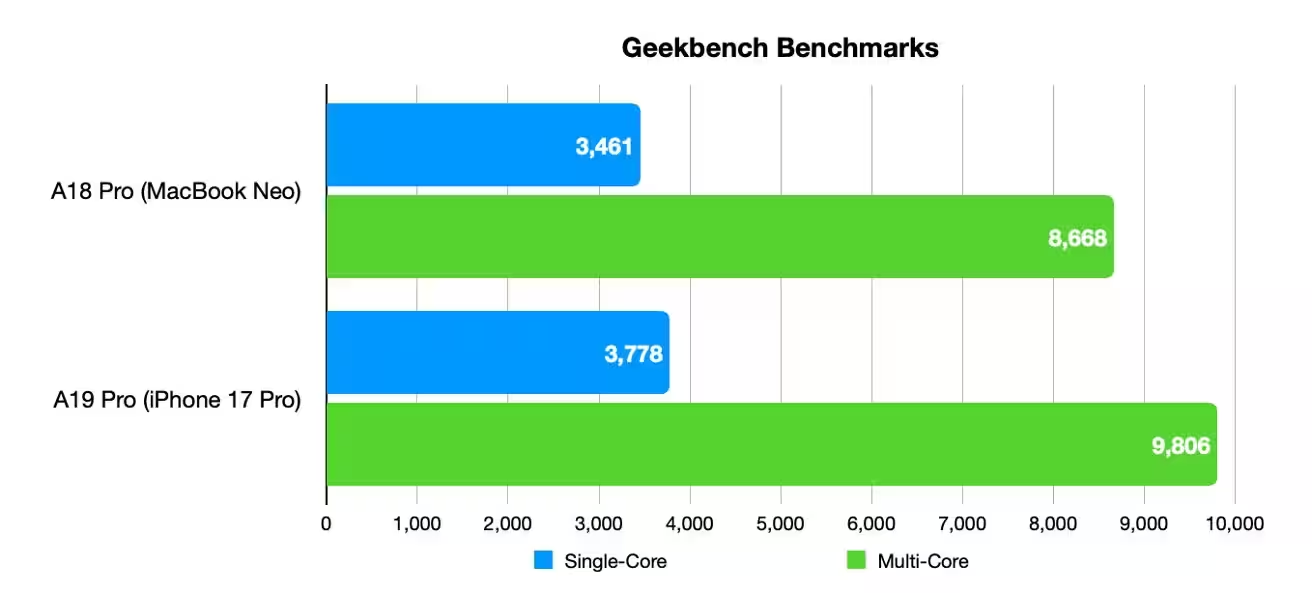
MacBook Neo performance compared to iPhone 17 Pro
Apple is understandably cautious about merging macOS directly into the iPhone or iPad experience-it would mean juggling multiple user interfaces and workflows that feel radically different. But the idea isn’t about cramming macOS into a tiny iPhone screen for touch-only use; rather, it’s about leveraging the iPhone’s brains when connected to a larger screen and input devices-transforming it into a Mac when you need one, and a phone when you don’t.
Samsung DeX vs Apple’s macOS integration potential
Samsung DeX has already explored what a converged device can look like by turning the Galaxy S26 Ultra into a desktop-like computer when docked, but it’s still running a variant of Android, not a true desktop OS like Windows or macOS. Apple has a unique advantage in that its mobile processors can run full macOS without any emulation or tricks. That means your phone could be your laptop without compromises in app compatibility or performance.
Software challenges for iPhone running macOS
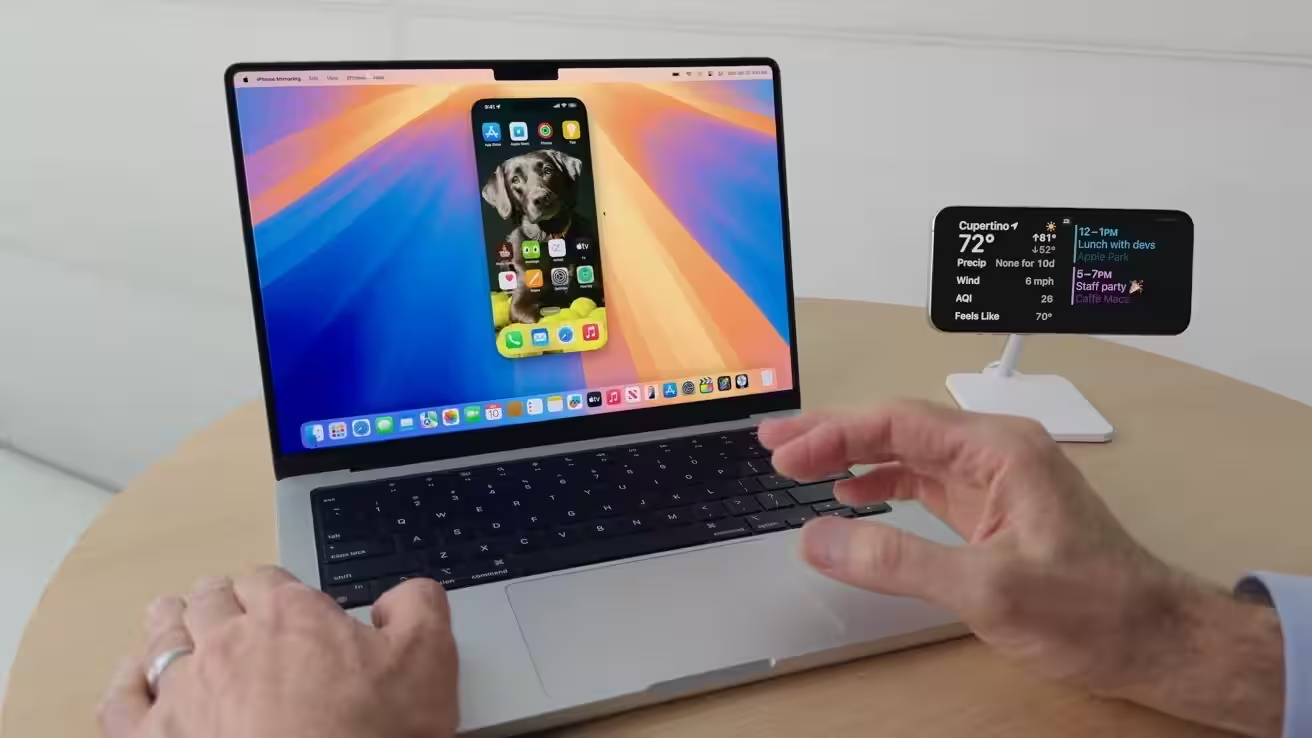
Software hurdles remain. Apple’s recent initiatives like iPhone Mirroring on Mac and the Liquid Glass interface design across platforms hint at a future where switching between devices and operating systems is smoother. However, fully unifying these experiences where a single device runs iOS, iPadOS, or macOS depending on context will require significant user interface and workflow rethinking.
The future of multipurpose Apple devices
Until Apple takes the leap, devices like the MacBook Neo stand as proof that the building blocks for a transformative, multipurpose Apple device already exist. Imagine walking around with an iPhone that becomes a powerhouse Mac once docked to your UltraFine display with a Magic Keyboard. Call it ”iPhone Ultra” if you want-the name almost writes itself. The question is when Apple will have the courage to make it real, freeing users from juggling separate devices and ecosystems.