

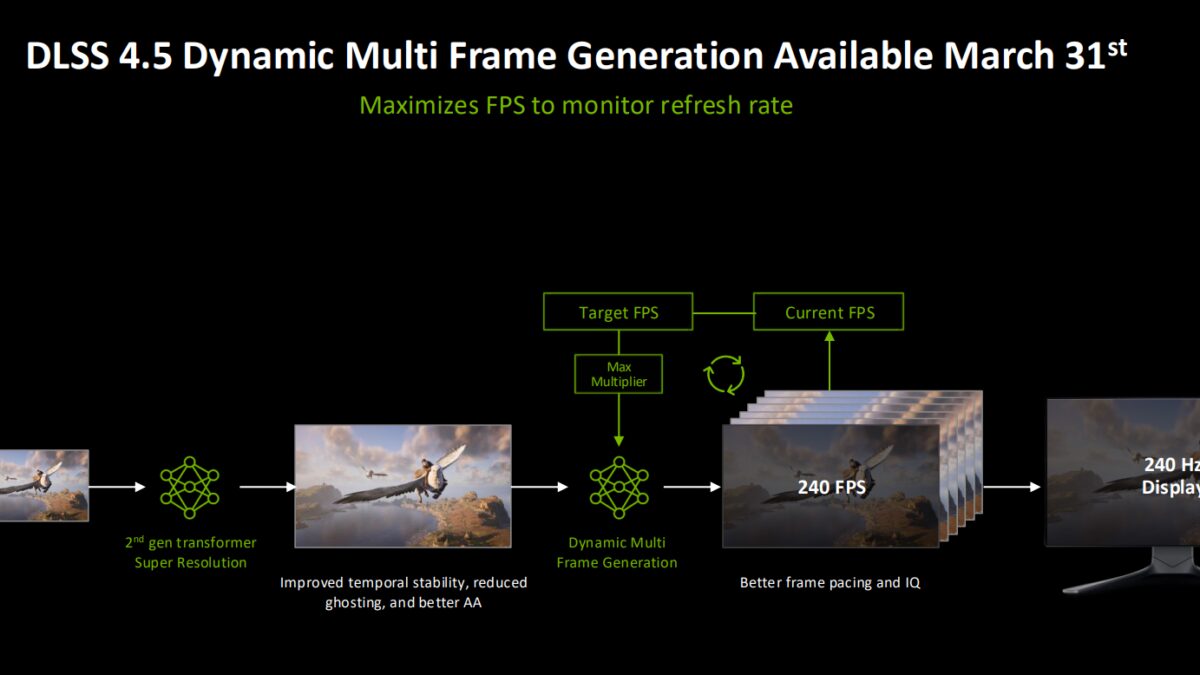
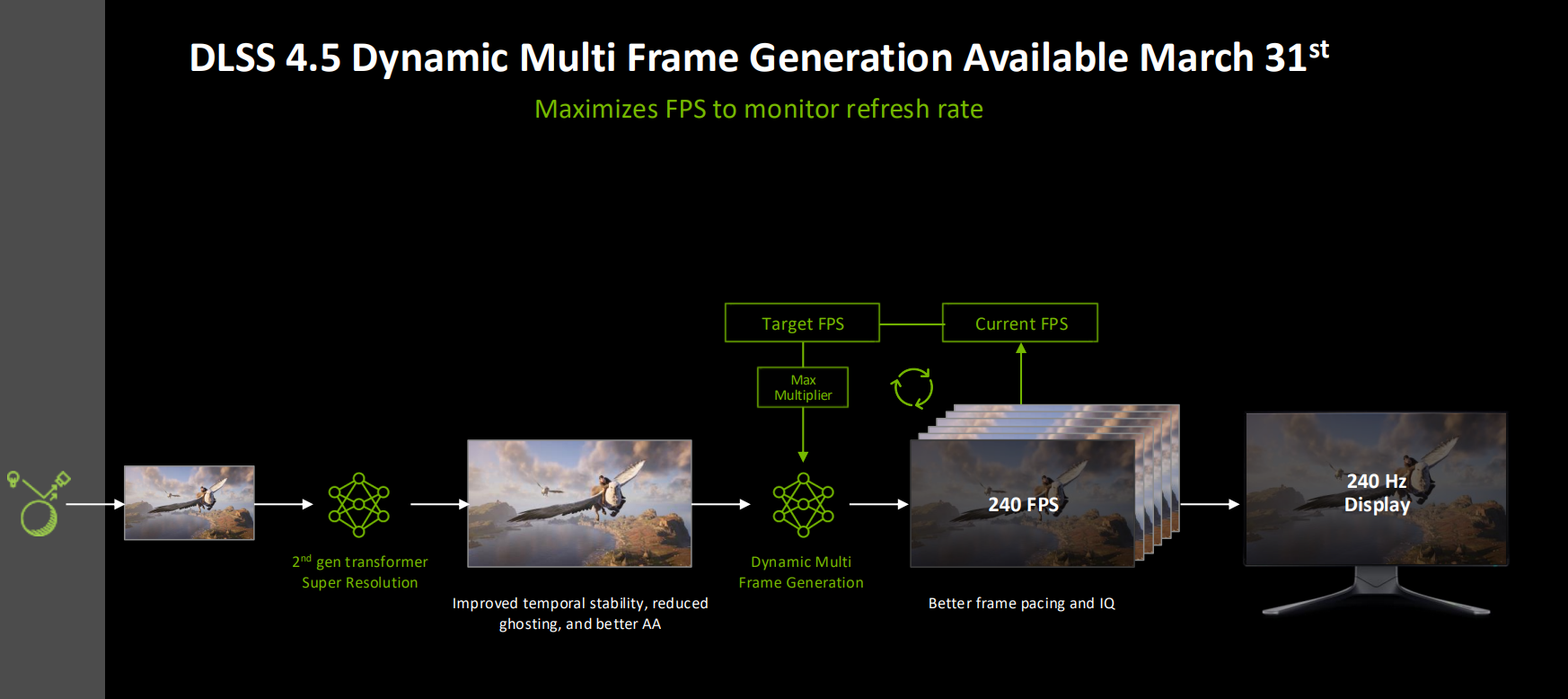
Nvidia is ramping up its DLSS technology with the rollout of DLSS 4.5 on March 31, introducing a feature called Dynamic Multi-Frame Generation. This upgrade allows the system to automatically vary how many frames it generates before rendering a new one-scaling from a one-to-one ratio up to six generated frames per rendered frame. The goal is to hit or exceed the refresh rate of your monitor, potentially maxing out fast displays such as 240Hz or higher, while keeping the visual quality tied to fully rendered frames.
This means gamers with high-refresh-rate monitors can expect smoother performance without their GPUs laboring to render every individual frame. Dynamic Multi-Frame Generation works by effectively filling in extra frames using AI, adapting on the fly based on your performance targets and hardware capabilities. On compatible setups, five out of every six frames on screen could be AI-generated, dramatically boosting frame rates while maintaining sharpness and detail on key rendered frames.
Alongside this, Nvidia announced RTX Mega Geometry-a feature designed to accelerate frame rates in games that utilize path tracing, especially beneficial in rendering complex foliage. Path tracing support is expanding, now covering titles like 007 First Light and Control Resonant, while classic games such as Portal 2, Need for Speed: Carbon, and Call of Duty 2 are receiving community-backed RTX lighting upgrades through Nvidia’s tools.
Developers can also utilize GeForce Now’s cloud platform more extensively to provide playtest access during development cycles, broadening paths for user feedback and game tuning. Yet, despite all these software and ecosystem enhancements showcased at the Game Developers Conference, Nvidia left expectations for new hardware unmet. The rumored GeForce RTX 50-series Super GPUs didn’t appear, and industry chatter suggests Nvidia is shifting focus from consumer graphics to AI workloads, scaling back gaming GPU production.
DLSS 4.5’s timing is strategic. With more gamers chasing ultrafast refresh rates and competitive edge visuals, dynamic frame generation could extend the life and appeal of current GPUs by squeezing out extra performance through AI tricks rather than brute rendering force. It’s a savvy response to stagnating hardware upgrades, offering immediate gains without requiring new silicon.
What is Nvidia DLSS 4.5 and Dynamic Multi-Frame Generation?
DLSS 4.5 is the latest update to Nvidia’s Deep Learning Super Sampling technology, introducing Dynamic Multi-Frame Generation. This feature dynamically adjusts frame generation to increase frame rates on high-refresh-rate monitors, using AI to generate up to six frames for every fully rendered frame.
How RTX Mega Geometry improves path tracing performance
RTX Mega Geometry focuses on boosting frame rates in games that use path tracing by efficiently rendering complex objects like foliage. This enhancement helps games with advanced lighting effects run smoother, supporting an expanding list of titles with RTX path tracing.
GeForce Now’s expanded cloud playtest capabilities
Nvidia is expanding developer access to the GeForce Now cloud platform, allowing more extensive playtesting during game development. This cloud approach facilitates user feedback and helps developers optimize game performance before launch.
Impact of DLSS 4.5 on gaming GPU performance
DLSS 4.5’s dynamic frame generation can significantly boost gaming performance on current GPUs by reducing the rendering load. This technology helps maintain high frame rates on ultrafast monitors without requiring new GPU hardware, making it a valuable upgrade for competitive gamers looking to maximize their systems.