

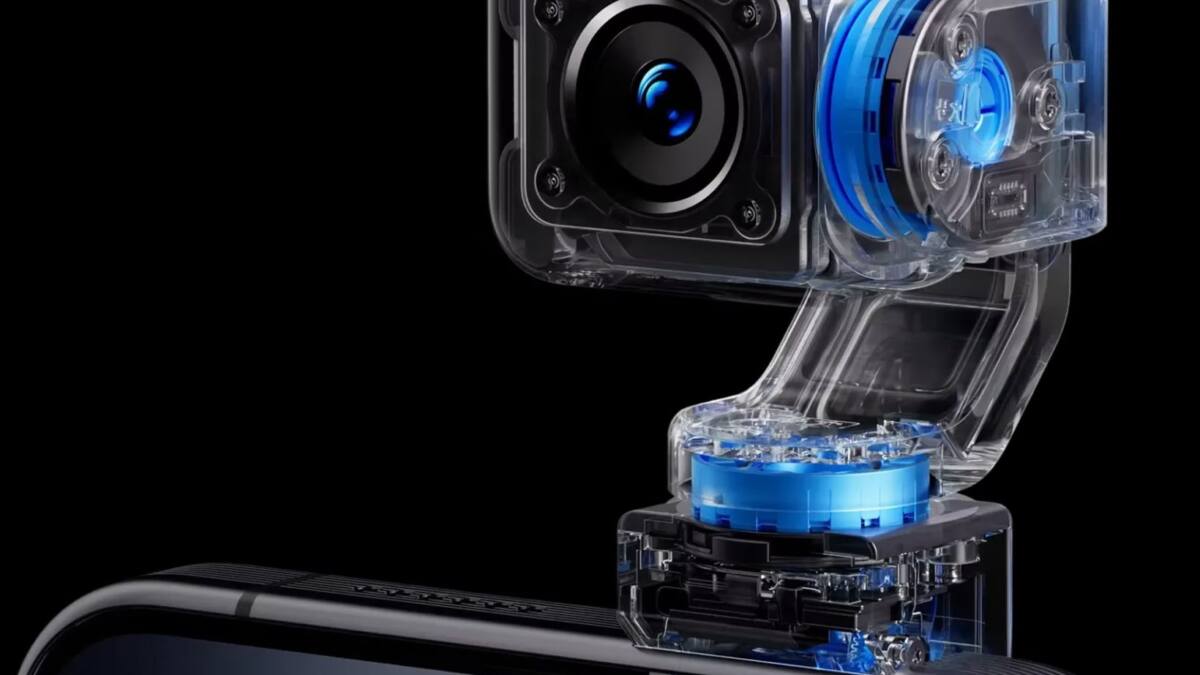
At Mobile World Congress 2026 in Barcelona, Honor unveiled a smartphone unlike any other: the Robot Phone, a device boasting a motorized camera arm with a gimbal system designed to mimic professional stabilizers. Demonstrated behind glass to guarded journalists, the phone promises advanced imaging and AI-powered physical gestures, with a launch targeted for the second half of 2026 in China. But beyond its flashy tech, many critical details remain a mystery, casting doubt on how practical or durable this ambitious concept will ultimately be.
The Robot Phone’s defining feature is a 200-megapixel camera attached to a tiny motorized arm that folds neatly into the phone’s back. This arm uses a four-degree-of-freedom gimbal system-small enough to be called the industry’s tiniest-and provides three-axis stabilization that rivals external handheld gimbals. According to Honor, this precise mechanical movement is enabled by a custom titanium-alloy micro motor, which the company claims is 70% smaller than comparable components. These advances draw heavily on the brand’s foldable phone engineering expertise, showcasing how innovation in one area feeds another.
For video enthusiasts, the phone offers a ”Super Steady” mode for filming motion-heavy scenes and AI Object Tracking that locks onto subjects with a simple double tap. A particularly intriguing feature called AI SpinShot allows the camera arm to automatically perform 90° or 180° rotations, even spinning a full 360°, adding cinematic flair usually reserved for dedicated camera rigs.
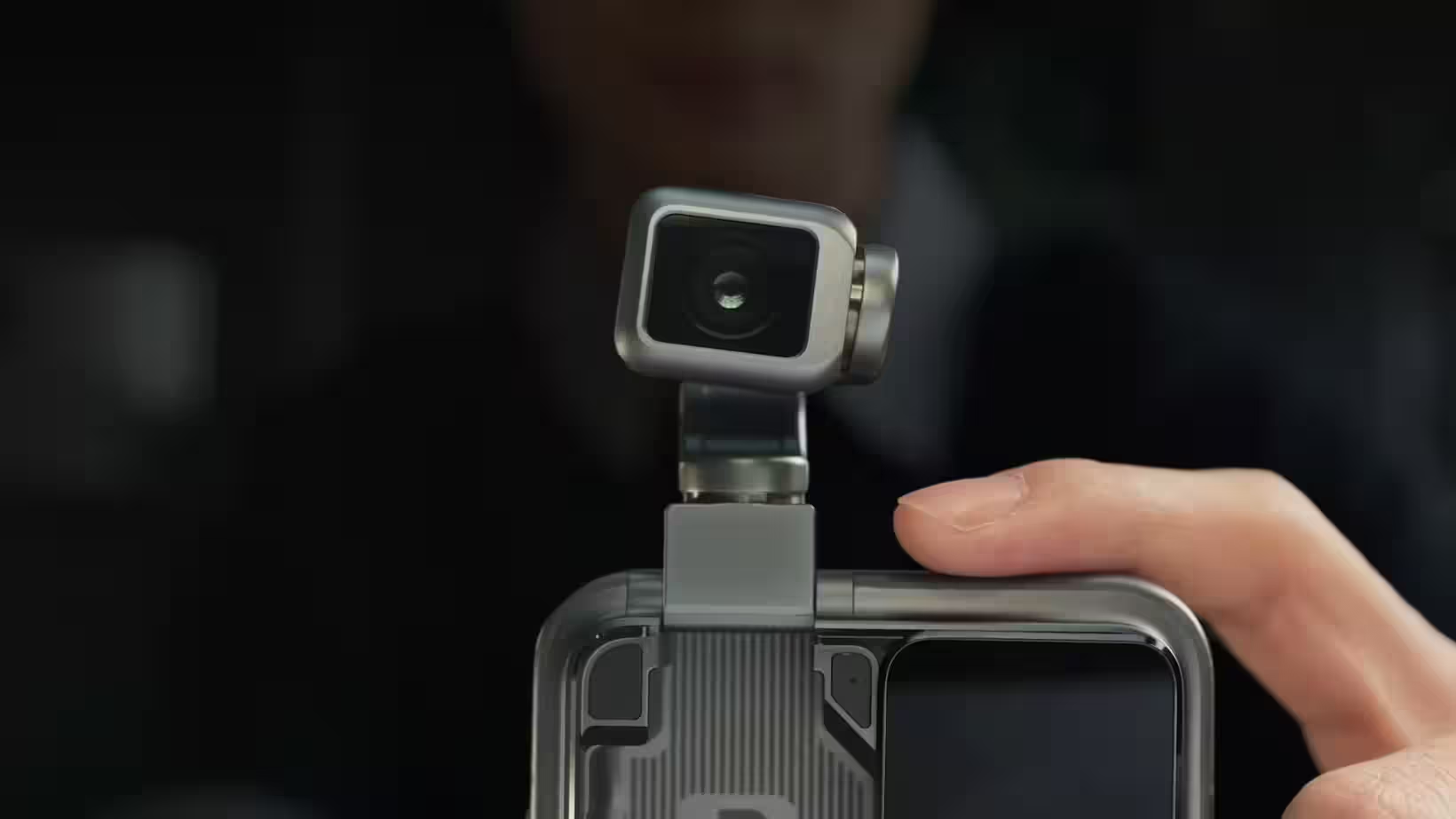
Honor has collaborated with ARRI Image Science, known for its film-industry-grade color science, to enhance the phone’s image processing. This partnership aims to deliver richer colors and more natural highlight roll-offs, elevating mobile photography closer to cinematic standards. But the physical gestures of the phone’s camera take the innovation a step further: it can nod, dance to music, and even ”sleep” by recognizing a user covering the camera, blurring the line between gadget and interactive robot.
This gesture capability was highlighted during Honor CEO James Li’s keynote, where the Robot Phone interacted live with both him and another humanoid robot, performing dances and handshakes. Honor ties this into its ”Augmented Human Intelligence” vision, which pitches artificial intelligence as a tool to extend human abilities rather than replace them. While admirable, this angle risks sounding like buzzword spin until the real-world value and everyday use cases become clearer.
The phone’s secrecy around core specs is conspicuous. Honor has yet to reveal what processor powers the device, its RAM, or even battery capacity-though it will use a silicon-carbon anode battery upgraded to handle the motorized camera’s energy demands. Perhaps most pressing is durability. Moving parts in smartphones have historically fared poorly against drops, dust, and pocket wear. Honor claims its foldable phone experience feeds into making this mechanism reliable, but no third-party durability tests are available, leaving consumers with a big unknown.
While the Robot Phone presents a visually stunning leap in camera tech, its limited hands-on availability and unrevealed specifications keep it firmly in the ”concept” category for now. Launching initially in China also raises questions about whether it will ever be widely available or remain a niche product.
Looking ahead, this device sits at the crossroads of innovation and practicality, pushing the boundaries of what a phone camera can physically do while challenging manufacturers to prove value beyond headline-grabbing mechanisms. Honor’s gamble on motorized camera tech will face the same hurdles that shuttered similar attempts in previous years. If it survives real-world usage and finds meaningful applications, 2026 could mark the dawn of robotic smartphones-if not, it might remain an ambitious but fragile showpiece.