

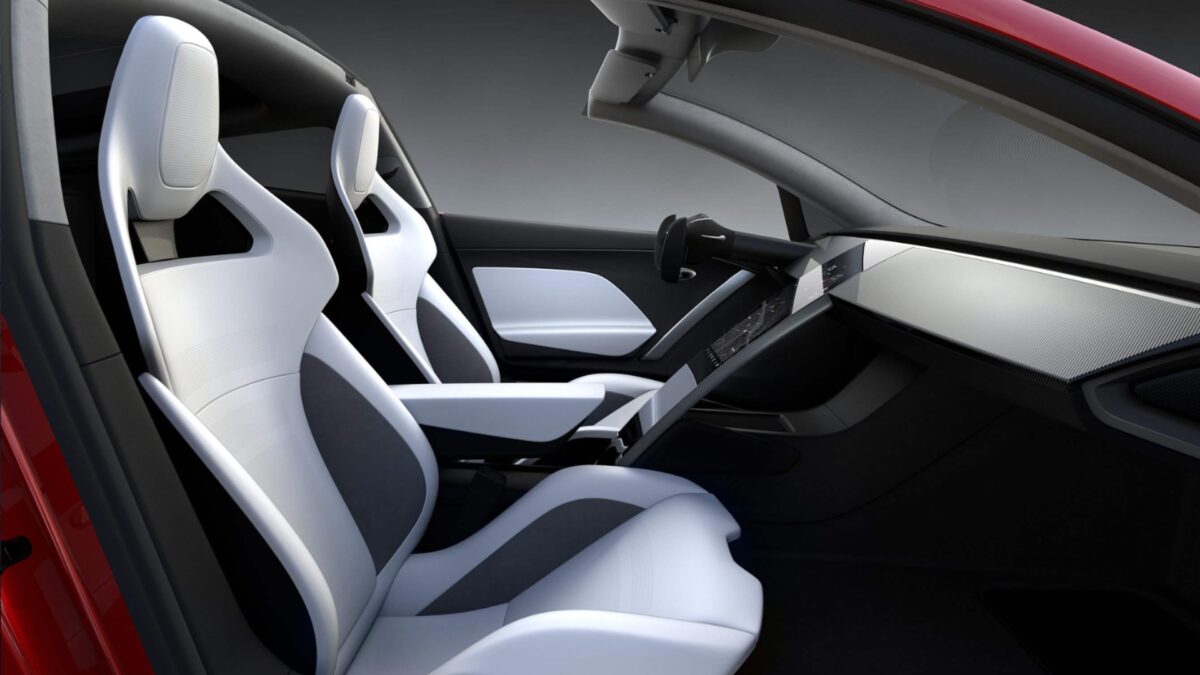
Tesla’s decades-in-the-making Roadster may finally be nearing a reveal, and with it comes a radical rethink of the humble car seat. A recent patent application shows Tesla plans to replace the typical multi-part assembly of a car seat with a single, unified composite frame that integrates the base, backrest, headrest, and bolsters. This ”monolithic” structure, complete with programmable ergonomics and integrated actuators, aims to streamline production, reduce weight, and open new doors for vehicle design across Tesla’s lineup.
Car seats usually come as a complex stack of metal brackets, recliner mechanisms, and various hardware fasteners. Tesla’s approach tosses all that out by crafting one continuous thermally molded composite frame. This method mirrors Tesla’s broader push with giga-casting large vehicle sections as single pieces, designed to reduce components, failure points, and assembly complexity. More than just a weight-saving exercise, this engineering mindset draws closer to the carbon fiber tubs used in high-end hypercars than conventional seat frameworks.
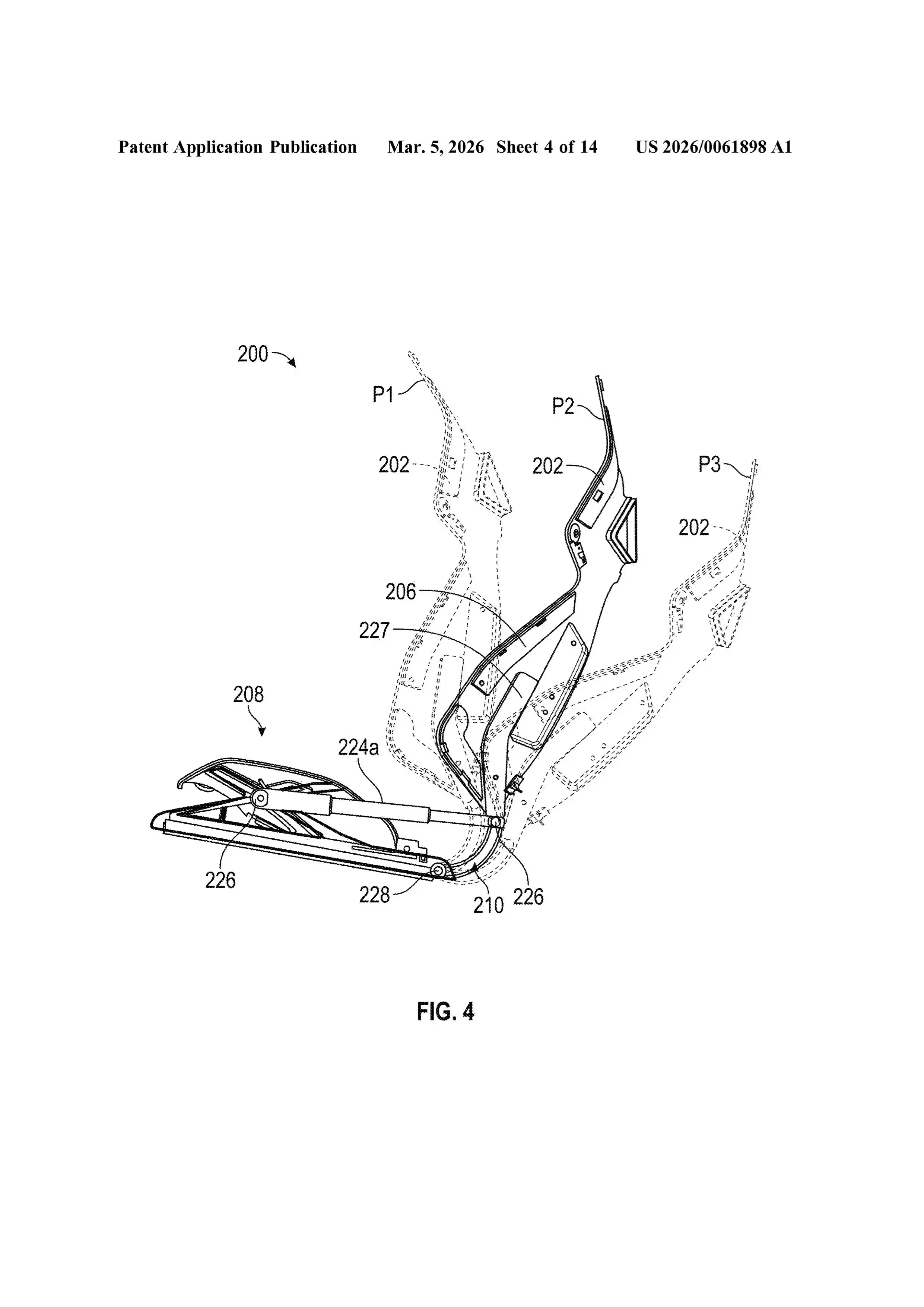
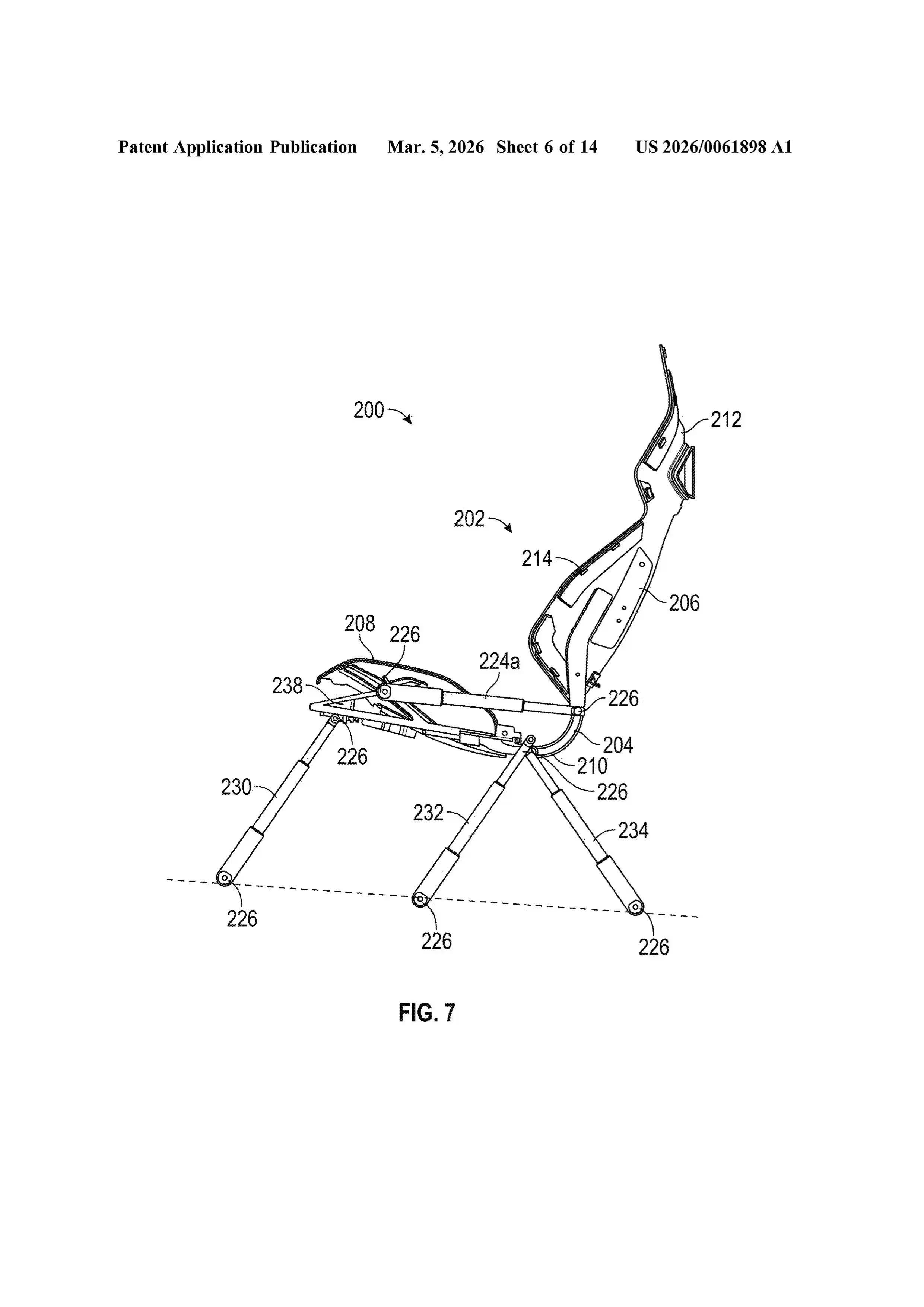
The patent details how Tesla divides the seat frame into several zones of adjustable stiffness, tailored for comfort and structural support. Movement, usually handled by heavy mechanical recliners, gets replaced by flexible fiber composite hinges. Four pairs of actuators provide up to six degrees of freedom, all controlled by onboard software-reflecting a fully programmable seating experience. Additionally, ventilation channels, airbag deployment pathways, and upholstery attachments are embedded directly into the seat, eliminating the need for separate hardware.
This isn’t simply an upgrade for the Roadster but a potential leap in how car seats get designed and produced industry-wide. If Tesla rolls out this technology across its vehicle range, it could dramatically shrink the complexity and weight of seats, improving efficiency and perhaps even safety. It’s an extension of Tesla’s obsession with vertical integration and cost-cutting through clever design, pushing beyond battery and drivetrain innovations to simpler vehicle architectures.
Tesla’s innovative architecture meets a time when automotive manufacturing faces pressure to cut costs amid supply chain issues and material inflation. Lightweight, fewer-part assemblies reduce not just production expenses but environmental footprints. Though many automakers flirt with modular seats and simplified designs, Tesla’s ”monolithic” concept might be one of the boldest takes yet. The pathway it suggests-integrating seats into the vehicle’s structural narrative-could inspire follow-ups from rivals that have long relied on incremental seat tweaks rather than redesigns.
Still, whether this will appear as early as the upcoming Roadster debut remains unclear. Tesla’s 2017 Roadster announcement promised the car ”soon” for years, a timeline repeatedly pushed back. But the seat patent adds credibility to the idea that the Roadster reveal planned for April 1 might actually deliver fresh hardware, not just recycled hype. If so, fewer passengers might complain about seats feel by the time they’re hurtling 0 to 60 in under two seconds.