

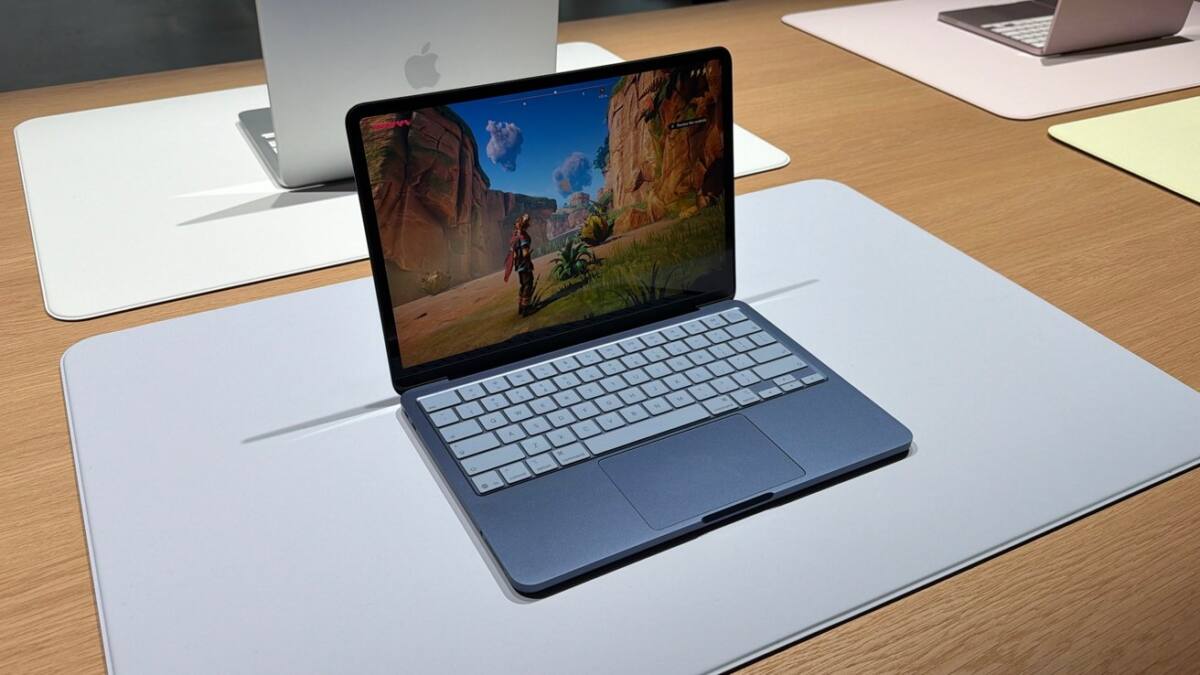
Apple’s newly launched MacBook Neo, powered by the A18 Pro chip borrowed from the iPhone 16 Pro, delivers performance that closely mirrors that of 2020’s M1 MacBooks. Early benchmark results confirm the Neo as a cost-conscious alternative that sacrifices some premium Mac features but still holds its own in day-to-day tasks, offering users an affordable entry point into the Apple Silicon ecosystem.
The MacBook Neo is Apple’s fresh attempt to hit a $599 price tag by pairing its latest A18 Pro chip-originally designed for the iPhone 16 Pro-with a stripped-down laptop chassis. While this might sound like a recipe for performance compromises, the Geekbench scores tell a different story. The Neo scored 3,461 on single-core and 8,668 on multi-core benchmarks, reflecting an upgrade compared to the M1 chip’s 2,235 and 7,901, respectively, in single-core and multi-core tests.
Interestingly, GPU benchmarks tell a nuanced story. The MacBook Neo’s A18 Pro GPU performance nearly matches that of the M1 MacBook Air with 16GB RAM, scoring just slightly below (31,286 vs. 31,912 on Metal). This near parity suggests users won’t face meaningful slowdowns for typical workloads like web browsing, media consumption, or light creative tasks, though demanding professional apps might push the Neo’s limitations.
A strategic move to disrupt the entry-level Mac market
Apple’s choice to employ a smartphone processor in a laptop is unconventional but strategic. By taking the A18 Pro chip-optimized for mobile power efficiency and performance-and shoehorning it into a MacBook chassis, Apple can slash costs compared to custom M-series Mac chips. This move positions the MacBook Neo to compete aggressively against discounted M1 MacBook Airs and budget Windows laptops.
This approach, however, isn’t without trade-offs. The MacBook Neo omits several premium features found on higher-end MacBooks, such as the superior speakers, better display technology, and cooling systems. Still, by offering Touch ID and respectable storage options starting at 256GB, Apple makes incremental compromises that may appeal to students, casual users, or those upgrading from older, less capable machines.
What the benchmarks mean for Apple’s broader chip strategy
These results highlight Apple’s evolving chip strategy, which now encompasses a wider performance spectrum by blending smartphone and computer silicon. While the M-series chips remain the workhorse for high-performance Mac models, the Neo demonstrates that mobile chips can power entry-level Macs without tripping over performance boundaries.
It also signals Apple’s intent to maintain steady price points around $600 for new Macs-a critical price segment for education markets and budget-conscious consumers. This tactic mirrors earlier moves from other tech companies that repurpose smartphone technology to cut down hardware costs while preserving adequate capability.
The MacBook Neo begins shipping on March 11, offering a tempting alternative for buyers who want an Apple laptop experience without breaking the bank. Whether this sets a new baseline for entry-level Macs or becomes a niche product remains to be seen, but it undoubtedly shakes up the lineup by redefining what an Apple Silicon Mac can be.