

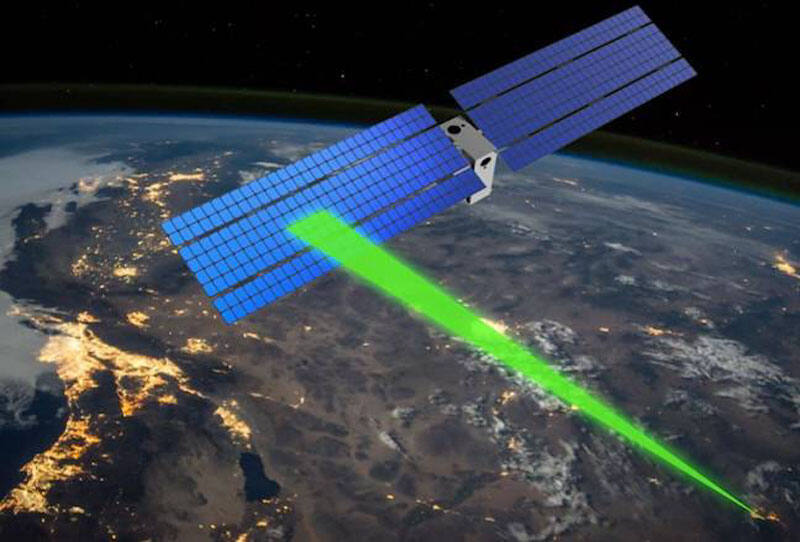
The race to turbocharge satellite communications has taken a giant leap as both Europe and China independently demonstrated gigabit-speed laser links with satellites perched roughly 36,000 kilometers above Earth. By breaking free from the bandwidth shackles of traditional radio signals, these experiments hint at a future where satellite data transfer is not a bottleneck but a high-speed highway, reshaping scientific research, military operations, and commercial communication in space and beyond.
Overcoming the hurdles of laser communication at extreme altitudes
Both the European Space Agency and China’s Academy of Sciences have set new benchmarks for optical satellite links. ESA technicians used a terminal developed by Airbus to connect seamlessly with the Alphasat TDP-1 satellite, achieving error-free data transmission at a peak speed of 2.6 Gbps during a brief window. Simultaneously, Chinese researchers showcased symmetrical 1 Gbps uplink and downlink signals over a distance surpassing 40,000 km, employing a precisely engineered 1.8-meter optical receiver. These milestones are not merely incremental; they represent conquering notoriously difficult challenges associated with optical communication through thick layers of atmosphere and minute satellite vibrations while requiring laser beams to be steered with unparalleled precision.
Key technical innovations included adaptive optics to mitigate atmospheric turbulence and coherent detection systems to suppress interference on the European side. Meanwhile, the Chinese experiments leaned heavily on real-time distortion compensation and closed-loop dynamic tracking to maintain a remarkably stable link for three hours, a feat that promises reliable long-haul connectivity. This level of control over optical links at geostationary orbit distances vastly outperforms conventional radio frequency systems, typically constrained by bandwidth and signal latency.
What gigabit laser links mean for the future of space and Earth communication
Shifting satellite communications from radio frequencies to laser optics is more than a speed upgrade; it fundamentally alters the role of geostationary satellites. Instead of acting merely as passive signal relays, these satellites can evolve into intelligent data nodes capable of processing information onboard, drastically reducing latency and expanding capacity. The tighter beam focus and reduced signal dispersion inherent in laser transmission also enhance security by making interception exceedingly difficult, a critical advantage for defense and sensitive commercial data.
Airbus’s representative framed this development as a tipping point ushering in decades of innovation in space communication architecture. With future plans hinting at creating spatial networks of satellites capable of vast interconnectivity, this technology could extend fast internet access to remote polar regions, oceans, air travel routes, and even deep-space missions. Moreover, protocols may be adapted to handle the unique challenges of space, including longer signal delays and intermittent visibility as satellites move in and out of line of sight.
China and Europe’s nearly simultaneous breakthroughs act as a bellwether, signaling a new phase of global cooperation and competition in space technology. While the U.S. and private companies have pursued optical communication in lower Earth orbit, mastering geostationary links broadens the usability and reach dramatically. The coming years will reveal how this technological leap reshapes satellite internet providers’ strategies and possibly diverts current investments toward laser-based systems designed for elevated bandwidth and security demands.
The challenge now lies in scaling these prototypes into operational infrastructure while managing the complexities of the space environment and maintaining link stability over longer periods. Success here could finally deliver on the promise of ubiquitous, high-speed internet from above, closing the digital divide and enhancing real-time data services across multiple sectors worldwide.