


Foldable phones are often seen as a compromise when it comes to camera quality-mainly because balancing a flexible design with advanced optics is no easy feat. That makes the latest news from Motorola especially exciting for the global tech community: the Motorola Razr Fold just scored an impressive 164 points on DXOMARK’s camera tests, earning a coveted gold certification. This score not only places the Razr at the top of the foldable segment but also thrusts it onto the global stage at number eight, ahead of heavyweights like Google Pixel 10 Pro XL and the Xiaomi 17 Pro Max.
For those less familiar with DXOMARK, it’s an independent lab renowned for its rigorous, science-backed assessments of consumer electronics cameras. They don’t just shoot a few photos and call it a day-they run complex picture, video, and zoom performance tests to evaluate how devices perform in real-world conditions. Motorola’s Razr Fold impressed across the board: excellent exposure, a wide dynamic range, and standout low-light photography. Color accuracy remains consistently balanced regardless of environment, while noise reduction and detail retention hold strong.
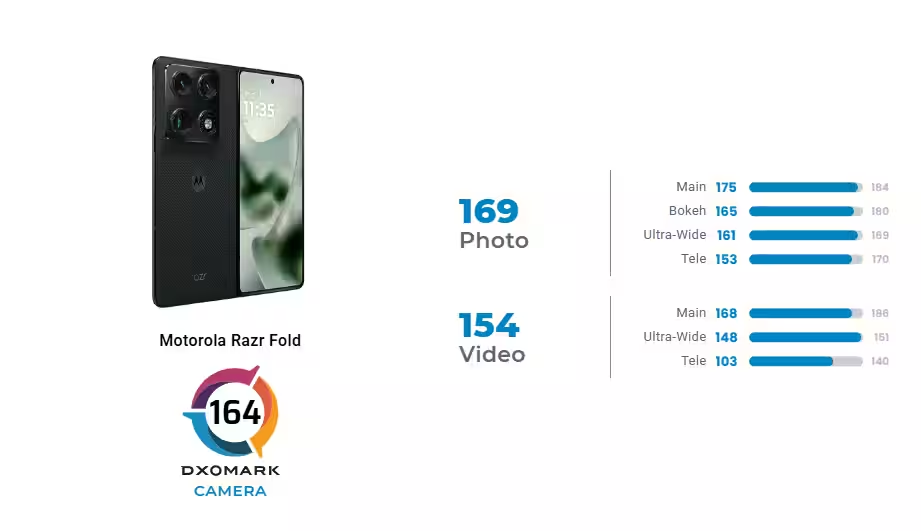
When it comes to portraits, DXOMARK highlighted the Razr Fold’s knack for rendering natural skin tones and precisely mapping depth of field, resulting in realistic, pleasing images. Zoom is powered by a 50MP periscope telephoto lens with a Sony LYTIA 600 sensor, offering three times optical zoom without sacrificing sharpness or color fidelity. Optical image stabilization further helps to reduce blur, even when zoomed in.

The Razr Fold’s camera system is built around three 50-megapixel Sony LYTIA sensors: the main shooter is the Motorola 828 module-the brand’s largest-ever 50MP sensor-paired with the periscope telephoto and a 122-degree ultra-wide lens that supports macro photography. The front-facing setup includes a 20MP Quad Pixel camera, plus a 32MP under-display lens designed for hands-free ”laptop mode” video calls.
Video recording capabilities are equally robust, supporting 8K capture with Dolby Vision for rich colors and enhanced dynamic range. Behind the scenes, Motorola’s proprietary Photo Enhancement Engine, powered by AI, kicks in to expand dynamic range, suppress noise, and create software-based background blur effects. The Snapdragon 8 Gen 5 chip handles imaging performance, optimizing energy consumption and powering smarter AI-driven camera algorithms.
Foldables rarely grab top DXOMARK scores, so the Razr Fold’s breakthrough clearly signals Motorola’s serious commitment to pushing camera quality in flexible devices. This sets a new bar for the category, shrinking the gap between premium flagships and foldables. Now, the big question for fans and competitors alike: who’s next to raise the stakes? Samsung with its Fold and Flip lineup, or Huawei’s Mate X series might be gearing up for the challenge.
For Russian readers, it’s worth noting that Motorola, historically appreciated for its innovative foldable designs in the local market, is now making strides in the same arena where Samsung and Huawei have long competed fiercely. This DXOMARK accolade may influence market dynamics back home and boost consumer confidence in Motorola’s evolving tech offerings.
In conclusion, the Motorola Razr Fold’s camera performance is more than just a score-it’s a sign that foldable smartphones are catching up to traditional flagships, especially in one of their weakest points: photography. As AI-driven enhancements and versatile hardware come together with powerful processors like the Snapdragon 8 Gen 5, we’re witnessing a new chapter in foldable tech maturity. For enthusiasts and industry watchers, this makes foldables not only a cool form factor but now a genuinely competitive choice for the camera-conscious user.