


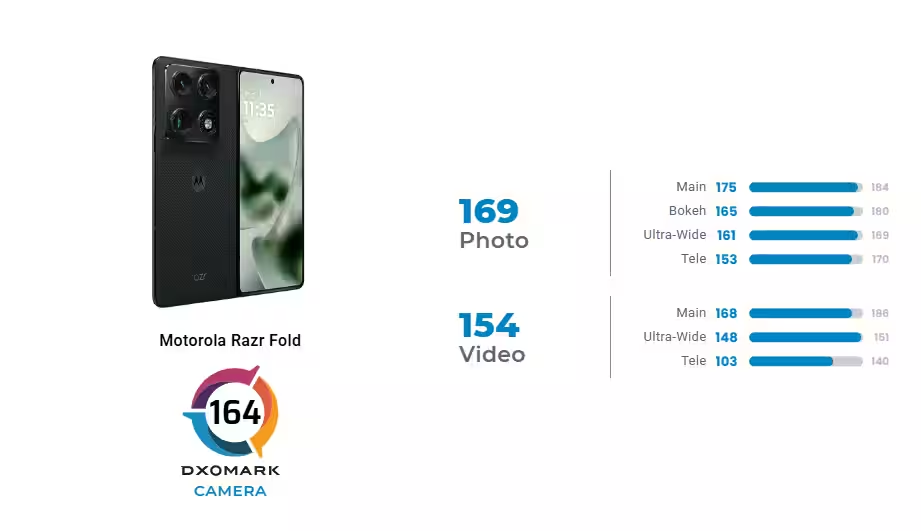
Motorola’s Razr Fold has just earned a DXOMARK camera score of 164, landing it the Gold Label for imaging performance and making it the top-scoring foldable smartphone in the testing lab’s rankings. This puts the Razr Fold ahead of notable rivals such as the Google Pixel 10 Pro XL and Xiaomi 17 Pro Max, and places it eighth among all smartphones globally, marking a significant milestone for foldable devices that have historically struggled to compete with traditional flagship cameras.
DXOMARK, an independent technology lab renowned for its rigorous scientific camera testing, assessed the Razr Fold using its Camera test suite, which evaluates photo quality, zoom capabilities, and video performance under controlled conditions and subjective analysis. The results highlight the Razr Fold’s notably accurate exposure, wide dynamic range, and strong low-light shooting capabilities. It also impressed with faithful color reproduction, consistent skin tones, and depth estimation that contributes to natural-looking portraits. These qualities suggest Motorola has made substantial improvements over previous folding phones, which often sacrificed camera quality for the novelty of the form factor.
Periscope zoom and multi-camera setup raise the bar for foldables
The Razr Fold’s camera system features three 50MP rear cameras, all equipped with Sony LYTIA sensors. The primary sensor boasts Motorola’s largest 50MP sensor to date, contributing to the device’s strong photographic performance. A standout feature is the 3x optical zoom via a periscope telephoto lens, which DXOMARK highlights for its sharp details and balanced colors even when zoomed in. This contrasts with many earlier foldables that lacked versatile zoom, further pushing the Razr Fold ahead in camera capability.

The ultra-wide camera offers a 122° field of view with stable image quality and Macro Vision for close-up shots, rounding out a flexible and capable system. On the front, the phone includes a 20MP selfie snapper and a 32MP internal camera optimized for video calls and hands-free photography, highlighting Motorola’s focus on both traditional and laptop-mode use cases.
AI-driven processing and video upgrade with 8K Dolby Vision
Beyond hardware, the Razr Fold benefits from Motorola’s Photo Enhancement Engine, an AI-powered system that enhances dynamic range, reduces noise, and creates software bokeh effects to simulate shallow depth of field. The Snapdragon 8 Gen 5 chipset under the hood bolsters these AI features, preventing a compromise between camera excellence and device performance.
Video capabilities are equally impressive, with support for 8K video recording featuring Dolby Vision, which enables higher dynamic range and more vibrant colors than standard video formats. This positions the Razr Fold as a foldable that doesn’t just keep up but pushes forward in multimedia creation, a growing demand as creators seek more compact yet powerful devices.
Motorola’s progress with the Razr Fold reflects a broader shift in foldable phones transitioning from experimental gadgets toward fully realized flagship contenders, where camera experience is no longer an afterthought. With consumers increasingly scrutinizing camera specs and image quality, Motorola’s leap with a DXOMARK-leading foldable camera raises the bar and pressure on other manufacturers to follow suit.