


Xiaomi is set to expand its self-developed chip lineup with the XRING O2, a successor to its debut mobile processor XRING O1, expected to launch later this year. Continuing its partnership with TSMC, the new chip is rumored to be built using their advanced 3nm fabrication node, promising improved efficiency and performance. This move reinforces Xiaomi’s commitment to designing proprietary chips and signals a broader ambition to power not just smartphones but a wider array of connected devices within its ecosystem.
Launched last year, the XRING O1 marked Xiaomi’s first entry into flagship mobile silicon development, employing TSMC’s second-generation 3nm technology. It debuted in the Xiaomi 15S Pro and was competitive with other high-end chips in benchmarks and everyday use. The company’s president recently confirmed plans to release a new chipset annually, aiming to gradually reduce reliance on outside suppliers like Qualcomm and MediaTek, which dominate Android smartphone chip markets.
Xiaomi’s silicon journey gains momentum
Xiaomi’s chip development started as a long-term play rather than an immediate volume play, with founder Lei Jun explaining that early efforts focused on mastering core technologies over several years. The XRING O1’s architecture, based on Arm CPU and GPU cores, already delivered multi-core scores above 9,000, raising eyebrows as a credible competitor in flagship silicon despite being a first-generation, in-house design. The XRING O2 will likely build on this foundation with enhanced performance and efficiency leveraging TSMC’s latest 3nm process.
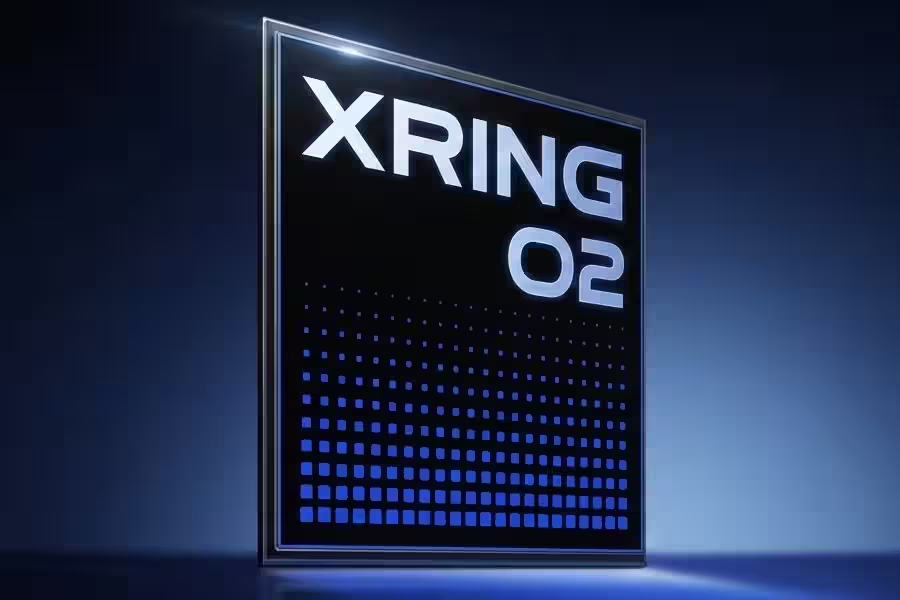
More significant than the upgraded specs, however, is Xiaomi’s strategy to broaden the chip’s applications beyond smartphones. Reports suggest the XRING O2 or its variants will expand into tablets, wearables, and other smart home devices, marking a bigger push to create an integrated, chip-powered ecosystem. This approach echoes moves by Apple, which has long designed silicon optimized across its product range, and underscores a growing trend among Chinese tech manufacturers to control hardware components more tightly amid global supply uncertainties.
This incremental yet determined chipmaking strategy holds both opportunities and risks. Xiaomi gains more control over product differentiation and potential cost advantages, but matching giants like Qualcomm or MediaTek in chip innovation and manufacturing scale is a tough climb. Success hinges on consistent performance improvements, power efficiency, and securing partnerships to integrate these chips into various devices seamlessly. As Xiaomi commits to annual chip launches, the coming years will reveal whether this gamble elevates Xiaomi from a handset assembler to a notable semiconductor innovator.