

Vivo is joining Samsung in embracing the Advanced Professional Video (APV) codec with its upcoming flagship, the X300 Ultra. Announced at MWC 2026, Vivo’s phone is the first non-Samsung device to support APV, a codec designed for high-quality, efficient video recording. This move positions Vivo as a stronger contender in premium smartphone photography and video, directly challenging Samsung’s Galaxy S26 Ultra in global markets.
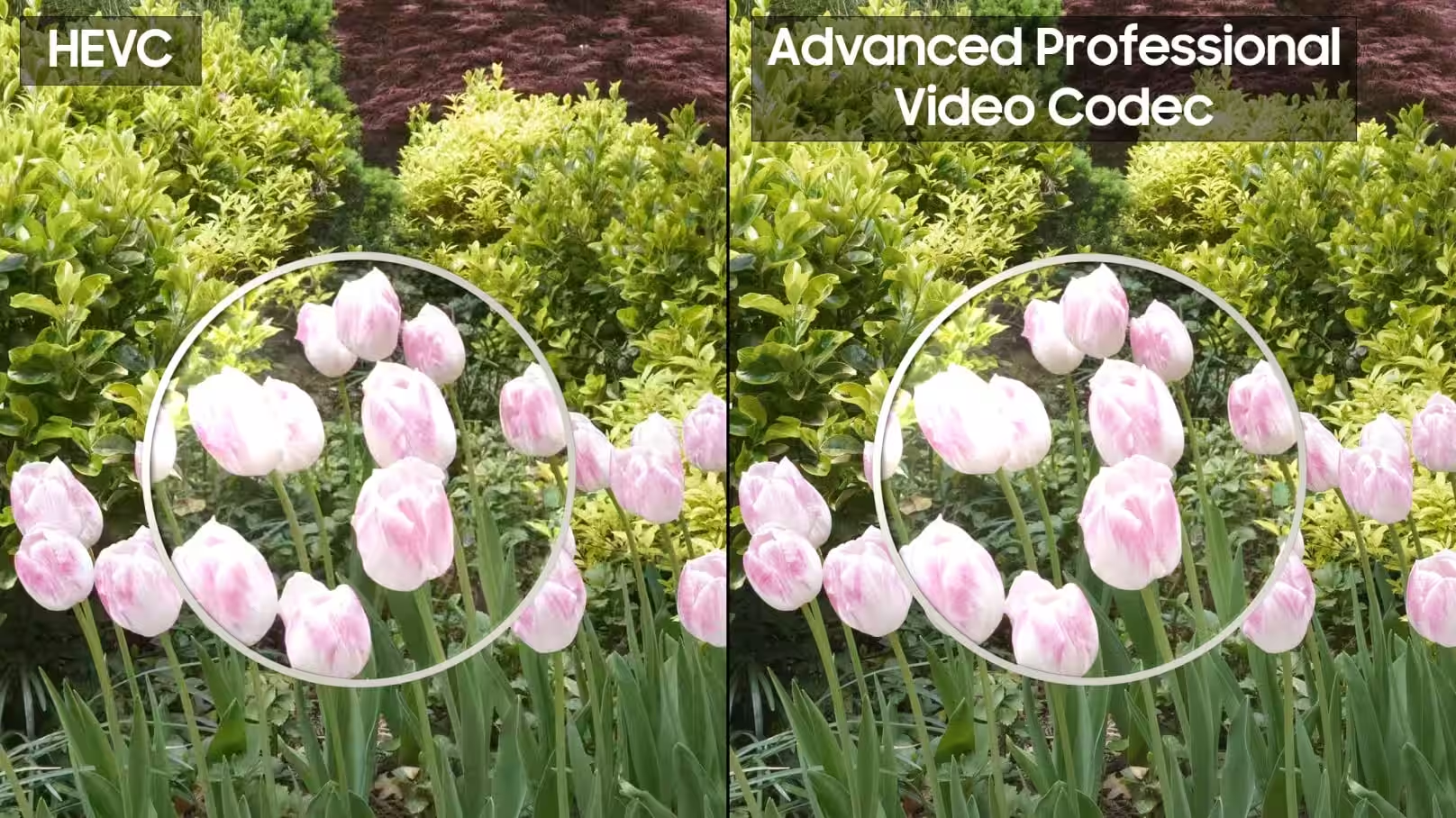
APV’s core appeal lies in its ability to deliver perceptually lossless video at smaller file sizes-about 20% less than HEVC-while preserving image quality across multiple edits and exports. This is significant for creators who demand professional-grade footage without massive storage demands. The codec’s intra-frame encoding means each video frame stands alone, making editing smoother and playback more responsive, especially in demanding video editing software.
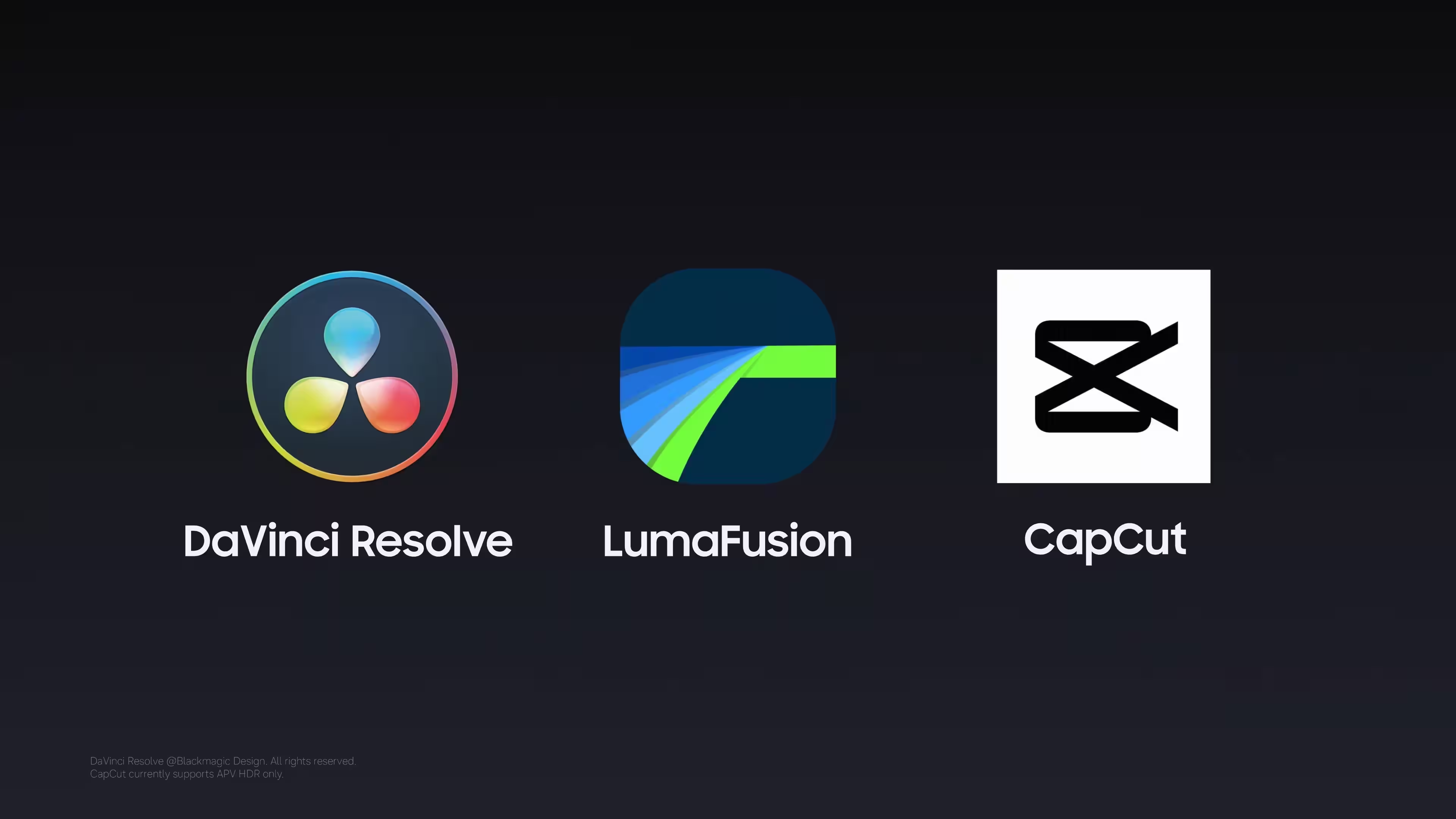
Samsung introduced APV alongside its Galaxy S26 Ultra, capitalizing on hardware support built into the Snapdragon 8 Elite Gen 5 chipset, which both Samsung’s flagship and Vivo’s X300 Ultra use. Android 16 also supports APV natively, while major editing apps like DaVinci Resolve, CapCut, and LumaFusion have integrated compatibility. Vivo’s endorsement of APV thus signals broader ecosystem adoption beyond Samsung’s devices.
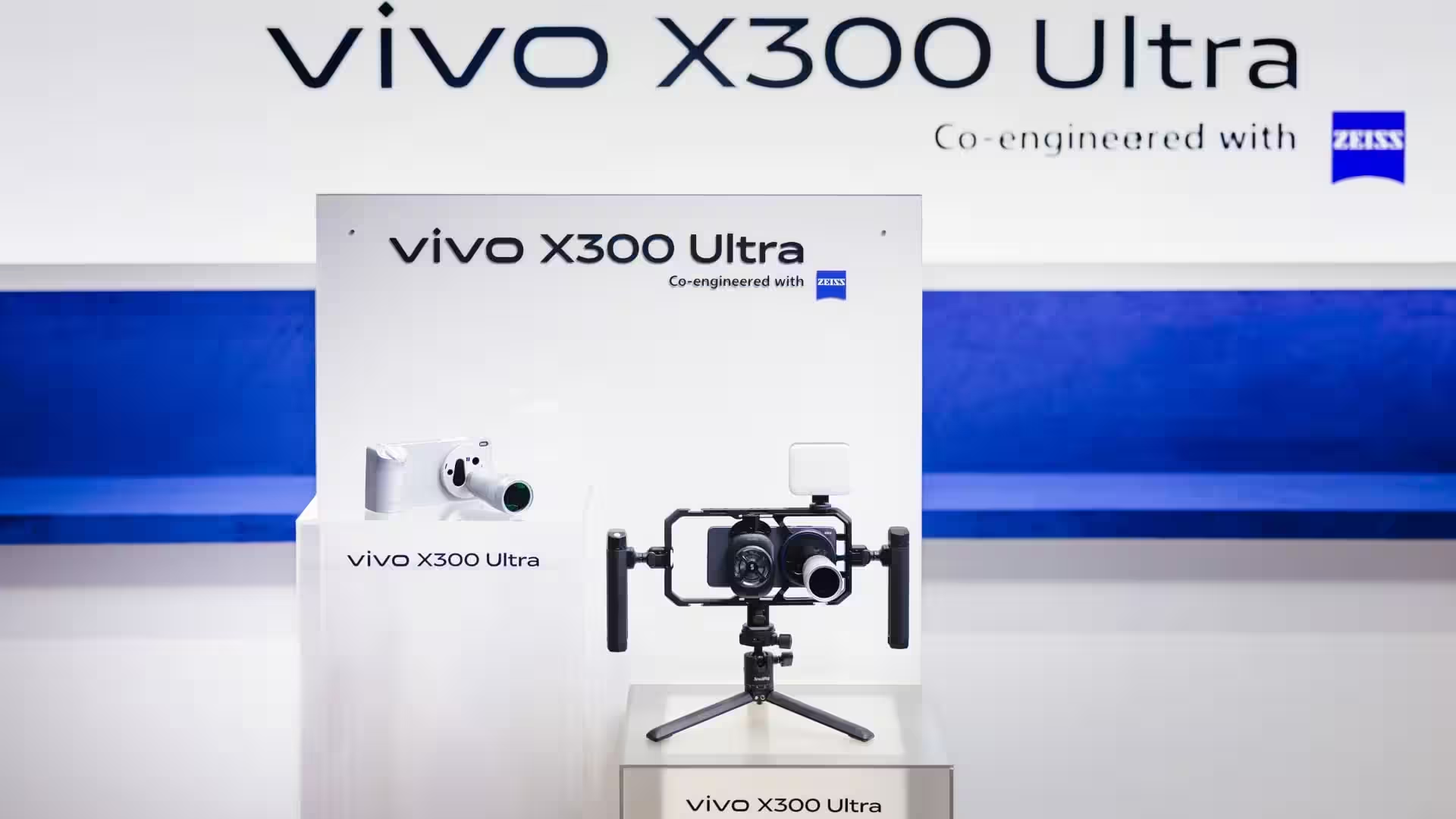
Vivo X300 Ultra’s camera prowess and market impact
The Vivo X300 Ultra boasts impressive photographic hardware: a 200MP primary sensor from Sony, a 200MP telephoto camera from Samsung, plus a 50MP ultrawide and 50MP front-facing camera. An optional teleconverter accessory extends optical zoom to the equivalent of 400mm, setting new ground in mobile zoom capabilities outside Samsung’s ecosystem.
- Primary: 200MP Sony LYTIA LYT901 sensor, 1/1.12-inch, 35mm equivalent, Dual-Pixel PDAF, OIS
- Telephoto: 200MP Samsung ISOCELL HPB, 1/1.4-inch sensor, 3.7x optical zoom, Multi-Directional PDAF, OIS
- Ultrawide: 50MP Sony LYTIA LYT828, 1/1.28-inch, f/2.0 aperture, Dual-Pixel PDAF, OIS
- Front-facing: 50MP with PDAF
- Optional accessory: Teleconverter kit reaching 400mm focal length (about 11.4x optical zoom)
Vivo plans to launch the X300 Ultra in select Asian and European markets, marking a rare global rollout for its Ultra series. This wider availability could shift dynamics in the premium smartphone photography segment, challenging Samsung’s dominance by offering comparable or even superior imaging options with APV codec support outside its own devices.
While Samsung bet on APV to enhance video quality and editing flexibility on its Galaxy S26 Ultra, Vivo’s move signals an opening of what was a tightly controlled technology. It may push other manufacturers to adopt APV, fostering competition and benefiting creators seeking high-res video on various hardware platforms.
The bigger question is whether APV will become the new standard for professional mobile video. Samsung’s codec promises both creative freedom and storage savings, but success depends on broader ecosystem support. Vivo’s endorsement is an encouraging sign, yet Apple, Google, and others remain absent so far, leaving space for alternative codecs to persist.
For now, Vivo’s X300 Ultra looks set to raise the stakes for high-end smartphone video and photography, giving enthusiasts a compelling alternative to Samsung’s Galaxy S26 Ultra-especially for those who prefer Android devices beyond Samsung’s flagship roster.