

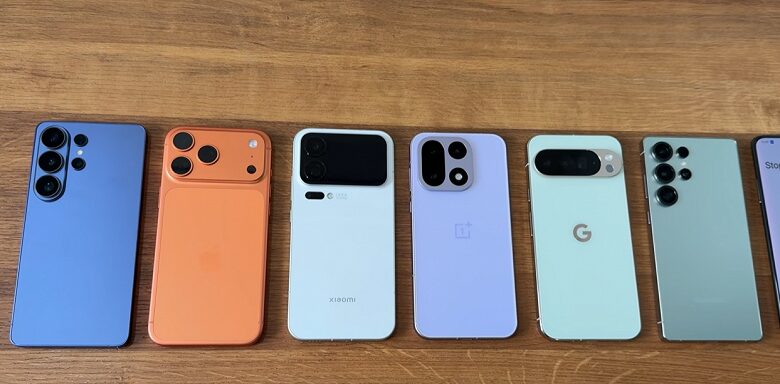
Samsung’s Galaxy S26 Ultra sticks with a 5000mAh battery, banking on a more efficient Snapdragon chip and the latest One UI 8.5 software tweaks to stretch its endurance. However, this cautious approach means it falls behind newer competitors like Xiaomi’s 17 Pro Max and OnePlus 15, which pack batteries over 7000mAh and blow past Samsung in real-world battery tests.
While Samsung’s strategy aims to improve efficiency over simply adding battery capacity, it contrasts sharply with Chinese rivals who continue to push larger battery sizes. Xiaomi’s 7500mAh and OnePlus’ 7300mAh batteries give them a noticeable edge in longevity that current tech tweaks alone can’t match.
In tests conducted by Tech Droider, the Galaxy S26 Ultra lasted about 9 hours and 8 minutes in mixed usage scenarios-slightly better than last year’s S25 Ultra, which managed 8 hours and 40 minutes. But Xiaomi’s 17 Pro Max exceeded 10 hours, OnePlus 15 clocked an impressive 12 hours and 31 minutes, and even Apple’s iPhone 17 Pro Max edged ahead with 9 hours and 41 minutes.
These figures underscore that while chip efficiency and software optimization are important, battery size still plays a dominant role in endurance, especially when AMOLED displays and 5G connectivity drain power aggressively. The S26 Ultra’s conservative 5000mAh battery now looks like a liability against beefier competitors.
Interestingly, in a different review published earlier, the S26 Ultra was reported to outperform the iPhone 17 Pro Max in battery life, indicating that test conditions and usage profiles can sway outcomes. But when stacked against phones with substantially larger batteries, Samsung’s chip-focused efficiency doesn’t translate into a leading runtime.
This tussle over battery size versus efficiency reflects broader trends in the Android flagship market. For years, Samsung has resisted inflating battery capacities beyond around 5000mAh, citing concerns about heat, weight, and charging times. Meanwhile, Chinese brands regularly double down on massive batteries, accepting extra bulk as a tradeoff for all-day-plus endurance.
Samsung’s approach prioritizes a slim, lightweight design and fast charging but may cost it mindshare among power users who want phones that can easily last through the longest days without recharging. This debate will heat up further as displays get brighter and CPUs demand more power, making the next generation of batteries and chipsets even more critical.
With no signs of Samsung upping battery sizes soon, it will be interesting to see if future Snapdragon and One UI improvements can close the gap, or if the company will eventually have to embrace bulkier packs like its competitors to keep up in battery life.