

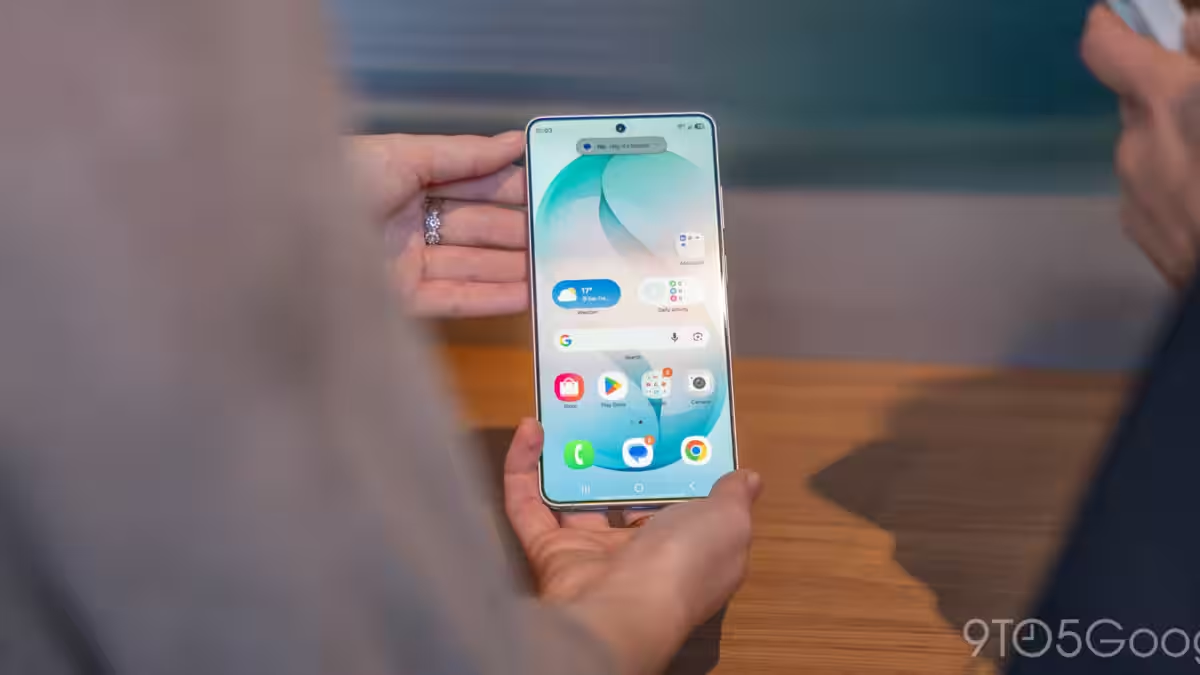
Samsung has confirmed that its latest Galaxy S26 series features 8-bit color depth displays instead of 10-bit, contradicting earlier statements that suggested the phones would support 10-bit panels. This clarification reveals that the Galaxy S26, S26+, and S26 Ultra continue to offer the same 16 million colors as previous models, rather than the 1.07 billion colors possible with a true 10-bit display.
The confusion traces back to mixed information at launch, where Samsung suggested the Galaxy S26 Ultra would provide a 10-bit display aligning with its advanced camera features. However, official spec sheets now confirm that all three models stick with 8-bit panels. While Samsung’s briefings mentioned improved 10-bit video support, this capability does not extend to the panel’s actual color depth on the display side.
A 10-bit color depth enables significantly smoother gradients and better color accuracy, a boon for reducing banding artifacts when viewing content or photos at various angles. The Galaxy S26 series, though retaining an 8-bit panel, reportedly achieved color banding improvements through internal software and hardware optimizations rather than raw color depth enhancements.
This development may disappoint consumers who anticipated a display upgrade from the previous Galaxy S25 series, as the S26 models appear to use essentially the same AMOLED 2X panels with identical color capabilities. The persistence of the 8-bit display suggests Samsung prioritized other areas for enhancement over boosting panel color depth this year.
Samsung’s backtracking points to a communication misstep during their press engagements, where the technical distinctions between 10-bit video processing and 10-bit display hardware were blurred. Companies often tout ”10-bit” as a headline feature, but the nuance that it applies only to video playback rather than the display panel itself can create misleading expectations.
In the broader context, Samsung isn’t alone in maintaining 8-bit displays on flagship phones, as Apple’s iPhones and many Android competitors also rely on 8-bit color with advanced color management techniques to enhance visual quality. True 10-bit AMOLED panels remain relatively rare in smartphones due to cost and power considerations.
Looking ahead, it remains to be seen when Samsung will fully transition to 10-bit displays across its flagship line, if ever. Meanwhile, software tricks and HDR support continue to deliver appealing image quality without the deeper color depth. For now, the Galaxy S26’s screen upgrades focus more on subtle refinements than a quantum leap in color fidelity.