

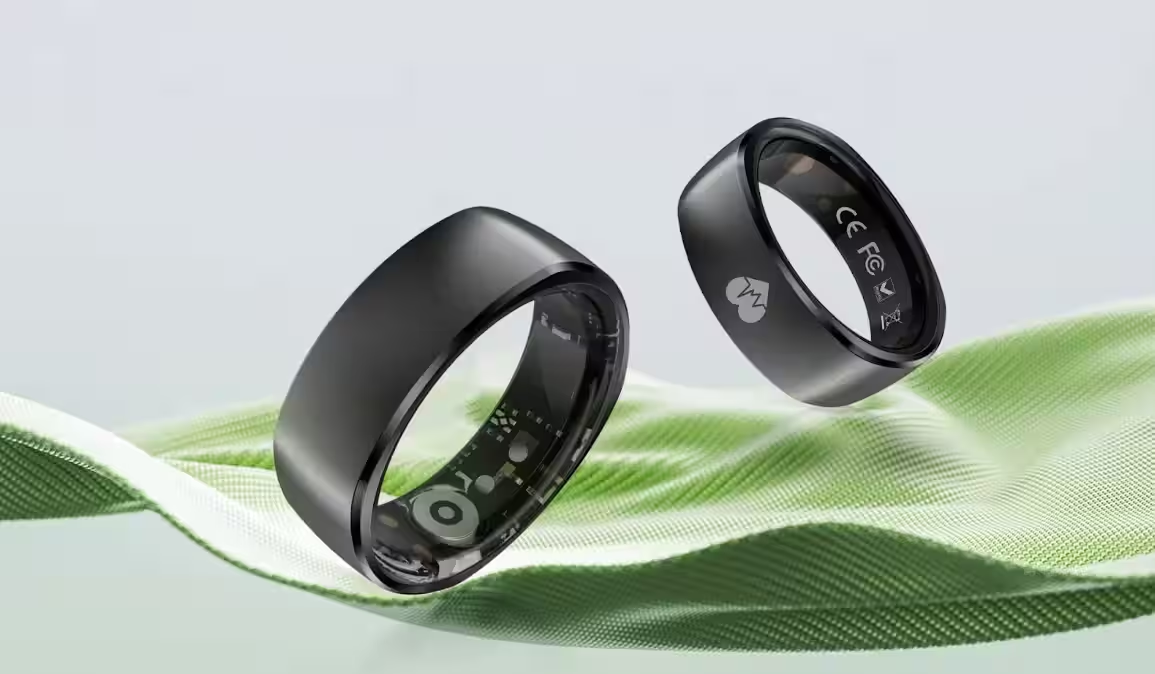
Smart rings have quietly become a favorite for people who want continuous health data without the bulk of a smartwatch. Smalth’s new Titanium Pro matters because it brings clinical-grade electrocardiogram (ECG) monitoring into a screenless ring at a price point that undercuts many established brands. That matters internationally: lower-cost devices with advanced sensors push the whole industry toward better, more accessible heart tracking, and they force big names to justify premium prices. Titanium Pro also tackles practical needs – multi-day offline storage, a durable medical-titanium shell, and a charging case that extends battery life – so it’s aimed at travelers and everyday users who don’t want frequent recharging or constant phone dependence. For readers outside Russia, the launch signals that smaller manufacturers are accelerating feature parity with global leaders. For those who follow Smalth’s Titanium line locally, this model shows a step up in cardiac monitoring without changes to the ring’s form.
Smalth has expanded its wearables lineup with the Titanium Pro smart ring, an evolution of the Titanium platform that adds expanded heart-monitoring features. The ring is screenless and designed for discreet, continuous health data collection in a compact, everyday-friendly form factor.
Titanium Pro includes built-in ECG support, which lets the device capture more detailed heart rhythm information than a standard pulse reading. Paired with continuous heart rate monitoring, heart rate variability (HRV) tracking, sleep-phase analysis and activity tracking, the ring builds a broader picture of cardiovascular health.
The device can store data offline for up to seven days – handy for travel or when you have limited internet access. Once the ring connects to the companion app, all accumulated data automatically syncs.
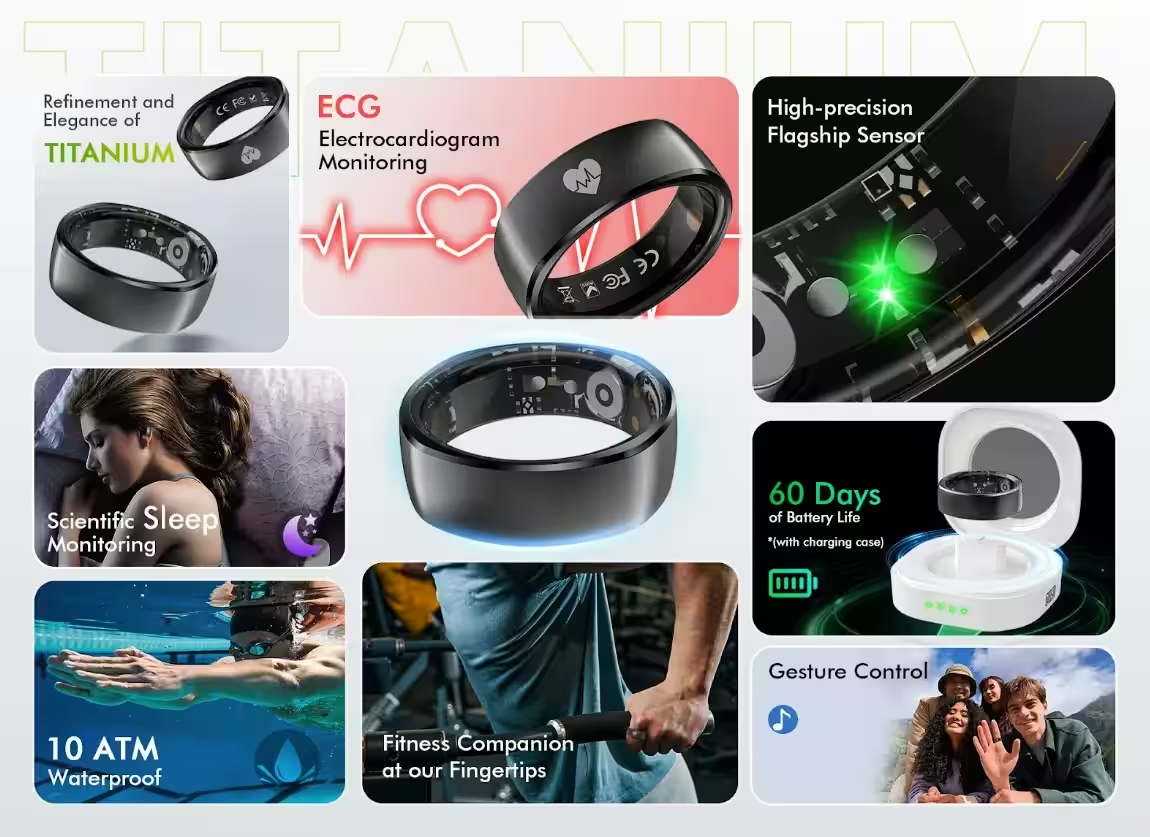
The chassis is made from medical-grade titanium, which makes the ring lightweight, durable and corrosion-resistant. Its minimalist, neutral design is meant for everyday wear, and water resistance increases the ring’s practicality for daily life.
Battery life is one of Titanium Pro’s selling points. Under typical use, the ring runs for five to seven days, and with lighter use it can last up to 12 days. The charging case delivers another four-five full charging cycles, which the company says brings total autonomy to up to 30 days and more.
Smalth Titanium Pro with ECG support is priced at $128. A ceramic version of the ring is also available for $88.
Analysis
For Russian readers, this release continues the Titanium platform’s incremental upgrades; the Titanium Pro feels like the logical next step rather than a radical redesign. Internationally, the ring underscores two trends: manufacturers outside the usual US/European ecosystem are rapidly closing the feature gap, and health-focused wearables keep shifting from simple metrics to clinically relevant signals like ECG and HRV. At $128, Smalth is positioning Titanium Pro as an affordable alternative to pricier smart rings and wrist-based ECG devices. The real test will be the companion app’s data quality, algorithm transparency and whether Smalth offers any medical-grade validation for its ECG readings. If those pieces check out, Titanium Pro could be a compelling option for users who want discreet, multi-day heart monitoring without a smartwatch’s footprint or price tag.