

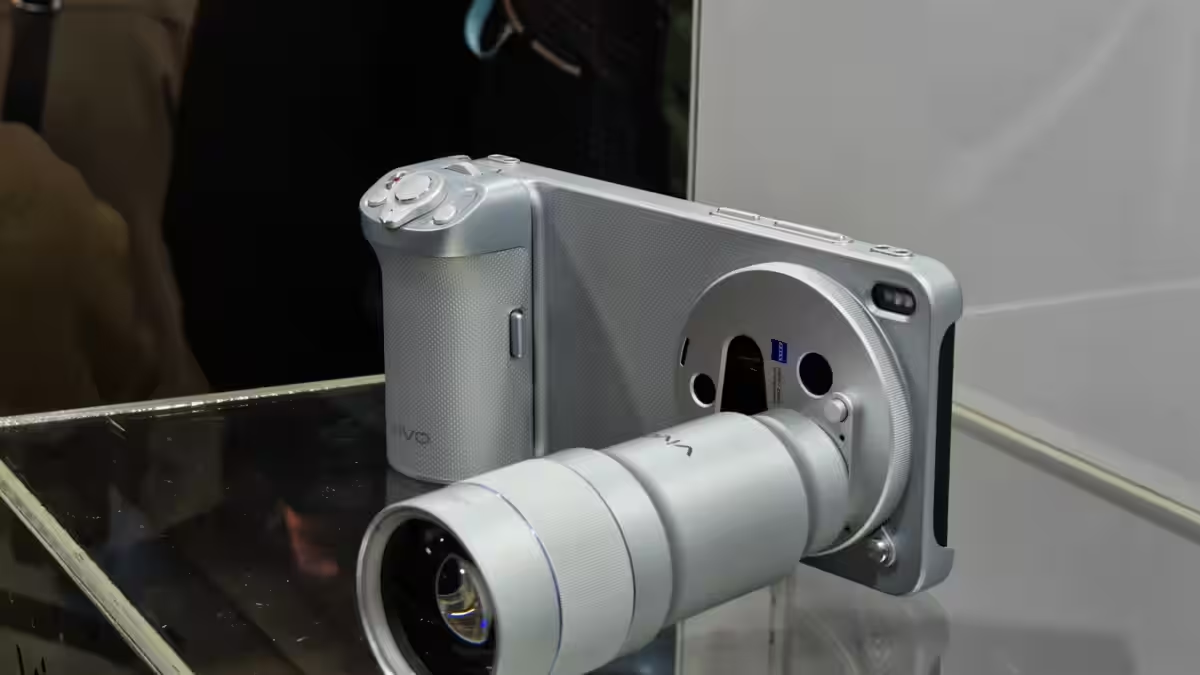
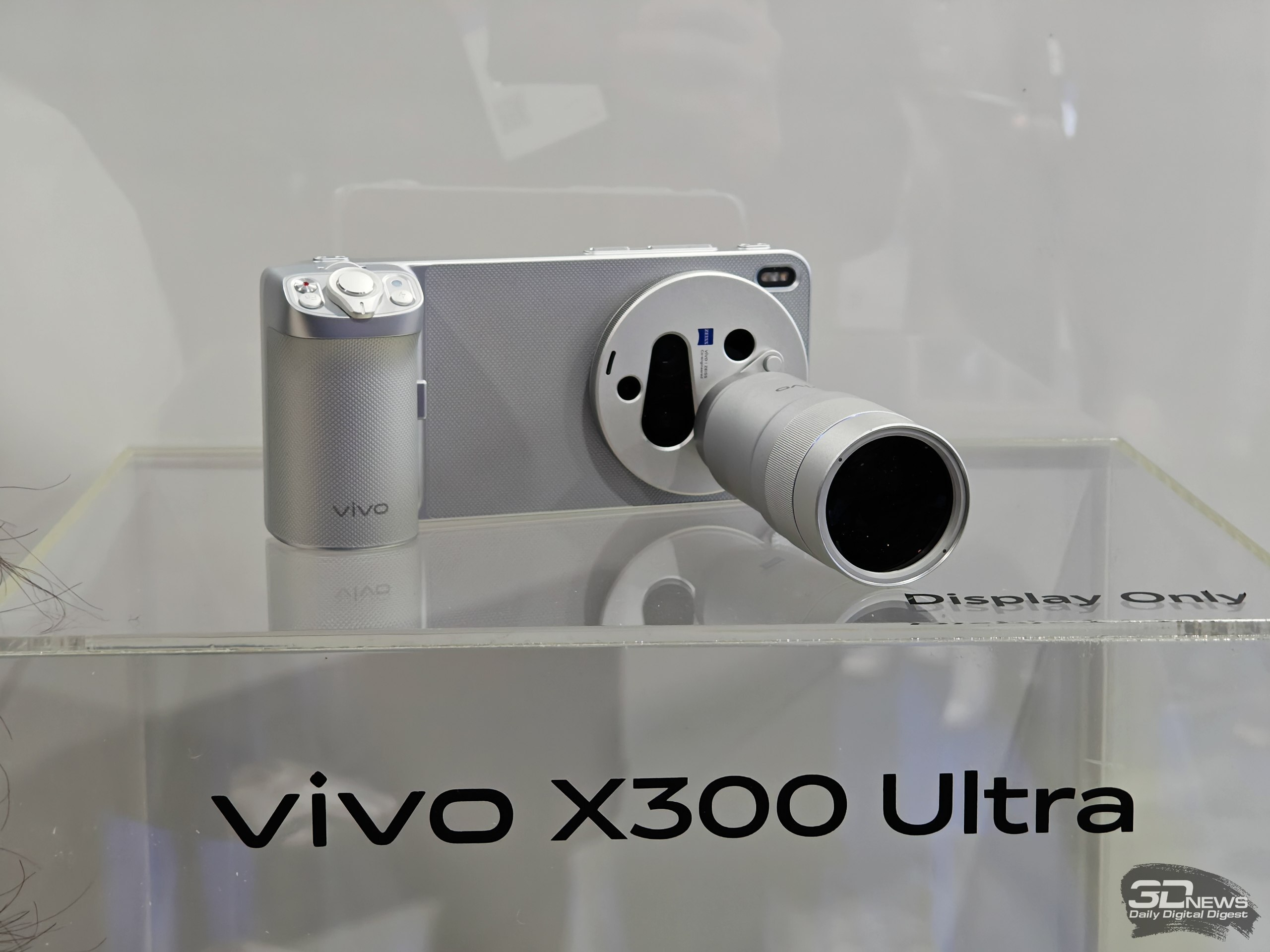
At MWC 2026 in Barcelona, Vivo unveiled its X300 Ultra flagship smartphone, marking the first time its Ultra series will be offered outside China. While the company is keeping most specifications under wraps, it confirmed a standout 200-megapixel telephoto camera and introduced new professional-grade accessories aimed at passionate mobile photographers.
Despite withholding a precise release date, Vivo’s decision to expand the X300 Ultra beyond China is a strategic move that reflects growing interest in high-end cameraphones worldwide. Its predecessor, the X200 Ultra, featured the same 200MP telephoto sensor and was widely praised as a top-performing photo smartphone last year. This year, improvements lie mostly in the bundled hardware rather than the core imaging sensor.
The highlight is the Telephoto Extender Gen2 Ultra, developed alongside Zeiss, which doubles the effective focal length from 200mm to 400mm. This bulky clip-on accessory is noticeably larger than its predecessor, hinting at enhanced optical performance but potentially sacrificing some portability. This signals Vivo’s commitment to serious photography enthusiasts who want true telephoto reach without carrying a separate camera.
Additionally, Vivo revamped its camera cage, in collaboration with SmallRig, aiming to turn the X300 Ultra into a genuinely professional video tool. This rig adds multiple cold shoe mounts for external gear, dedicated physical controls for zoom and shutter, and even an integrated cooling fan to manage heat during extended shooting sessions. This accessory suggests Vivo hopes to attract content creators who want more than just a typical smartphone experience.
However, Vivo remains vague about the X300 Ultra’s availability outside Asia. While the smartphone’s global launch is slated for late 2026, major markets like the US will likely be left out, and Vivo’s presence in Europe continues to be sporadic at best. This uneven rollout could frustrate potential buyers who have grown accustomed to more consistent global launches from competitors.
Vivo’s push into the international cameraphone arena highlights a broader trend of smartphones positioning themselves as serious imaging tools rather than just multimedia devices. With rivals like Samsung and Xiaomi also enhancing telephoto capabilities, the race to offer DSLR-like versatility in a phone is intensifying. Still, the need for bulky clip-ons and external rigs underscores the current limitations of smartphone optics and the challenges for manufacturers balancing performance with convenience.
The X300 Ultra’s real test will be whether it can convince photography enthusiasts outside China to invest in a platform that, so far, has struggled to maintain a stable foothold in Western markets. Vivo’s collaboration with Zeiss and SmallRig points to a deliberate attempt to build an ecosystem for serious creators, but without a clear launch plan or broad availability, it risks remaining a niche option.