

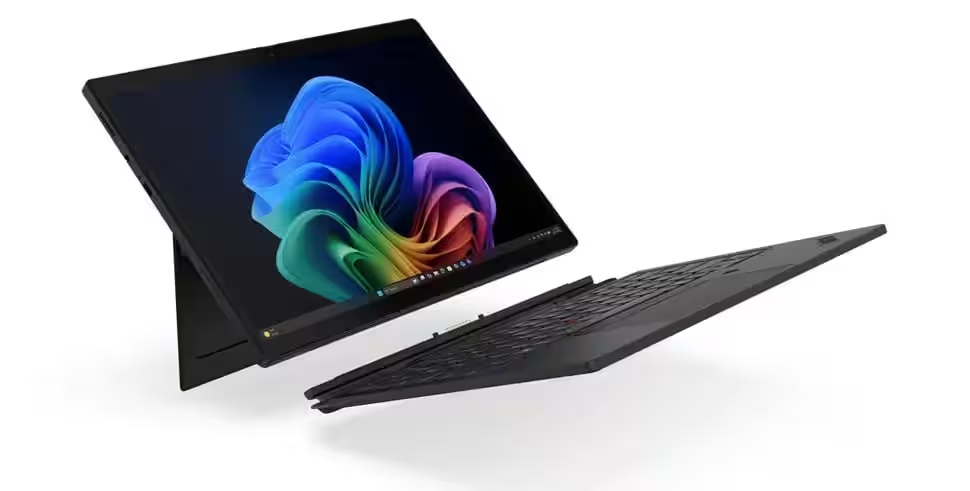
Lenovo’s new ThinkPad X13 Detachable matters because it tries to merge the rugged, business-focused DNA of the ThinkPad line with the portability and modularity that corporate buyers increasingly ask for. With a Surface Pro-like detachable design, Intel’s latest Core Ultra chips, a 13-inch 500-nit display, and an unusually user-replaceable battery, Lenovo is signaling that hybrid devices can be tailored for heavy enterprise use rather than just consumers. For international IT managers and procurement teams, that combination raises questions about lifecycle costs, security, and device management: soldered RAM up to 64 GB limits field upgrades, while removable batteries and Thunderbolt 4 ports simplify maintenance and docking. The device’s $1,999 starting price also forces a calculus about value versus conventional business laptops and competing detachables. In short, the X13 Detachable is a test case for whether premium detachable PCs can win mainstream enterprise deployments worldwide. It could reshape corporate buying habits globally.
At Mobile World Congress, Lenovo announced the ThinkPad X13 Detachable – the successor to the X12 – aimed squarely at corporate users who want a true tablet-plus-PC experience. The design clearly borrows inspiration from Microsoft’s Surface Pro family, from the kickstand to the magnetic keyboard, but Lenovo says it adds features rarely seen in this segment: a field-replaceable battery and Intel’s newest processors.
For readers in Russia: ThinkPad has long been a go-to brand in many Russian corporate and government IT fleets, so new enterprise-grade ThinkPads draw particular attention locally. Procurement cycles, local support relationships, and reputation from the IBM-era ThinkPad days still influence buying decisions here – so a pricier, more modular detachable from Lenovo will be judged not just on specs but on service, warranties, and replacement logistics.
Key specs
The X13 Detachable runs on the newest Intel Core Ultra 5 and Ultra 7 Series 3 processors (code name ”Panther Lake”). Lenovo hasn’t listed exact SKUs, but the company advertises support for up to 64 GB of soldered LPDDR5x RAM (no user upgrades) and up to a 1 TB NVMe drive in M.2 2242 format. The 13-inch display reaches 500 nits of brightness and the chassis includes two Thunderbolt 4 USB-C ports for docking and high-speed peripherals.
Instead of the flimsy folio keyboards you sometimes see on detachables, Lenovo went with a stiffer attachment system that aims to feel closer to a classic ThinkPad T-series laptop. The keyboard offers 1.5 mm of key travel – noticeably more than most detachable keyboards – and the cover houses a full-size stylus bay that charges the pen while it’s docked.
The headline engineering move is a removable battery that users can swap in the field without disassembling the tablet. That’s unusual for ultra-thin detachables and a clear bid at enterprise customers who prioritize uptime and serviceability. It doesn’t change the fact that RAM is soldered, which limits upgrade paths over the device’s lifecycle.
We see the X13 Detachable as part of our strategy to build ”intelligent systems that work seamlessly with everything we use,” integrating AI at the system level and tying into the Lenovo Qira ecosystem,
Luca Rossi, president, Lenovo Intelligent Devices Group
Lenovo set the starting price at $1999 – a significant premium over direct detachables like the Surface Pro 10 and the HP Elite x2, and higher than many conventional business laptops. Sales begin in July 2026, with a phased rollout across markets through the third quarter.
Analysts note Lenovo faces a tricky sell: it needs to convince corporate buyers that the mix of tablet flexibility, ThinkPad ergonomics, and a user-replaceable battery justifies a price that’s roughly double the category average. The business case will hinge on how deeply Lenovo integrates AI features into enterprise workflows via Lenovo Qira and whether IT departments value the modest modularity on offer.
My take: the X13 Detachable is an interesting experiment in moving premium detachable hardware toward enterprise needs. The removable battery and Thunderbolt 4 ports are practical wins for IT teams that manage large fleets, and the stiffer keyboard improves day-to-day typing comfort – both arguments for corporate buyers who tolerate higher entry costs for lower operational friction. But soldered LPDDR5x up to 64 GB, while beefy, locks future upgradeability, and the $1,999 entry point puts this device in a competitive crossfire where buyers will weigh managed lifecycle benefits against cheaper, repair-friendly clamshells or more affordable detachables. If Lenovo can make the Qira-driven AI features genuinely useful in corporate workflows and back the product with enterprise-grade support in key markets, the X13 Detachable could find a niche. Otherwise, it risks remaining a premium curiosity.