

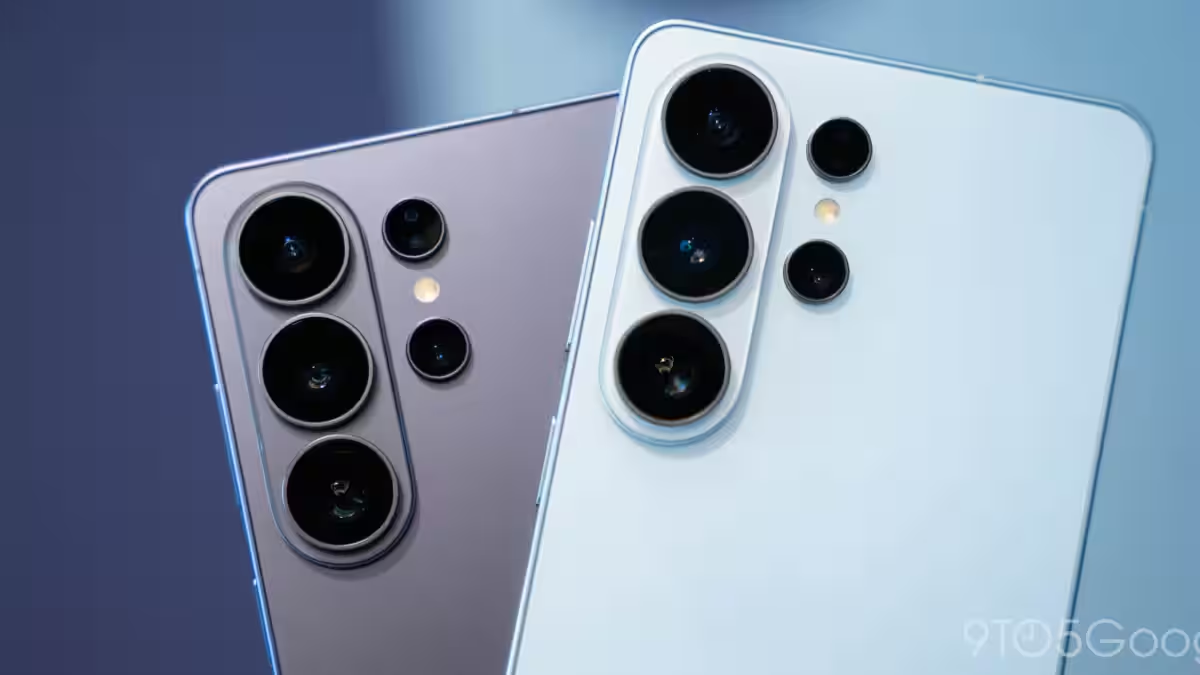
With the Galaxy S26 series just hitting shelves, whispers about Samsung’s next flagship, the Galaxy S27 Ultra, are already gathering steam-especially around a potentially long-overdue upgrade to its flagship 200MP camera sensor. Rather than overhauling resolution, Samsung appears focused on improving sensor size and technology to boost image quality, a shift that could signal a new era in mobile photography for the company.
Incremental sensor upgrade aims for better dynamic range
Leak sources such as Digital Chat Station and Ice Universe suggest Samsung’s upcoming ISOCELL HPA sensor will maintain the staggering 200-megapixel count but increase in physical size to 1/1.12”, with a twist: integration of LOFIC (Lateral Overflow Integration Capacitor) technology, which enhances dynamic range by managing pixel charge more efficiently. This promises sharper highlights and richer shadows, especially in tricky lighting conditions.
Interestingly, one rumored variant called the HP6 might offer a smaller 1/1.3” sensor but retain similar performance features, indicating Samsung may experiment with size-performance tradeoffs to fit design constraints or reduce costs. This approach mirrors trends seen among competitors like Xiaomi’s 17 Ultra and even Apple’s rumored integration of LOFIC in their latest iPhone lineup.
Samsung’s camera upgrades have felt stuck-until now?
Samsung’s camera department has been in a holding pattern with the 200MP sensor since its debut, with most improvements lately coming from software processing rather than sensor hardware. The Galaxy S26 Ultra improved slightly by using a wider aperture on the main and ultrawide cameras, but many had hoped for a more substantial leap in physical sensor tech.
Samsung’s history of last-minute lineup changes and quiet product reboots-highlighted by the S26’s tumultuous development-make early rumor caution warranted. However, if Ice Universe’s past prediction about the S26’s wider aperture panned out, their assertion about the S27’s new sensor upgrades might not be just wishful thinking.
This rumored sensor upgrade fits into a broader industry trend of leveraging sensor size and dynamic range technology to push boundaries, rather than chasing ever-higher megapixel counts that often struggle to deliver noticeable real-world improvements. Samsung’s move to embrace LOFIC could help it reclaim ground lost to rivals who have been quicker to deploy advanced sensor technology.
What the rumored sensor upgrade means for Samsung’s flagship future
If the Galaxy S27 Ultra does launch with the ISOCELL HPA or HP6 sensor, it could mark the first major imaging hardware upgrade for Samsung’s Ultra line in years. Photographers and enthusiasts waiting for a tangible improvement over the S26’s incremental enhancements might finally get their wish. Still, the performance will hinge not just on sensor technology but on how Samsung’s software handles the extra dynamic range and detail capture.
Timing is everything, too. Samsung’s experimentation with sensor sizes might hint at tradeoffs between camera performance and the device’s overall size, cost, or battery life. Whether this balance will satisfy a market increasingly attuned to computational photography remains to be seen.
As the Galaxy S26 continues to find its feet in stores, keeping an eye on S27 rumors reveals Samsung’s push to keep pace with camera innovations from Apple and Xiaomi. If it succeeds, the Galaxy S27 Ultra might finally stop feeling like just another iterative step and reclaim its spot as a leader in smartphone imaging.