

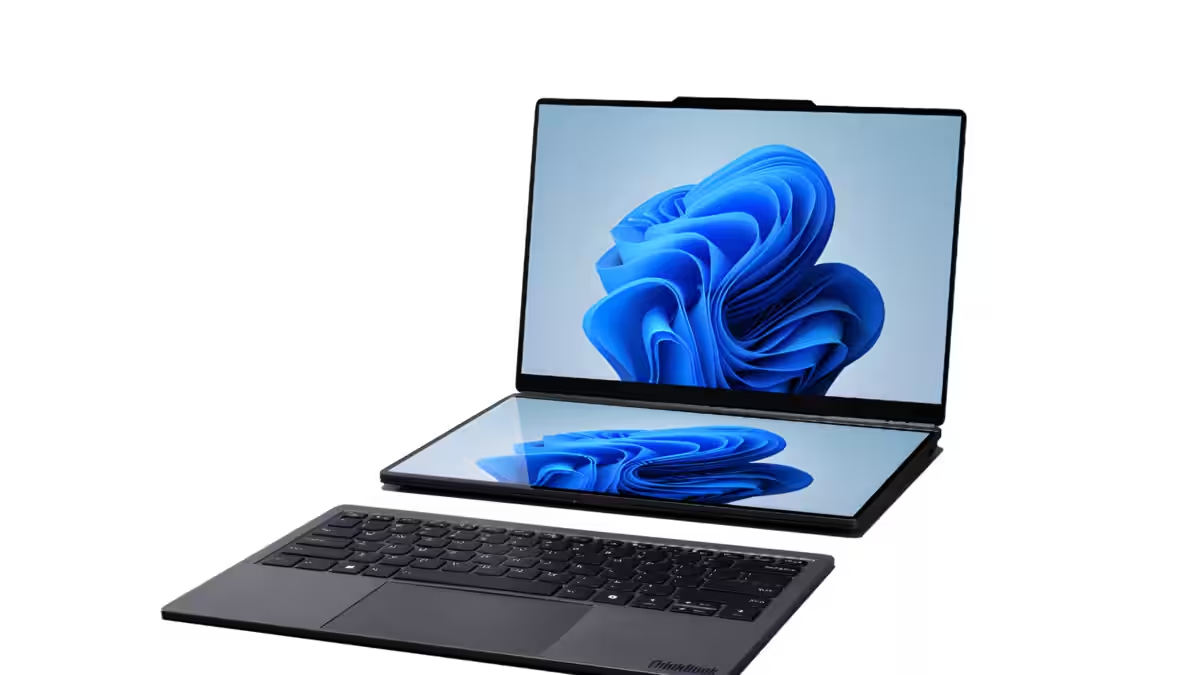
Lenovo’s latest experiment hints at a laptop design that refuses to settle for the status quo. Leaked images reveal a ”ThinkBook Modular AI PC” concept surfacing ahead of MWC 2026 in Barcelona, and while it looks like a plain laptop at first glance, its defining trait is a detachable lower half that can swap between a traditional keyboard and a secondary touchscreen display.
This modular setup promises workflow flexibility. Want a classic typing experience? Attach a physical keyboard. Need extra screen real estate for sketching, editing, or controlling media? Switch it out for a touch panel. One render even shows the main display detached entirely, sitting sideways-implying the base may support different configurations.
Lenovo isn’t new to pushing laptop boundaries. Previous MWC prototypes included rollable displays, transparent screens, and magnetically attachable components. While not all these concepts hit retail, they hint at the brand’s ongoing attempt to blend innovation with practical user needs.
But the devil is in the details-and Lenovo isn’t revealing much yet. How do these modules connect? Magnets, pins, rails? Does the touchscreen support stylus input? What’s the resolution? And, crucially, how does AI integrate into this modular system, if at all? Without answers, it feels more like a brainstorming session than a near-future product rollout.
Modular laptops have tried and mostly failed before. The idea dates back years, with devices like Dell’s Concept Ori and frameworks such as Google’s Project Ara (for phones) showing the potential-and headaches-of interchangeable parts. Key challenges include durability, seamless performance switching, and ecosystem support. Lenovo’s approach will need more than cool design to overcome these.
Competitors like Framework have been quietly making modular PCs work by focusing on component upgradability rather than swapping core user input devices like keyboards or touchscreens. This ThinkBook concept suggests Lenovo is taking a bolder, more radical route that prioritizes versatility on the fly. Whether users crave that trade-off remains to be seen.
Lenovo’s strategy of unveiling controversial prototypes at MWC makes sense-it sparks conversation, gauges excitement, and informs future products without committing prematurely. Even if the modular AI ThinkBook never ships as is, bits of its design philosophy could influence laptops in the next few years, especially as AI workloads push keyboards and screens to adapt dynamically.
MWC 2026 will open on March 2, so expect a clearer picture then. Until that moment, Lenovo’s modular gambit teases a stubborn refusal to settle on how laptops should look or work. It’s a reminder that even in a world dominated by smartphones and tablets, the quest to rethink portable productivity machines is still very much alive.