

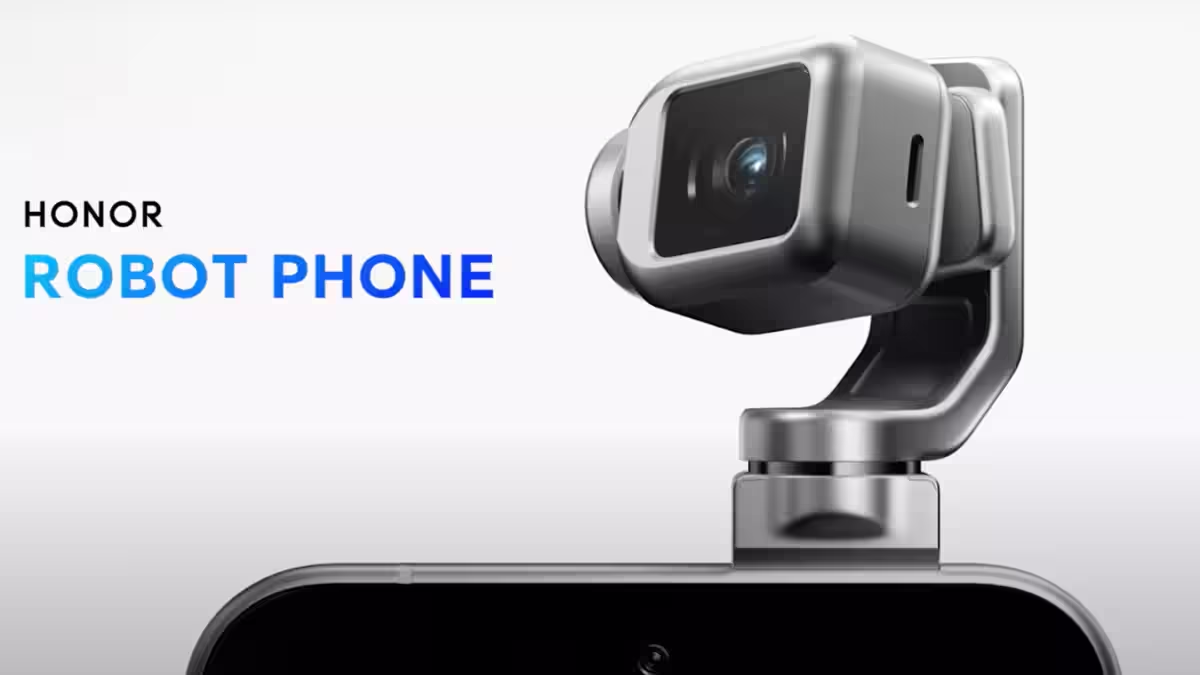
Honor is stepping beyond the usual smartphone formula by unveiling the Robot Phone at MWC 2026 in Barcelona-a premium device featuring a motorized, mechanical camera arm designed for content creators. Set to debut in China later this year, this phone aims to stand out visually and functionally in a market where flagship handsets increasingly blend into one another.
The Robot Phone’s headline feature is its 200-megapixel sensor mounted on what Honor calls the smallest four-degree-of-freedom (4DoF) gimbal system in the industry. This motorized arm unfolds from the back of the phone to provide mechanical stabilization and subject tracking, aiming to elevate video shooting capabilities for vloggers and creators. Unlike typical smartphone camera setups, the arm can extend, rotate, and compensate for shaky hands in real time.
Beyond gimmicks, this approach addresses an ongoing challenge for smartphone videographers: how to capture smooth, professional-looking footage without bulky gear. While optical image stabilization has improved, mechanical gimbals provide a distinct advantage in fluid motion capture. Honor’s integration of this tech into a phone signals ambition to appeal directly to creators looking to push mobile video quality.
An intriguing touch is the Robot Phone’s AI-driven interactive camera module, which can respond to voice commands and mimic nodding or shaking gestures. This playful robotic element hints at the future of user-device interaction that blends hardware and AI more seamlessly-though its real-world usefulness remains to be seen.
Honor’s timing is shrewd: smartphone prices are expected to rise in 2026 as memory chip costs climb, pushing brands to differentiate beyond raw specs. While Honor has kept most technical details under wraps, and pricing is undisclosed, the Robot Phone clearly aims for the premium segment. Its launch will start in China later this year, with international rollout details still unknown.
Other smartphone makers have toyed with mechanical camera modules before, such as Samsung’s Galaxy A80 with its rotating camera or ASUS’s Zenfone 6 flip camera, but none have quite taken the robotic gimbal route combined with AI interactivity. This bold experiment by Honor could either carve out a niche among creators or remain a niche novelty given the complexity and likely high cost.
Looking ahead, the question is whether the premium mobile photography crowd will embrace a phone focused on mechanical finesse over sheer megapixels or raw processing power. Honor seems to be betting that hands-free, stabilized video recording will spur a new wave of content creation on mobile, but it faces stiff competition from established flagship lines and emerging foldables.
For now, the Robot Phone’s China-only availability strategy limits its immediate global impact. If Honor can later scale and price this cleverly, we might see an interesting addition to the smartphone toolkit that blends robotics and AI in a way no one else has quite done yet.
Until then, the video demos of the Robot Phone at MWC show promising tech that might just push some boundaries, but whether it becomes more than a flashy innovation remains to be watched.