

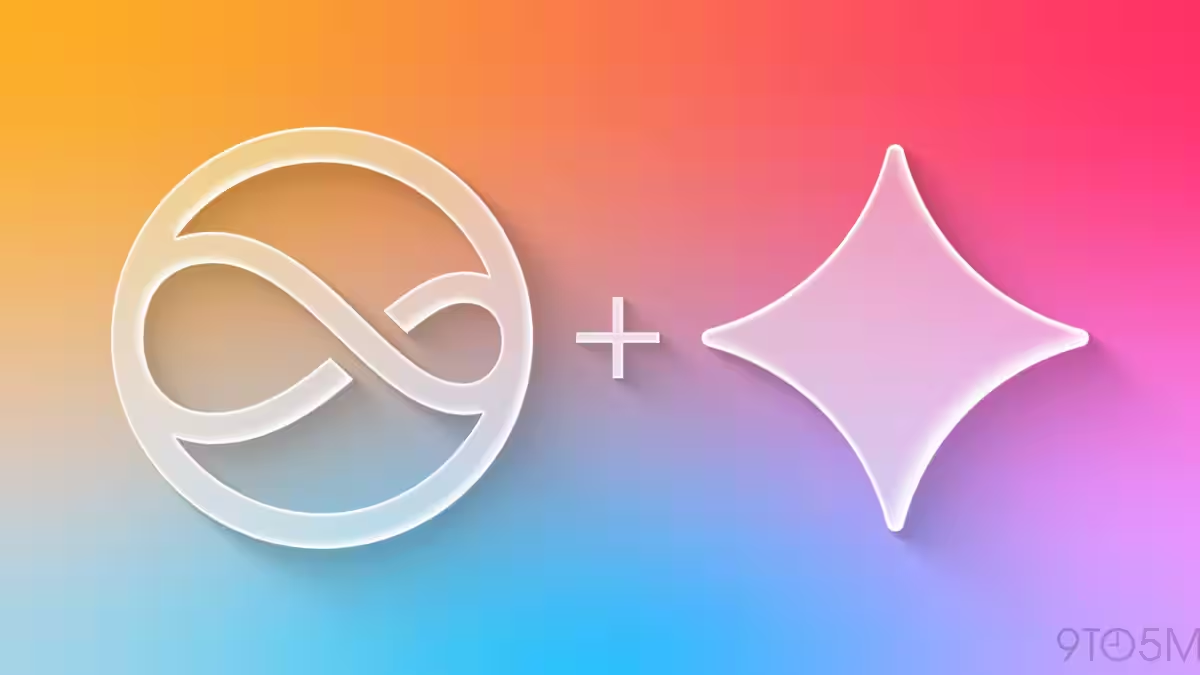
Apple is abandoning its longtime Core ML framework in favor of a new, modernized Core AI system that will debut with iOS 27. This move signals a broader shift beyond the limited domain of machine learning toward embracing a more expansive, versatile artificial intelligence toolkit for developers.
Core ML, introduced years ago as Apple’s primary bridge between machine learning models and apps, is becoming a relic in an era when AI far exceeds traditional machine learning paradigms. By rebranding and redesigning this framework as Core AI, Apple appears ready to better accommodate general AI approaches, including large language models and generative AI, without forcing developers to piece together third-party solutions.
This change aligns with how Apple has recently integrated AI enhancements such as Google’s Gemini models to overhaul Siri’s intelligence and responsiveness. While iOS 26.5 is poised for initial releases of these AI improvements, the Core AI framework in iOS 27 promises a more developer-focused, flexible foundation for AI-powered app features across the ecosystem.
Apple has been criticized for trailing behind competitors like Google and OpenAI in openly embracing AI innovation. Where Google offers extensive AI APIs and integrates conversational AI experiences proactively, Apple’s historically cautious stance has leaned toward privacy and incremental improvements. Core AI appears to reconcile this by offering developers easier, more direct access to AI capabilities while maintaining Apple’s ecosystem control.
However, the rebranding from Core ML to Core AI might not represent a radical technical overhaul under the hood but rather a strategic pivot to match current marketing and developer expectations around AI. ”Machine learning” as a term has lost its luster amid hype for next-gen AI tools. This evolution reflects Apple’s acknowledgment that sticking with the old name and framework risks alienating developers eager to explore broader AI concepts in apps.
For users, the benefits may materialize as smarter, more intuitive apps baked directly into iPhones and iPads without relying on clunky integrations or scattered AI services. That said, Apple’s success with Core AI depends heavily on how well it empowers developers without compromising performance or privacy-two areas where Apple’s standards remain notably higher than its rivals.
As we await WWDC this June, where Core AI will likely receive a full showcase, Apple is betting on quietly upgrading its AI infrastructure to catch up with an industry now dominated by ChatGPT-style models and AI assistants. The real test will be whether this new framework can attract sufficient developer interest to widen Apple’s AI app ecosystem or if it remains a niche upgrade disguised as a rebranding.