

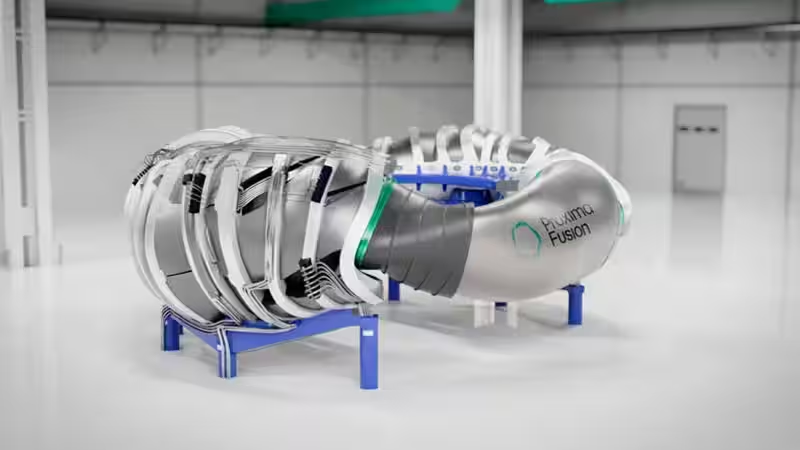
In a bold move that could reshape Europe’s energy future, a Munich-based company, Proxima Fusion, has announced plans to develop the continent’s first fusion power plant using a stellarator-a less common but promising type of fusion reactor. The strategy involves building a demonstration reactor, dubbed ”Alpha,” set to produce its first plasma by 2031, followed by a full-scale fusion power plant called Stellaris later in the decade.
Unlike the more widely known tokamak reactors, stellarators rely on complex magnetic fields to trap and control plasma, presenting significant engineering challenges. Yet, they benefit from a more stable plasma confinement ideal for continuous operation, a critical factor for practical fusion energy. Recent advancements in algorithms and artificial intelligence promise to tame the plasma behavior in these devices, potentially overcoming previous hurdles that stalled stellarator progress.
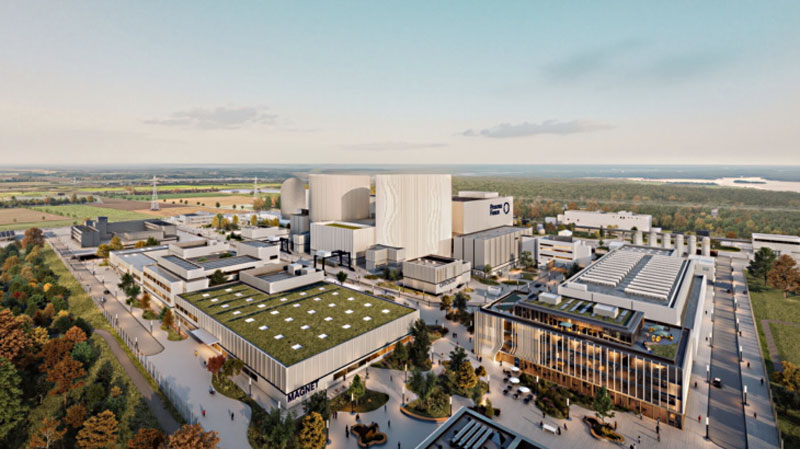
The timing and political context make this project particularly striking. Germany has been phasing out conventional nuclear power plants since the early 2000s, driven by public opposition and safety concerns. Yet, it is placing considerable faith and investment into fusion-seen as a safer and cleaner alternative. The upcoming Stellaris plant will be constructed on the site of the decommissioned Gundremmingen nuclear power station in Bavaria, signaling a symbolic and practical shift from fission to fusion energy.
Funding for the endeavor is a cooperative effort: roughly 20% is expected from private investors through Proxima Fusion, another 20% may come from the Bavarian government contingent on federal support, and the remainder is aimed to be covered by Germany’s federal budget, which plans to allocate over €2 billion toward advanced fusion projects by 2029. This multi-stakeholder approach aims to build a robust ecosystem, integrating scientific research from the Max Planck Institute for Plasma Physics with industrial-scale production capacity.
The project builds on past successes-several of Proxima Fusion’s physicists were involved in creating Germany’s Wendelstein 7-X, the world’s largest stellarator, which demonstrated stellarators’ feasibility for fusion research. Still, the leap from experimental devices to a commercial power plant is enormous, requiring not just sustained fusion but net positive energy output and practical engineering solutions to handle immense heat and neutron flux over extended periods.
Internationally, fusion research has long been dominated by tokamak-based projects such as ITER in France and various private ventures focused on compact designs. Stellarators represent a niche but appealing alternative that may accelerate fusion commercialization if the challenges of plasma control and efficiency can be resolved. Germany’s focus on stellarators diversifies fusion research in Europe, but it remains to be seen how this approach will stack up against more conventional tokamak strategies worldwide.
If successful, Germany’s fusion strategy could boost the continent’s energy independence while reducing carbon emissions significantly. The export potential of fusion technology would also position Bavaria as a key player in a future fusion industry. However, as always with fusion, timelines are lengthy, uncertainties remain high, and much depends on breakthroughs in physics and engineering over the next decade.
So, while the ambition to build the first operational stellarator-based fusion plant in Europe is commendable and a step forward, skeptics will need to wait for concrete results from Alpha’s plasma operations before claiming victory. The fusion race is heating up, and with Germany betting heavily on stellarators, the next decade will reveal whether this underdog design can deliver on its decades-old promise of clean, limitless energy.