

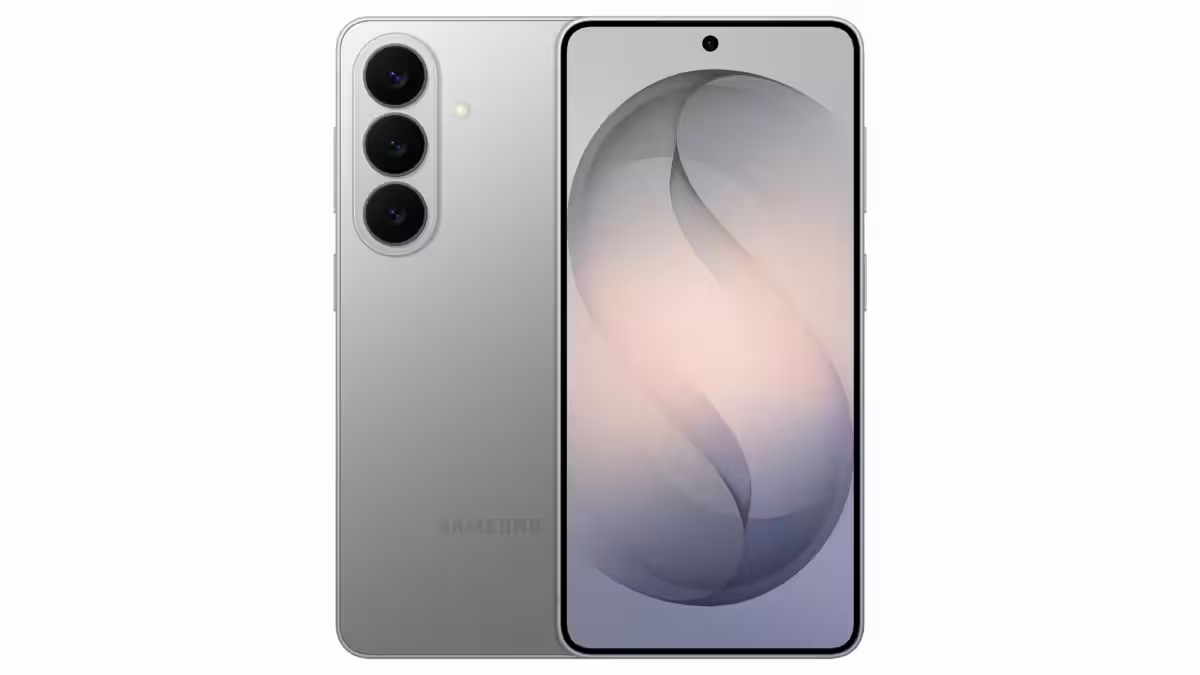
Samsung’s new Galaxy S26 and S26 Plus arrive with familiar camera hardware but a fresh bet: software and on-device AI are where the company thinks value will come from. The phones keep the same 50 MP main, 12 MP ultrawide, and 10 MP 3x zoom sensors, while One UI 8.5 supplies the headline features – and Samsung asks Europeans to pay a bit more for the privilege.
On paper, the S26 family is an incremental update. The Galaxy S26 uses a 6.3-inch LTPO OLED with 120 Hz refresh, a 4300 mAh battery, and 12 GB of RAM. The Plus keeps a 6.7-inch screen and a 4900 mAh battery. Storage starts at 256 GB (Samsung has dropped the 128 GB base tier), and charging is rated at 25 W for the S26 and 45 W for the S26 Plus. In most regions, Samsung will ship the new 10-core Exynos 2600, while the US, China, and Japan get the Snapdragon 8 Elite Gen 5.
Where Samsung wants to draw attention is One UI 8.5 and its on-device AI. Samsung promises faster voice and AI task handling, and new features such as Now Nudge (reminders pulled from chats), smart screenshots sorted into eight categories, Audio Eraser 2.0 working inside third-party apps, and an automated Call Screening that answers and transcribes spam calls. Camera software additions include a 360° Horizon Lock to keep the horizon level and Auto Framing that crops 8K footage in real time to deliver a composed 4K clip.
Colors are white, sky blue, cobalt violet, and black. Preorders open today, and global sales start 11 March 2026. European pricing: Galaxy S26 256 GB – 1000 euros; Galaxy S26 Plus 256 GB – 1250 euros. Samsung says the average price rise is 40-80 euros, attributing it to higher component costs and expanded AI capabilities.
So why does this matter? It shows Samsung leaning fully into a trend that already defined recent flagships: hardware is stable, software is the battleground. Computational photography and on-device AI can give older sensors new tricks, and that lets OEMs extend development cycles on optics while still marketing something that looks new.
That trade-off produces winners and losers. Winners: mainstream buyers who value smarter assistants, automated workflows, and convenience features more than sensor upgrades; Samsung’s margins, which benefit from avoiding costly camera redesigns; and the services story, since AI features can be rolled into the Galaxy ecosystem.
Losers: photo hobbyists and pros who want improved optics or higher-resolution sensors; buyers sensitive to price increases now that base storage begins at 256 GB; and anyone in regions getting the Exynos 2600 who remembers that Samsung’s Exynos and Qualcomm Snapdragon variants have not always matched each other in sustained performance and battery life.
There are also tactical concerns. Samsung’s charging figures (25 W and 45 W) are modest compared with the very high charging wattages some competitors have pushed in recent years. And leaning on software to differentiate puts pressure on long-term update commitments: these AI features matter only if they keep improving and remain available across devices and carriers.
Expect Samsung to make much of One UI 8.5 in marketing: it is the clearest product story here. But whether consumers accept software polish in place of new camera hardware will show up in the sales mix. Enthusiasts who want optics upgrades will still point at the Ultra model or look to rivals; mainstream buyers who prize smarter day-to-day features may not notice the difference – until they compare prices at checkout.
Either way, Samsung has signaled that the next phase of flagship competition will be less about megapixels and more about the AI that squeezes meaning out of your photos, calls, and chats. That is a safer, cheaper play for manufacturers – and a bet that the rest of the market will follow.