

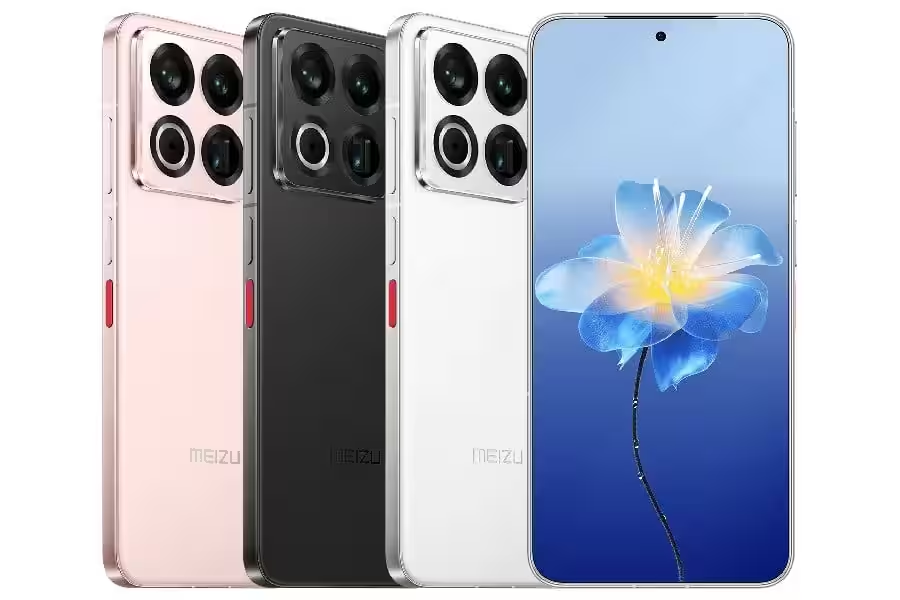
Smartphone makers that once raced to outdo each other on specs are now quietly reassigning their bets. On February 27, Meizu confirmed what insiders and social chatter had already been suggesting: it will temporarily pause new domestic smartphone product development and redirect resources toward Flyme, AI work, and cross‑industry projects.
What Meizu actually said
The company denied rumors of bankruptcy or a shutdown, and insisted that customer support and after‑sales services will continue. But it explicitly framed the decision as a planned transition: pause new domestic handset development, keep its overseas smartphone business and AI glasses and Pandaer tech moving under market‑oriented plans, and push a ”Powered by Flyme” approach for broader collaborations.
Meizu also highlighted traction for Flyme Auto – saying installations have crossed 2.26 million, and that it aims for 3 million this year – using those numbers to underline the logic for the shift.
Why this matters beyond the Meizu 23
This isn’t just about one model. The decision exposes a wider problem: mid‑tier Android original equipment manufacturers (OEMs) face an exhausted hardware playbook. With component costs, thin margins, and fierce competition from established giants, software, services, and platform licensing are the clearest routes to higher recurring revenue.
For Meizu, the pivot buys time and a new identity. Instead of trying to win again on specs or price, it can try to monetize Flyme – in cars, wearables, and third‑party devices – or license its software and integrations to partners. That path can be far less capital‑intensive than funding successive smartphone generations.
Who stands to gain – and who loses
Winners: automakers and platform partners that adopt Flyme Auto or other Flyme services; customers of those partners if integrations are solid; Meizu if it successfully turns installations and licensing into steady income; overseas Meizu teams and non‑phone product lines that get runway to continue.
Losers: suppliers and contract manufacturers that rely on Meizu’s handset volume; domestic consumers waiting for the Meizu 23 or future flagships; the brand’s standing as a hardware contender if long absences become the norm. There’s also a reputational risk if the pivot is interpreted as a retreat rather than a strategic refocus.
How this fits a broader pattern
Meizu’s move echoes choices other Chinese firms have made: lean into software, autos, IoT, and services. Some rivals have diversified into cars and cloud services; others doubled down on global markets or carved out narrow hardware niches. The difference for Meizu is starting from a small hardware base and an existing OS with some automotive traction – an asset most smaller OEMs lack.
What to watch next
First, whether Meizu follows through by licensing Flyme aggressively to carmakers and device makers, or whether this becomes a holding pattern while it decides its next handset strategy. Second, how supply partners and retail channels respond – immediate cancellations or slower order books would signal a true contraction. Finally, whether rival OS and auto platforms can turn installations into meaningful revenue before consumer attention drifts.
Pragmatically, the Meizu 23 is now on thin ice. The brand promises support for existing customers, but a pause in domestic development makes a timely launch unlikely. If Meizu wants to stay relevant as a phone brand long term, it will need to translate Flyme’s car wins into clear consumer and partner benefits – fast.