

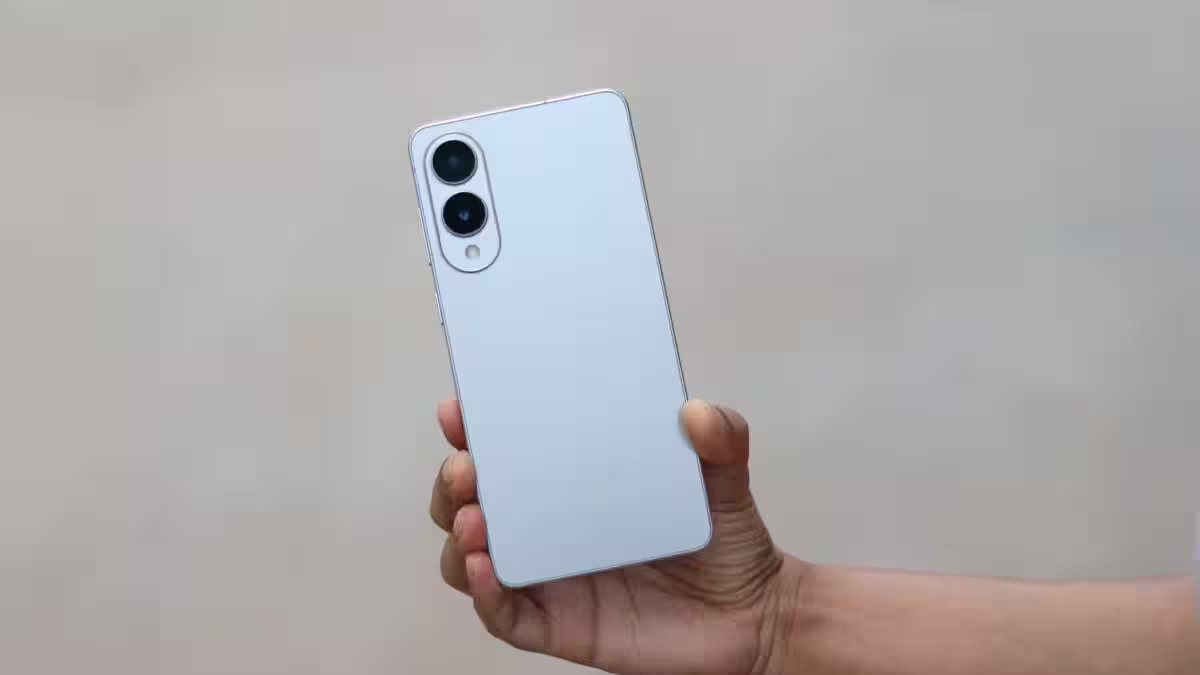
Samsung’s most headline-grabbing experiments from last year – the wafer‑thin Galaxy S25 Edge and the three‑panel Galaxy Z TriFold – have been put on ice. That matters because both devices were less about mass appeal and more about engineering flex: one chased extreme thinness, the other tried to fold a phone into a tablet. Now Samsung appears to be asking a blunt question: who actually pays for those trade‑offs?
The short announcement behind the long-term rethink
In an interview with Bloomberg, Samsung MX Chief Operating Officer Won‑Joon Choi said the company is not currently developing direct successors to either device and is still weighing the future of the S Edge line. He added that Galaxy S25 Edge sales were comparatively lower than those of other Galaxy S models. The S25 Edge launched at 5.8mm, Samsung’s thinnest phone to date, while the Z TriFold could unfold into a full‑sized tablet.
Those sentences are deceptively simple. They signal a shift from showcase engineering – making headlines with devices that push component makers and factories to their limits – toward prioritizing sustainable sales and margins. The decision to pause both lines is less about technical inability and more about market reality.
Why both concepts ran into the same wall
Both handset ideas trade practical attributes for novelty. The S25 Edge squeezed thickness down to 5.8mm, but extreme thinness typically forces compromises in battery capacity and thermal headroom. Tri‑fold designs demand bespoke hinges, oversized flexible panels, and complex assembly – all of which drive up prices and lower yields.
Customers voting with their wallets are the bluntest feedback loop. High prices, shorter battery life, or middling camera performance don’t pair well with premium tags, so even technically impressive phones can sell poorly. That helps explain why Samsung is choosing to pause and reassess rather than commit to annual refresh cycles for either form factor.
This isn’t an isolated lesson – look at the market
The wider smartphone market offers precedents. Clamshell foldables and inward‑fold books have grown steadily but remain niche because they cost more and must convince buyers to accept trade‑offs. Motorola’s early Razr revivals and other boutique designs have shown how hard it is to convert curiosity into consistent demand.
Manufacturing realities matter too. Tri‑fold displays require new glass formulations, extra protective layers, and novel hinges; those parts take time and scale to get cheap and durable. Until component costs fall and yields improve, tri‑folds will struggle to reach anything beyond an enthusiast price bracket.
Who wins, who loses
Winners: mainstream buyers and Samsung’s bottom line. By redirecting investment toward the core S and Galaxy Z Flip/Fold families, Samsung can chase volume and per‑unit profitability instead of engineering showcases with limited demand. Component suppliers that serve mainstream foldables also gain from greater scale.
Losers: early‑adopter thrill-seekers and niche suppliers who invested in tri‑fold tooling. Enthusiasts who enjoy new form factors will see fewer yearly surprises. The PR wins from bold prototypes are cheaper than they used to be.
What Samsung will likely do next
Expect a two‑track approach. First, continue to refine mainstream foldables – thinner, cheaper hinges, and better battery life – because those models have shown the clearest path to volume. Second, keep tri‑fold and ultra‑thin concepts alive in labs as optional projects, to be revived when panel tech, battery density, or supply economics make them a viable consumer proposition.
In short: Samsung isn’t giving up on innovation; it’s getting choosier about which experiments it turns into annual products. That pragmatism will disappoint some gadget obsessives, but it also reduces the odds of expensive flops that leave component partners and investors counting losses.
Whether Samsung reintroduces successors will come down to two variables: can component costs and durability improve enough to justify mainstream pricing, and will buyers accept the trade‑offs those designs require? If either answer flips, expect another round of bold hardware. Until then, the prototypes can sit on the shelf and do their PR work quietly.