

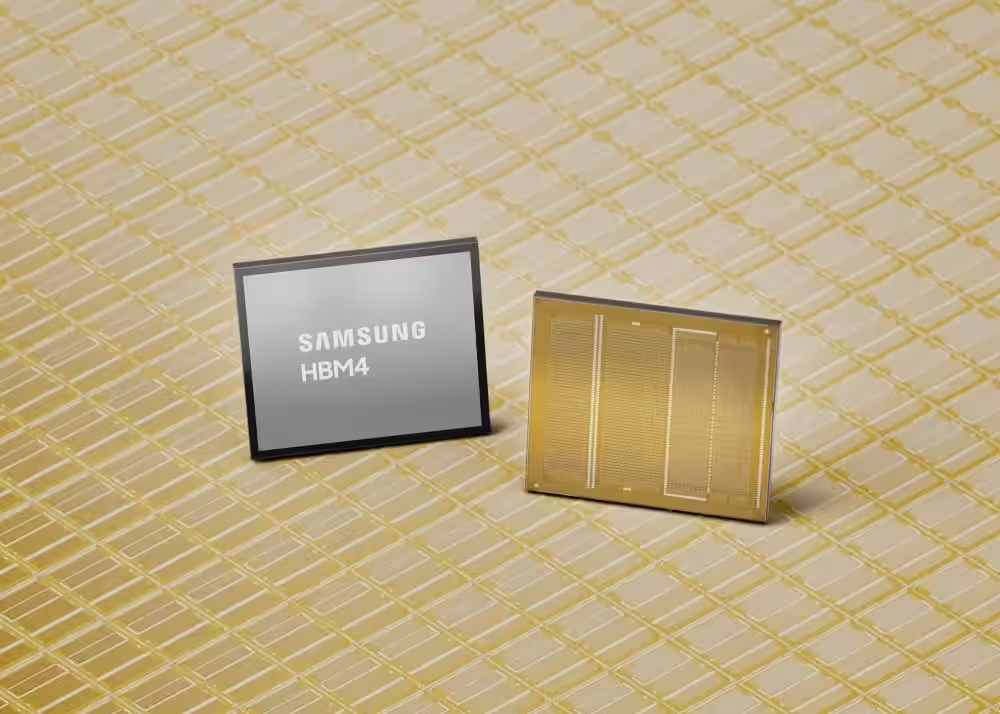
DRAM is back to being a profit-driven sprint, not a commodity crawl. After months of chipmakers scrambling to match demand from AI servers and cloud providers, Samsung Electronics has retaken the top revenue spot in the global memory market – and it did so on the strength of higher-priced, high-margin products.
Market research firm Omdia puts Samsung’s Q4 2025 DRAM revenue at $19.1 billion, giving it a 36.6% share of the market for October-December. That figure represents a 40.6% jump from the prior quarter and was enough to nudge SK Hynix into second place with a 32.9% share and $17.2 billion in sales, up 25.2% quarter-on-quarter. The global DRAM market reached $52.47 billion in Q4 2025, a 30% increase compared with Q3.
The snapshot is stark: Samsung recovered the lead after losing it to SK Hynix in Q1 2025. Micron slipped to third with a 22.9% share (down from 25.8% in Q3), while China’s CXMT accounted for 4.7% of the market.
So what changed so fast? Two levers. First, memory average selling prices (ASP) climbed – Samsung benefited from a 40% increase in DRAM ASP as market prices rose. Second, buyers shifted toward premium server and accelerator memory: HBM3E and DDR5 accounted for a disproportionate share of revenue growth because those products command much higher margins than commodity mobile DRAM.
Why this matters beyond bragging rights
The headline – Samsung back on top – masks a deeper market realignment. The big tailwinds for vendors now come from AI training and inference workloads that demand high-bandwidth, high-capacity memory stacks. HBM and high-capacity DDR5 are becoming premium niches rather than niche premiums, and memory companies that scale those lines quickly capture most of the upside.
For customers, that means better access to high-performance parts but also higher bills. Rising ASPs are a transfer of value: more profit for suppliers, higher infrastructure costs for hyperscalers and service providers. For smaller buyers and legacy OEMs, rising server-memory prices can squeeze margins or delay upgrades.
A familiar cycle with a new wrinkle
Memory is famously cyclical – booms beget overbuilds, which lead to busts. The difference today is product mix. Past cycles were usually about volume: who could flood the market cheapest. The current cycle is about who can produce the right kinds of chips: ultra-wide HBM stacks, high-density DDR5 for servers, and low-power LPDDR5X for mobile and automotive applications. Samsung says it will expand production of HBM4 and high-capacity DDR5 and target LPDDR5X demand in cars and phones; if those ramps succeed, the company can secure the high-margin segment for another year.
Competitors are playing catch-up. SK Hynix remains close in scale and will push its advanced DRAM roadmap; Micron’s seasonal share drop suggests either inventory mismatches or weaker exposure to premium products in Q4. China-based vendors like CXMT still hold only single-digit shares, constrained by scale and – in the background – geopolitical and export dynamics that make access to cutting-edge lithography and customers uneven.
What to watch next
Short term, watch ASP direction. If prices keep rising or stay elevated, Samsung and others will bank outsized profits and keep investing in premium DRAM. If the market overbuilds – a perpetual risk as vendors expand capacity to chase margins – prices could reverse quickly.
Also track product ramps. HBM4 availability and cost-per-bit for high-capacity DDR5 will determine whether this quarter’s winners can hold the lead. Finally, follow where cloud and AI OEMs allocate spend: if hyperscalers standardize on certain memory stacks, the beneficiaries will be those suppliers already certified and shipping at scale.
In short: Samsung’s Q4 numbers are an expected reward for focusing on premium memory, but the memory business hasn’t lost its appetite for surprises. The next few quarters will tell whether this crown is a durable return or just the next turn in a long, volatile cycle.