

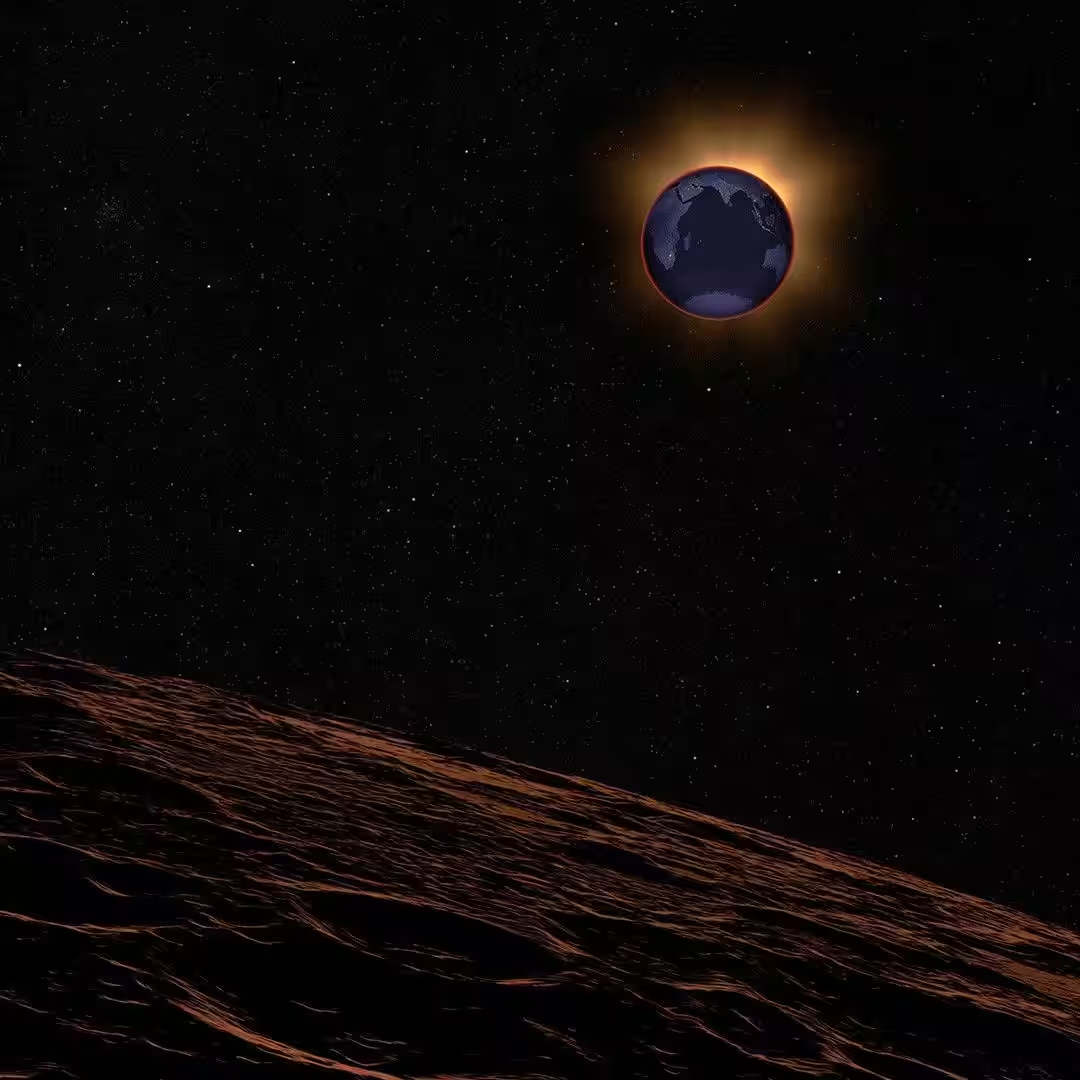
The headline is simple: a total lunar eclipse – a ”blood moon” – happens on March 3, 2026. The less simple fact is that totality will last only 12 minutes and take place almost at dawn, with the full moon very low in the sky. That combination makes this one of those rare sky shows that rewards planning and a good vantage point more than casual stargazing.
When and where you can actually see it
The eclipse will be clearly visible across North and Central America. Observers in Central and South Asia will catch only a partial view. It won’t be visible from Europe or Africa.
If you’re in the United States, here are the published times for the moment of totality (local time):
Los Angeles: 3:04 am
Denver: 4:04 am
Chicago: 5:04 am
St. Louis: 5:04 am
New York: 6:04 am
Washington, DC: 6:04 am
Why the moon turns red – and why this one will look different
During totality the Earth blocks direct sunlight from reaching the moon. Some sunlight still skirts through Earth’s atmosphere, which scatters blue light and bends redder wavelengths toward the lunar surface – in other words, all the world’s sunrises and sunsets get faintly projected onto the moon.
Because this eclipse reaches totality near the horizon, the moon will be seen through more of Earth’s atmosphere than usual. That can deepen the red tint for viewers with a clear horizon, but it also makes atmospheric conditions – dust, haze, pollution, and local weather – far more influential. The result: some viewers will see a dramatic copper disk, others a barely noticeable dimming.
How to maximize your chance of seeing it
Short version: get up early, go somewhere high with a clear eastern horizon, and give yourself time to set up. At totality the moon will be low and about to disappear, so trees, buildings, or rising terrain will easily block the view.
Practical tips:
– Dress for cold. Predawn hours are often the chilliest. Bring hand warmers and a ground pad if you’ll be stationary.
– Use binoculars or a small telescope to bring out surface detail and the red shading. A tripod plus binoculars on a mount is a big upgrade over handholding.
– Photographers: a telephoto or small telescope is ideal. Mount your camera on a tripod and use a remote release or self-timer. Exposures will change quickly – the full moon before totality is bright; during totality the scene can become very dim – so bracket exposures. If you shoot manually, start with settings that expose the full moon (low ISO, short shutter) and then open up both shutter and ISO as totality approaches. Expect to change settings as the eclipse progresses rather than relying on one snapshot.
– Light pollution matters less for a lunar eclipse than for faint deep-sky targets, but a darker sky will still make the red hue and surrounding stars easier to appreciate.
Who wins, who loses, and what this says about public astronomy
Winners: early risers with access to high, unobstructed viewpoints – rooftop observers, photographers, and local astronomy clubs that organize pre-dawn meetups. Social feeds will fill quickly with close-up images, because the event is short and visually striking.
Losers: casual viewers in Europe and Africa, and anyone without a clear eastern horizon. The 12-minute totality means you don’t get a second chance if you wake up late or pick a poor viewing spot.
More broadly, these brief, location-dependent sky events expose a perennial tension in popular astronomy: memorable, shareable phenomena are sometimes the least accessible to the majority. Total lunar eclipses are easier to observe than total solar eclipses because they’re visible across an entire hemisphere, yet this particular geometry – dawn, low altitude, short totality – makes it a specialist’s treat.
A quick reality check and what to expect next
Yes, it’s safe to look at a lunar eclipse with the naked eye. No special filters or protective eyewear are required. If you want the iconic copper disk, plan your location, get there early, and be prepared to adjust camera settings on the fly.
If you miss this one, don’t fret: total lunar eclipses occur about every 2.5 years on average. But every eclipse is different. This March 3 event will be remembered for being short, low, and capricious – perfect for anyone who likes a challenge and a dramatic photo to prove they were up before sunrise.
CONTENT_END