

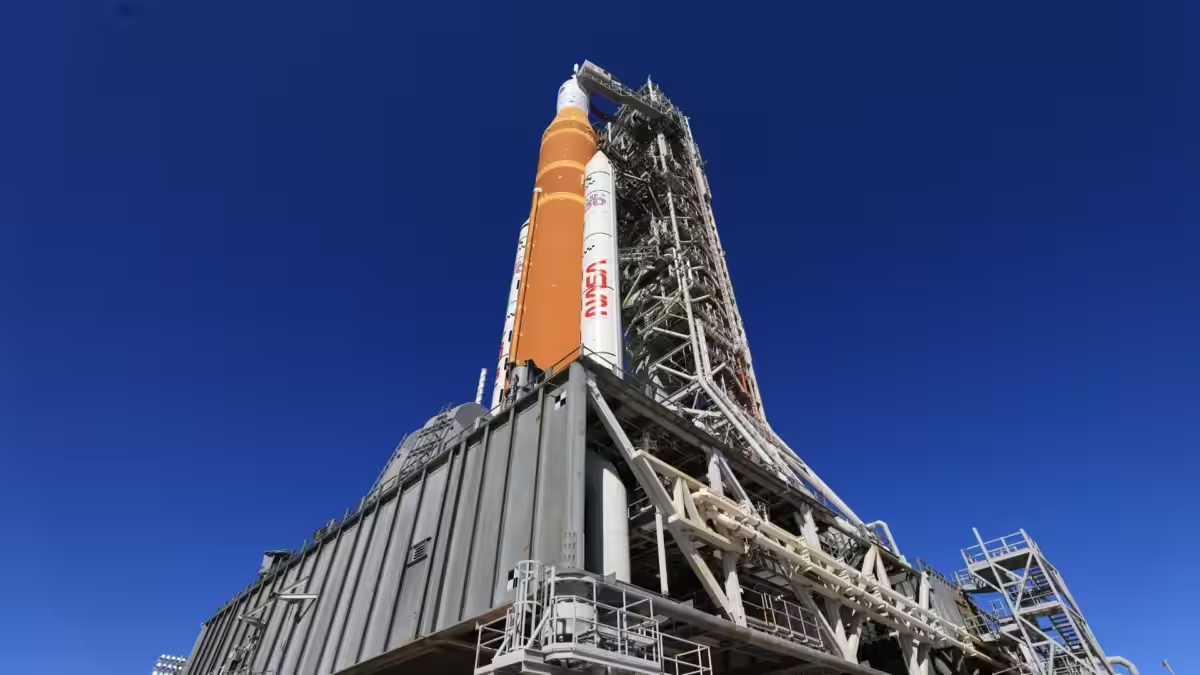
NASA’s plan to send astronauts around the moon in early March just hit a familiar snag: an interruption in helium flow inside the Space Launch System’s interim cryogenic propulsion stage. The problem is small in hardware terms but large for the schedule – and it almost certainly pushes the mission out of the tight March launch window.
”A rollback would mean NASA will not launch Artemis 2 in the March launch window,” NASA officials wrote in a blog post.
NASA
The operational impact is straightforward and unforgiving. The March window runs March 6 through March 9, with another shot on March 11. If those dates are missed, NASA will have to wait until at least April, when target launch dates include April 1, April 3-6 and April 30.
The immediate trigger was telemetry showing an interruption of helium flow in the SLS upper stage. Helium isn’t exotic here – it’s the invisible plumbing that pressurizes the liquid hydrogen and liquid oxygen tanks and keeps engine systems in the right state to fire. Teams reviewed data after a successful wet dress rehearsal that wrapped on Feb. 19, even though an earlier WDR attempt on Feb. 2 was cut short by a liquid-hydrogen leak.
NASA is preparing for a rollback of the rocket from the pad back to the Vehicle Assembly Building so engineers can troubleshoot and, if necessary, repair the stage. That conservative option protects options at the pad and in the VAB but effectively kills any chance of launching in the first March window.
Why one small system matters
Rockets are systems of tightly coupled redundancies. A helium valve, a sensor, a blocked line – any of those can leave a spacecraft unable to meet the exacting requirements of a crewed mission. Because Artemis 2 is a crewed flight, NASA’s risk tolerance is low. Troubleshooting on the pad is constrained by wind forecasts and safety rules, which is why teams are already preparing to remove pad access equipment and move the vehicle to the VAB.
This is a pattern, not a one-off
Small problems have tripped up the SLS program before. Artemis 1, the uncrewed test flight, suffered repeated liquid-hydrogen leaks during its launch campaign and only launched successfully in November 2022 after several scrubs and fixes. Artemis 2’s recent wet dress rehearsal successes showed progress, but the new helium interruption is a reminder that single-launch, bespoke heavy-lift systems are fragile – and schedule margins are thin.
Contrast that with the commercial approach some companies use: faster iteration, higher flight cadence, and design choices that accept more early risk to accelerate learning. That difference is part of why debates about how NASA mixes government-built rockets and commercial providers have been so persistent.
What this means next
Practically speaking, expect a rollback to the VAB while engineers chase the helium anomaly. If the work goes smoothly, NASA has said it could still preserve the April windows, but every extra day on the ground increases the chance of a longer slip – and adds cost and scheduling headaches for flight crew, ground teams and international partners.
Politically, the delay will be fodder for critics who point to SLS’s long development timeline and the program’s history of late-breaking technical fixes. Operationally, it’s a reminder that crewed lunar missions depend on dozens of small systems working perfectly at the same time. That’s unlikely to change until heavier launch fleets and higher flight cadences become routine.
For now, the next few days of data review will determine whether Artemis 2 slips just a few weeks or inches into a much longer delay. Either outcome is manageable – technically – but neither is great for a program counting on tightly timed lunar departure windows and a long campaign ahead.