

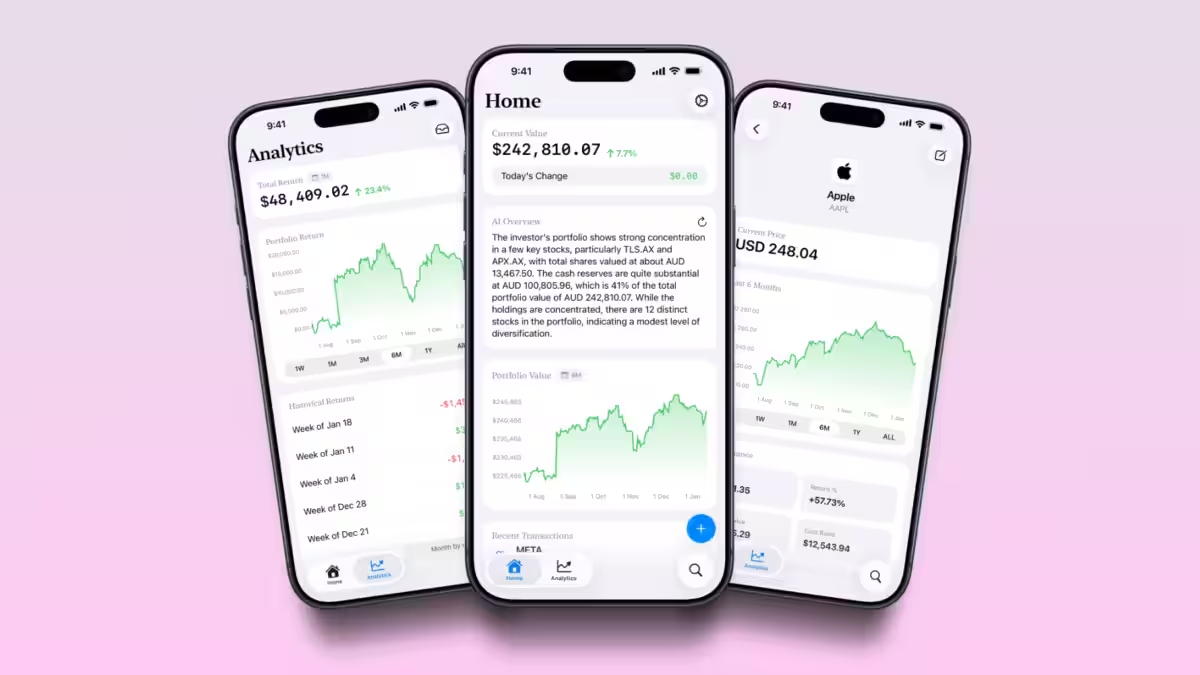
Too many investing apps promise the convenience of automatic syncing and then deliver cluttered dashboards, shaky privacy, or flaky connections. Summit takes the opposite approach: tidy, local-first portfolio tracking for iPhone and iPad that asks you to do the work up front and keeps the math on your device.
What Summit actually does
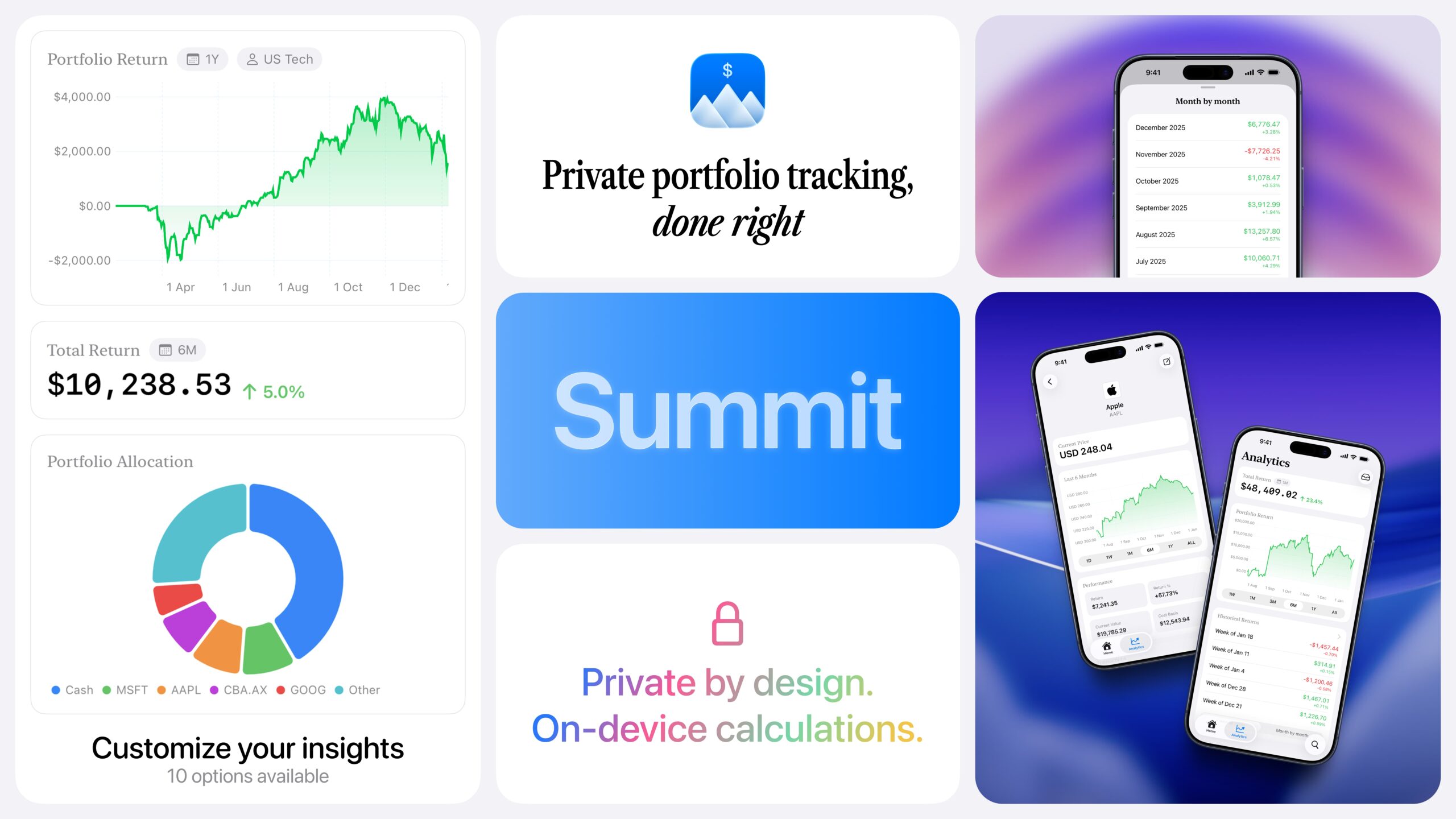
Summit is a free app on the App Store for iPhone and iPad running iOS 26 and later. It aggregates all your holdings into one clean dashboard – current value, daily change, and charts of value over time – but it doesn’t do the one-click broker hookups you see in larger aggregators. You either enter positions manually or import them via CSV. If you provide cost basis data, Summit will show historic returns, allocation breakdowns and largest positions across all your accounts. The calculations use real-time market data and are performed on device.
The developer offers a Summit Pro tier for those who want extras: AI overviews, deeper analytics, CSV import/export and support for multiple accounts. Pro costs $2.99/month, $24.99/year, or $49.99 lifetime. The app will be available on Mac soon, the developer says.
Why the manual route still matters
Automatic linking via APIs like Plaid is convenient, but convenience has a cost: your portfolio data ends up on third-party servers, and connections break when brokers change APIs or throttle access. Manual entry, plus CSV imports, is frictiony but predictable. It gives users control over what lives where and avoids handing credentials to a middleman.
Summit’s on-device calculations are an explicit privacy play. That will appeal to investors who treat their portfolio as sensitive data and prefer not to trade it for automated updates. It’s the same argument driving a wave of indie apps that prioritize privacy and single-purchase or modest subscription models over recurring cloud services.
Where Summit fits among competitors
There are plenty of portfolio trackers, and they split into two camps. One camp-large aggregators and wealth tools-links directly to banks and brokerages to auto-sync holdings and transactions. The other camp-indie and privacy-focused trackers-relies on manual input, CSVs, or periodic imports and emphasizes control and local computation.
Apps such as Delta and Sharesight offer different mixes of automation, reports and tax features; services like Personal Capital combine aggregation with advisory services. Summit is targeting the privacy/manual end of that spectrum. That narrows its audience, but it also gives it a clearer selling point: predictable behavior, fewer broken connections and no cloud-side exposure of raw position data.
What Summit gets right – and what it still needs
Right: the interface is clean and focused, the analytics cover the basics investors actually use, and the pricing is straightforward. A lifetime option at $49.99 is attractive for power users who dislike recurring fees.
Not yet right: onboarding friction. Manual entry is inevitable for this design, and while CSV import helps, most people want a fast path that syncs across devices. The promised Mac app and cross-device syncing will be crucial. If Summit keeps data local, it will need a secure, user-controlled sync mechanism (encrypted iCloud sync is one option) to avoid undermining its privacy pitch.
Another gap: tax and transaction history. Many investors care about tax lots, realized gains and wash-sale tracking; Summit surfaces historic returns if you enter cost basis, but it isn’t marketed as a full tax reporting tool. That’s fine for portfolio insight, but it limits appeal to active traders who expect trade-level reconciliation.
Who wins, who loses
Winners: privacy-minded investors, people with multiple brokerages who want a tidy single-pane view without granting account access, and buyers who prefer modest or one-time payments over a rising stack of subscriptions.
Losers: users who prefer zero-friction automation and expect a bank‑like live feed of every trade. Large aggregator services won’t be displaced by Summit, but they could lose a sliver of users who prioritize control over convenience.
Verdict and what to watch
Summit won’t replace robo-advisors or full-service wealth platforms. But it doesn’t need to. There’s an enduring slice of investors who will trade a little setup time for better privacy and a clearer view of portfolio performance. Summit’s success depends on two things: shipping a secure, simple Mac app and a reliable sync that respects its promise of local computation. If it pulls that off, Summit can be the handy middle ground between spreadsheet tedium and opaque cloud aggregators.
Try it if you keep accounts across brokers and want a private, uncluttered way to see how your positions are doing. Skip it if you need automatic, transaction-level syncing and tax reporting out of the box.