

Microsoft is reshuffling the top of its Xbox division at a moment when the business is already being pulled in two directions: defend a traditional console model or double down on services and Windows integration. The departures of longtime executives make that tug-of-war obvious.
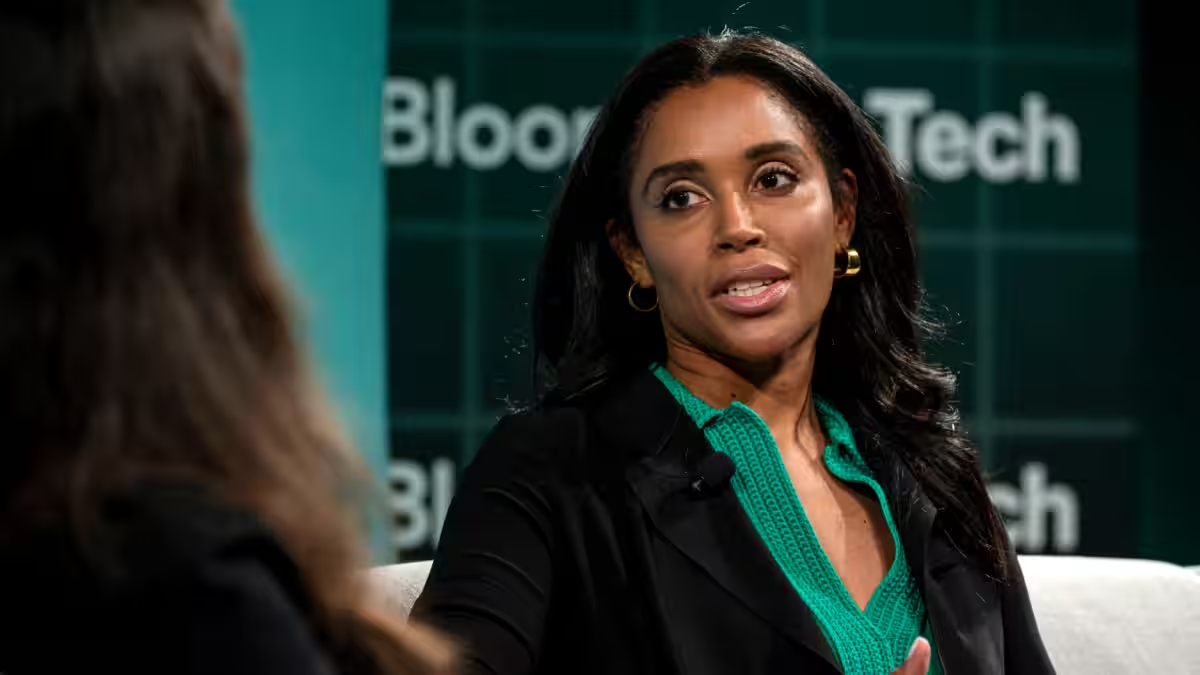
On Feb 20, 2026, Xbox announced that Sarah Bond, president and chief operating officer of Xbox, is leaving the company at the same time as Phil Spencer, CEO of Microsoft Gaming, steps away from his role. Microsoft elevated Asha Sharma to EVP and CEO of Gaming and promoted Matt Booty to EVP and chief content officer as part of the transition.
Why this matters
These departures aren’t just personnel changes. They’re a sign that Microsoft is choosing which future of gaming it wants to invest in: devices tied to Xbox branding, or a platform play that treats Windows, cloud streaming, Game Pass, and partner hardware as the primary route to players.
Phil Spencer’s internal memo praised Bond’s role in expanding Game Pass, cloud gaming, and supporting new hardware launches, calling her ”instrumental during a defining period for Xbox, shaping our platform strategy.” That wording underscores how leadership framed recent years – as a platform pivot rather than a console-first renewal.
The long arc: from console bets to subscription bets
Under Spencer, Xbox moved aggressively toward subscriptions and cloud services, building Game Pass into the division’s headline product and buying studios to feed it. That effort reduced reliance on single-console cycles, but it hasn’t eliminated the hard economics: high development costs, thin margins on hardware, and uneven returns from acquisitions.
At the same time, Microsoft has been folding Xbox features into Windows and courting partners building handhelds and other non‑console devices. That strategy treats Xbox as a cross-device platform rather than a standalone box – a sensible hedge, but one that frays the instincts of fans who still equate Xbox with a flagship console.
How the competition is playing this
Sony remains the clearest counterpoint: it leans into first‑party exclusives and premium hardware sales alongside services. Nintendo sticks to tightly controlled first‑party franchises and hardware innovation. Google’s cloud gaming experiment ended in shutdown, a reminder that services-only plays can fail without developer buy-in and a healthy ecosystem.
Microsoft’s bet has been that mixing Game Pass, cloud streaming, and Windows OEM partnerships will create stronger hooks than console sales alone. But the recent layoffs, studio closures, and razor-thin margins in gaming have shown how messy that transition can be.
Who stands to gain – and who might lose
Winners: Microsoft’s cloud and Windows partners, and the business teams that monetize subscriptions and cross‑device features. Hardware makers building PCs, laptops, tablets, and handhelds that integrate Xbox services could find new demand.
Losers: Traditional console purists and internal studio teams that count on big, exclusive console launches to justify large budgets. If focus shifts more toward scalable services, expensive single‑platform projects will face renewed scrutiny.
What to watch next
Expect Microsoft to accelerate integration between Xbox’s service portfolio and Windows, and to lean on partnerships with OEMs rather than invest heavily in a family of in‑house Xbox devices. That approach reduces capital intensity but raises questions about first‑party exclusives and long‑term studio investment.
Internally, the promotions of Asha Sharma and Matt Booty suggest Microsoft wants continuity in product and content strategy while signaling a new phase of commercial focus. Externally, gamers and developers will be watching whether those appointments produce steadier support for studios and clearer product roadmaps.
Call it pragmatic or call it risk‑averse: Microsoft is choosing the path that treats players as subscribers across devices rather than buyers of a single box. That’s where the numbers are easier to model – but it’s also a harder promise to sell emotionally to the people who still buy consoles to feel ownership of a gaming platform.
For now, the message from Redmond is clear: Xbox’s future is being remapped away from a hardware-first story and toward a services-first one. Whether that pays off will depend on whether Microsoft can keep developers funded and fans engaged while it chases scale.
”Sarah has been instrumental during a defining period for Xbox, shaping our platform strategy, expanding Game Pass and cloud gaming, supporting new hardware launches, and guiding some of the most significant moments in our history,” Phil Spencer wrote in an internal memo.
Phil Spencer