

Android is about to add two features many iPhone users take for granted: a native app lock and a universal clipboard. That sounds like catching up, and it is – but it also matters in a practical way for Pixel owners and anyone who has been relying on shaky third-party workarounds.
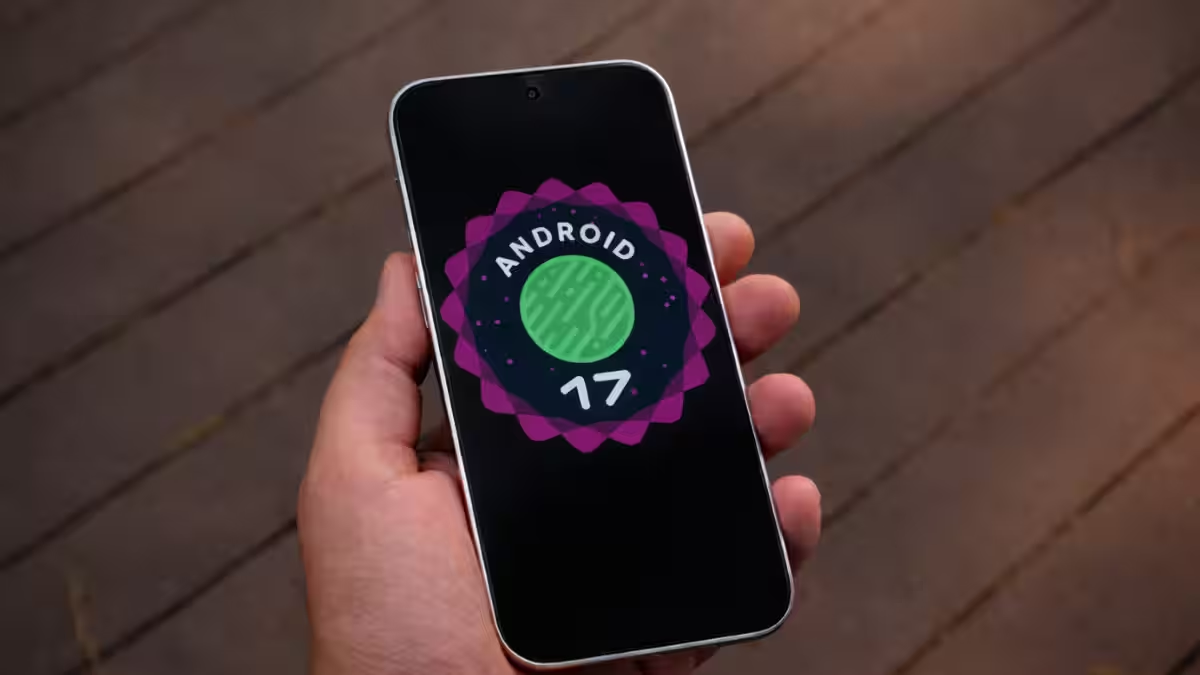
Google pushed an Android 17 beta without the usual developer previews, and early builds reveal hints of two system-level features: an integrated app-lock and a synced clipboard that works across devices. Neither is confirmed as final, but both have appeared in framework-level code and beta branches, suggesting Google is serious about shipping them this year.
Why these are more than cosmetics
At surface level, native app locking and clipboard sync feel like small quality-of-life changes. But they solve real problems: Pixel users today either lean on OEM-skinned phones that already include app lock, or install third-party app lockers that require invasive permissions and add attack surface. Clipboard syncing, meanwhile, has been cobbled together with third-party apps and platform-specific solutions – a native option would make cross-device copy-paste less fragile and less siloed.
Apple introduced a universal clipboard back in 2016, and iOS added native app-lock controls in 2024. Other Android vendors – Samsung, Xiaomi, Oppo, Vivo and OnePlus – have already offered their own versions for years. So Google is late, but the timing matters: when the operating system implements a feature, it becomes the baseline for Pixels and an option for other manufacturers to adopt cleanly.
What Google needs to get right
There are three obvious questions Google will have to answer before these features are useful rather than merely visible:
1) Security model – App lock must avoid becoming a platform for abuse. Many third-party lockers ask for Accessibility permissions or broad access to run reliably; a native solution should minimize required permissions and integrate with existing system authentication (PIN, biometrics, passkey).
2) Cross-device trust and encryption – Universal clipboard implies syncing ephemeral data across devices tied to a Google account. Users will reasonably demand transparent encryption, short time-to-expiry, and controls to opt out for sensitive content. If Google treats clipboard sync like another cloud-backed convenience without clear protections, it will raise privacy alarms.
3) Scope and rollout – Will these features be Pixel-only, part of core Android available to all partners, or gated behind a Google account for cross-device sync? The beta traces suggest system-level plumbing, but consumer rollouts, ecosystem adoption, and whether other OEMs keep their own versions will determine how ubiquitous these features become.
Who wins and who loses
Winners: Pixel users and anyone committed to Google’s ecosystem. They get a cleaner, safer alternative to third-party apps and a more seamless multi-device workflow. Google itself gains a stronger baseline for Android features, which matters for consistency and UX expectations.
Losers: some third-party app locker makers and vendors who used exclusive features to differentiate. If Android provides a robust app lock and clipboard sync, those niche apps and vendor skins lose an argument for why customers should choose their software over AOSP plus Google services.
A short history of the same fight
This is not the first time Android has trailed Apple on small but sticky features. Apple’s Universal Clipboard debuted in 2016; Microsoft added cloud clipboard features on Windows in 2018. Android’s strength has always been choice, but that same diversity fragments experience – a native implementation is Google’s bid to unify the baseline without bulldozing vendor innovation.
What to expect next
Don’t expect everything in the initial Android 17 beta to be consumer-ready. Google’s pattern in recent cycles has been to ship developer-focused releases first and push feature polish in quarterly platform releases. The company is likely to refine these additions in Android 17 QPR1, which is expected around August or September 2026, coinciding with the Pixel 11 launch window.
If you care about security and convenience, watch for three final signs before celebrating: whether app lock integrates cleanly with system authentication, whether clipboard sync is opt-in and end-to-end protected, and whether the features reach non-Pixel devices in a usable way. If Google gets those right, these overdue features will stop being ”catch-up” and start being quietly useful.
Short version: Google is closing two annoying gaps in Android functionality. The details – permissions, encryption, and rollout – will decide whether this is meaningful progress or just a checkbox on the feature list.