

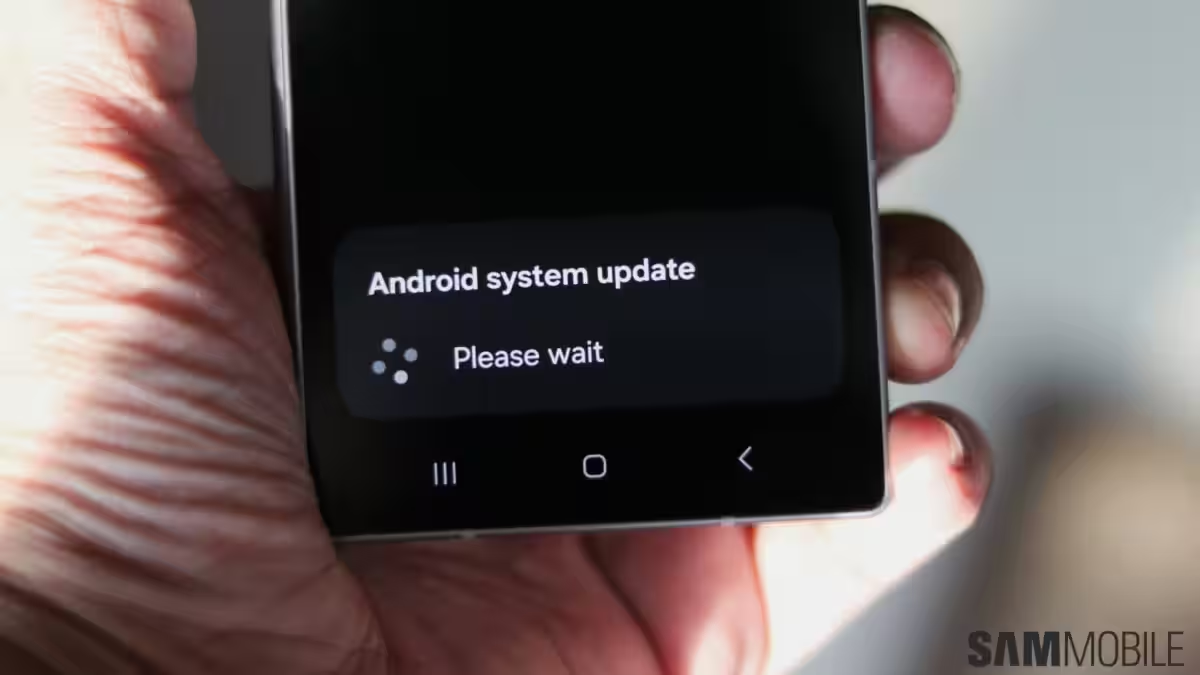
If your Galaxy phone just installed a 1.3MB Google Play System update and then showed a different date than before, you’re not imagining things. Over the last 48 hours many Samsung devices have been pushed a microscopic Play System package – first one day, then another – and users are spotting conflicting timestamps: January 1, 2026; November 1, 2025; and even November 1, 2026 on some beta units.
What happened, in plain terms
Samsung phones worldwide – notably newer, higher-end Galaxy models – received a Google Play System update that weighed in at 1.3MB. Some people report that after installing it the Google Play System update is dated January 1, 2026. Other reports indicate that after installing it, the date has been reverted to November 1, 2025. Earlier today, a 1.3MB Google Play System update arrived on Galaxy S25 units running on the beta version of One UI 8.5; it is dated November 1, 2026.
Why those tiny updates matter more than their size suggests
Google Play System updates are the modular plumbing of Android: introduced to let Google and partners push fixes to parts of the OS without a full firmware update. They can touch things like core libraries, security modules, and certification metadata. Because the changes are modular, the payloads are often small – sometimes just configuration or version markers – which explains a 1.3MB download.
But the visible symptom here is not the download size. It’s the timeline confusion. Play System dates are increasingly visible in Settings, and people use them alongside the Android security patch level to judge whether a phone is up to date. When those dates jump around – or show different months and years across installs – it creates uncertainty for consumers and IT teams that need a clean audit trail.
How to check it yourself
On affected Galaxy phones you can check the Play System entry at Settings > About phone > Software information > Google Play System update. Google has published notes explaining the November 2025 and January 2026 Play System updates on its support pages.
Who wins, who loses
Winners: Google and OEMs get to patch things faster without waiting for full OS releases. Samsung benefits from a channel that lets it align Play-delivered fixes with its One UI beta and stable releases – One UI 8.5 is currently in beta on the Galaxy S25 series and expected to ship broadly with the Galaxy S26.
Losers: anyone who treats the Play System date as the definitive status of a device. That includes consumers who compare phones by ”latest patch” and corporate admins who need consistent forensic evidence of update history. A Play System date that flips between November 1, 2025, January 1, 2026, and even November 1, 2026 will cause needless support tickets and compliance questions.
What this echoes from the past
Android’s modular update approach (Project Mainline and related Play-delivered modules) has been a slow fix for fragmentation since it began rolling out in 2019. It solved many problems – allowing Google to harden components without OEM-built firmware – but it introduced a second clock to track alongside the traditional security patch level. That split has always required clearer consumer messaging; the current wobble is a reminder that the messaging still isn’t there.
What I’d watch next
Expect more backend nudges rather than feature updates. These small packages usually represent metadata or certificate tweaks rather than functionality changes. Still, Samsung and Google should issue a short clarification: why successive 1.3MB pushes landed, and which date users should trust for security and support purposes.
For people managing fleets of devices, the practical move is to rely on the Android security patch level (the security patch date shown in About phone) and your enterprise management console logs for proof of compliance – not the ephemeral Google Play System timestamp. If you’re a curious owner, check the Play System entry in Settings and keep an eye on vendor notices as One UI 8.5 moves from beta toward a wider roll out with Galaxy S26.
The short verdict
These tiny, repeated Play System updates aren’t cause for alarm. They’re the modular update mechanism doing its job. But the inconsistent date stamps are an avoidable source of confusion. Google and OEMs have the tools to fix this – they just need to align their messaging and make clear which timestamps matter for users and administrators.